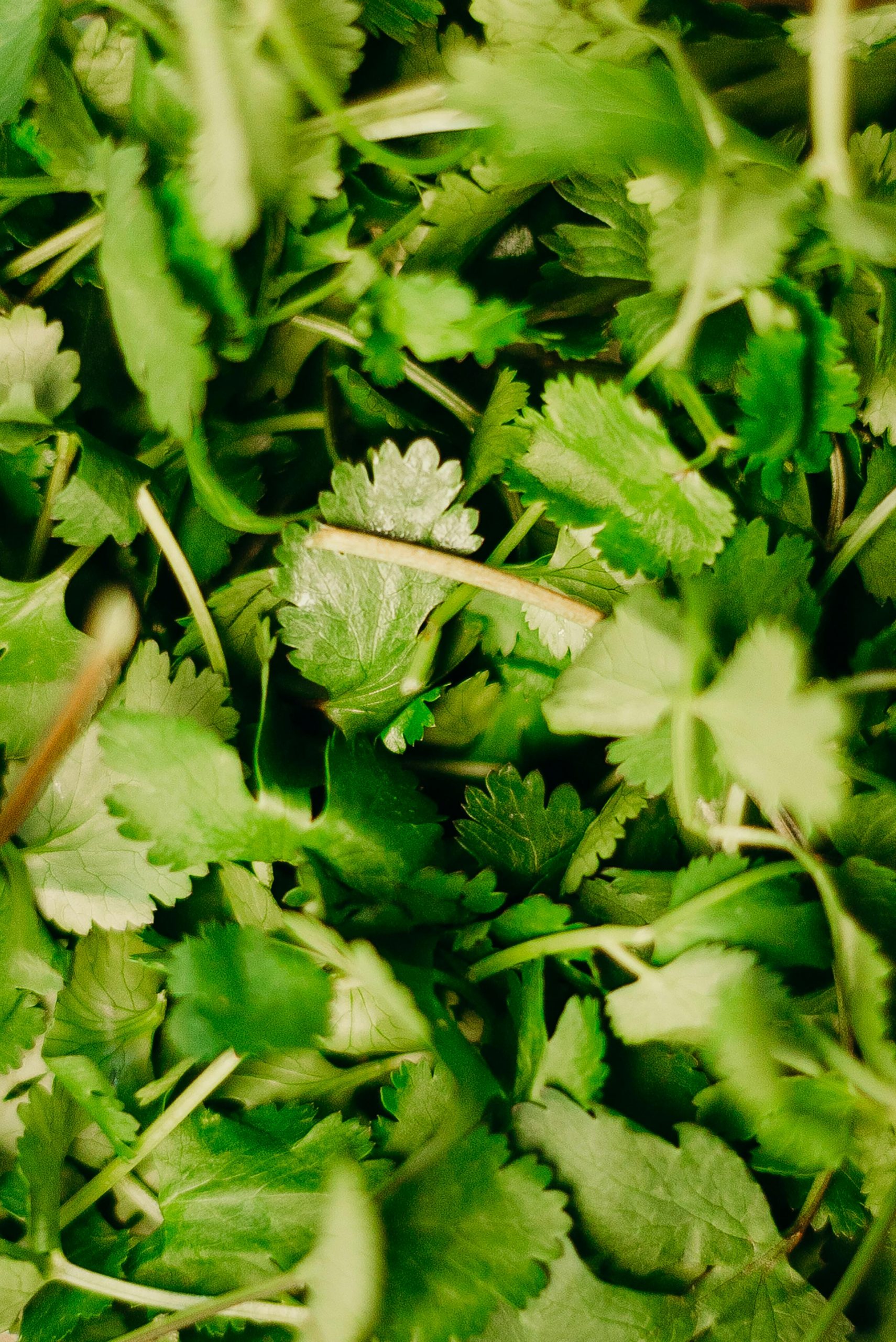
We all have that one friend or family member – heck, I’m that friend and family member – who thinks coriander tastes like soap. But what gives? Is it the number of taste buds that causes the adverse reaction? Do DNA and genes have something to do with it?
You’re not the only one
Research has found that as many as 1 out of 5 people experience a soapy taste when eating coriander. This is likely due to a super-sensitivity to the flavour compound in coriander called ‘aledyhide’. In fact, studies have identified two genetic variants associated with the soapy taste, commonly with a mutation producing olfactory receptors with a high binding capacity for natural chemicals in coriander.
What this means is there are people with this gene in their genetic makeup who taste more soap-like flavours, rather than the fresh, citrusy flavours of coriander. And unsurprisingly, the population containing the fewest people with this gene mutation are in areas that tend to use the most of the leafy herb: Central America and India.
Does that mean you will always taste soap?
Well, this depends on whether you’d like to change the way you taste coriander or not. If you’re exposed to it regularly because of what you, your family, or friends like to it, it might be in your best interests to try.
Just like chilli, you can slowly build up your tolerance for coriander. Adding small amounts to food, or just using the stems for a while, can help you build up some tolerance and lower that soapy flavour. But how long it will take differs from person to person, so how long this process may take varies.
It might just be worth your while to come to a potluck prepared with coriander-free foods, or resort to asking for your next curry or taco order to be coriander-free!
Also See: Upgrade your drinks cart: The top 5 drink trends for 2026
Upgrade your drinks cart: The top 5 drink trends for 2026