If you’ve ever stood in the baking aisle wondering whether you should be buying cocoa powder or cacao powder, you’re not alone. They may look almost identical, come from the same plant and both promise a rich, chocolatey hit – so what exactly is the difference?
The short answer is that cacao and cocoa come from the same plant, Theobroma cacao, but the terms are often used to describe the beans and products at different stages of processing. There is also a fair amount of overlap in how the words are used on food packaging, which makes the whole thing rather confusing.
Here’s what you actually need to know before swapping one for the other in your next batch of brownies.
First things first: cacao and cocoa come from the same plant
Both cacao and cocoa originate from the seeds, or beans, of the Theobroma cacao tree. Once harvested, the beans are removed from the pods, fermented and dried before being processed into the ingredients we know and love – including cocoa powder, cocoa butter, chocolate and cacao nibs.
The words themselves aren’t as scientifically neat as you might expect.
In general, “cacao” is often used when talking about the raw beans, tree or less-processed products, while “cocoa” tends to refer to processed products such as cocoa powder. However, the terminology isn’t universal, and the two words are used interchangeably in many countries and on food labels. Scientific literature also notes this overlap.
So, no, cacao isn’t a completely different ingredient from cocoa. Think of them as two names that are commonly used for products derived from the same humble bean.
What happens to a cacao bean?
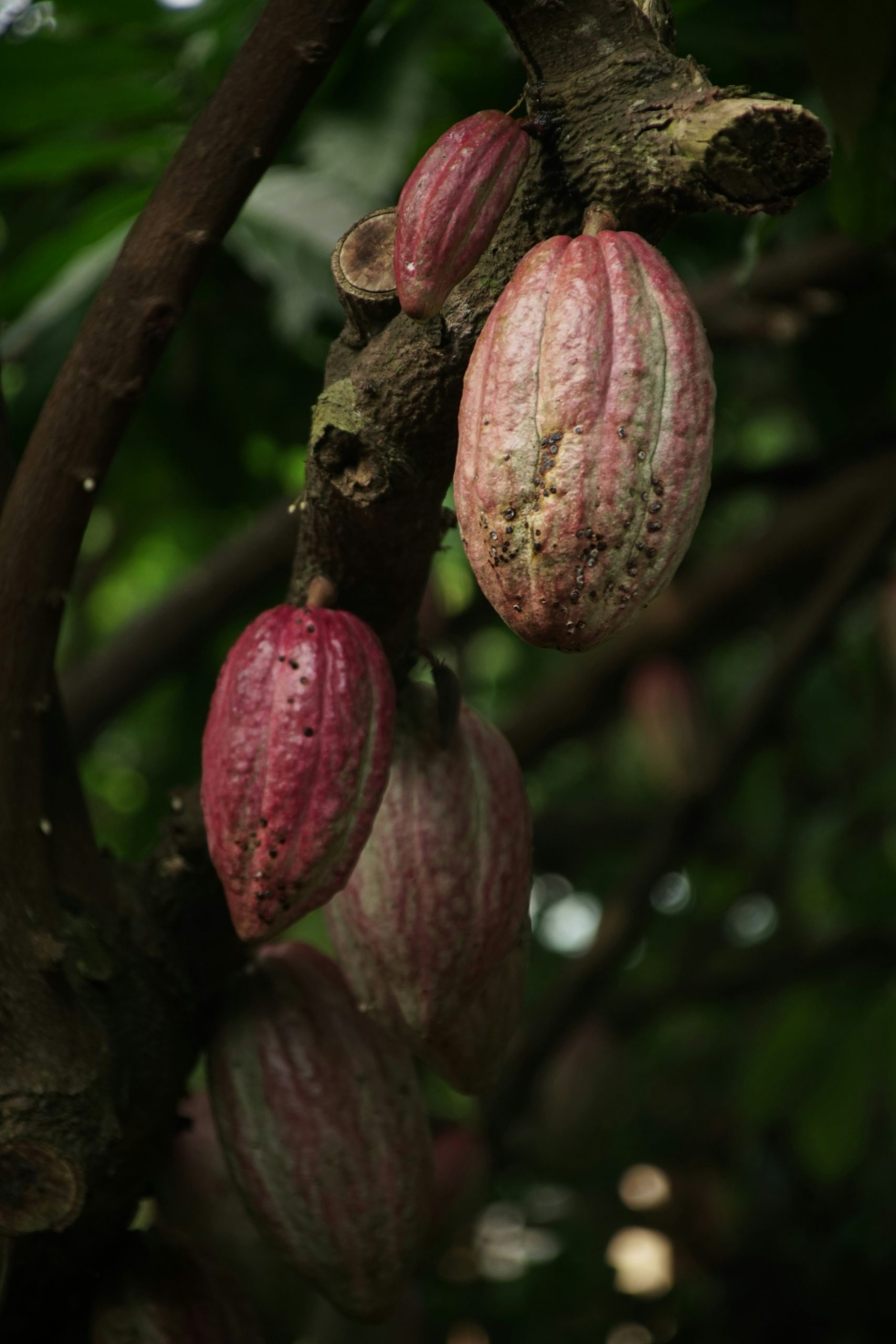
Before getting into the powder sitting in your pantry, it helps to understand what happens to the bean after it’s harvested.
Fresh cacao beans are surrounded by a sweet, sticky pulp. They are fermented – an important step in developing the characteristic chocolate flavour – and then dried. Fermentation isn’t simply about preservation; it causes a series of chemical changes that influence the flavour and composition of the beans.
After drying, the beans can be roasted. They are then cracked and winnowed to remove the outer shells, leaving the edible nibs. The nibs can be ground into cocoa liquor, which can then be pressed to separate cocoa butter from the remaining cocoa solids. Those solids are ground into cocoa powder.
And this is where the difference between many products labelled cacao and cocoa starts to become more noticeable.
Cacao powder vs cocoa powder
Cacao powder is generally marketed as a less-processed product. Depending on the manufacturer, cacao powder may be made from beans that have not been roasted, or have undergone relatively low-temperature processing.
Cocoa powder, meanwhile, is generally made from processed and roasted cacao beans.
But here’s the important bit: there isn’t one universal processing method that makes every product labelled “cacao” fundamentally different from every product labelled “cocoa”.
The amount of processing can vary considerably between products. Some cocoa powders are also treated with alkali in a process known as Dutch processing, which changes the powder’s colour, flavour and acidity.
In other words, don’t judge a product solely by the word on the front of the packet. The ingredient list and product description will tell you far more about what you’re actually buying.
Is cacao healthier than cocoa?
This is where things get a little muddier.
Cacao beans naturally contain flavanols and other polyphenolic compounds. However, these compounds can be affected by fermentation, roasting and other processing methods. Research has found that processing can substantially alter the levels of individual flavanols in cocoa ingredients, with Dutch processing having a particularly significant effect on some compounds.
That doesn’t mean cocoa powder is “bad” or that cacao powder is automatically a superfood.
It simply means that processing matters. If you’re specifically buying cacao because you want a product with more of its naturally occurring compounds intact, look at how the product has been processed rather than relying on the word cacao alone.
And there’s another small catch: eating a spoonful of unsweetened cacao powder isn’t quite the same thing as eating a chocolate bar. Once sugar, milk, cocoa butter and other ingredients enter the picture, the nutritional profile of the finished food changes considerably.
Does cacao taste different from cocoa?
Yes – although exactly how different they taste depends on the product.
Cacao powder can have a more intense, earthy or slightly bitter flavour, while cocoa powder is often smoother and more familiar in classic chocolate desserts.
Dutch-processed cocoa tends to be darker in colour and has a milder, less acidic flavour than natural cocoa powder. The alkalisation process is specifically used to alter the flavour and colour of cocoa products.
This means that two packets of “cocoa powder” can taste noticeably different from one another, too.
And if you’re making something where chocolate is the star of the show, that difference can matter.
Can you use cacao powder instead of cocoa powder?
Usually, yes – but not always as a straight one-for-one swap.
For recipes such as smoothies, overnight oats, energy balls, homemade granola and simple chocolate sauces, swapping cacao powder for cocoa powder is generally straightforward. The biggest difference will usually be the flavour.
Baking is where you need to pay a little more attention.
Natural cocoa powder is acidic, while Dutch-processed cocoa has been alkalised and is less acidic. That acidity can interact with raising agents such as bicarbonate of soda, so changing one type of cocoa for another can affect the chemistry of a recipe.
If a recipe specifically calls for Dutch-process cocoa, don’t automatically assume that natural cocoa or cacao powder will behave in exactly the same way. The same goes in reverse.
For a recipe that relies heavily on the balance between cocoa and a chemical raising agent, it is safest to use the type of cocoa powder specified.
When can you swap them?
In smoothies and drinks
Go for it. Cacao and cocoa powder can both add a deep chocolate flavour to smoothies, hot chocolate-style drinks and iced coffees.
Just remember that cacao can taste more bitter, so you may want to adjust the sweetness.
In porridge and overnight oats
Either works beautifully. Add a spoonful of cacao or cocoa powder with banana, nut butter, cinnamon or yoghurt for an easy chocolate breakfast.
In energy balls and no-bake treats
This is one of the easiest places to make the swap. Since there is no baking chemistry to worry about, the main consideration is taste.
In brownies and cakes
This is where you should be more careful. If the recipe specifies natural cocoa powder, Dutch-process cocoa or cacao powder, there is usually a reason.
The type of cocoa can affect acidity, colour, flavour and how the other ingredients behave.
In chocolate sauces and desserts
Either can work, although the flavour and colour may vary. Cacao powder can give a more intense, earthy chocolate flavour, while Dutch-process cocoa will generally give you a darker colour and smoother taste.
What should you buy?
It depends on what you’re making.
For classic baking:
Look for the type of cocoa powder specified in your recipe. Natural cocoa and Dutch-process cocoa aren’t always interchangeable.
For smoothies, oats and breakfast bowls:
Cacao powder and cocoa powder can both do the job. Choose based on the flavour and processing you prefer.
For a rich, dark chocolate flavour:
Dutch-process cocoa is often a good choice, particularly in recipes where its darker colour and smoother flavour are desirable.
For a less-processed cacao product:
Look for cacao powder that clearly states how it has been processed rather than assuming that the word cacao tells you everything you need to know.
ALSO SEE: Chocolate cake with shortbread lollipops and fresh strawberries
Chocolate cake with shortbread lollipops and fresh strawberries
Feature image: Unsplash