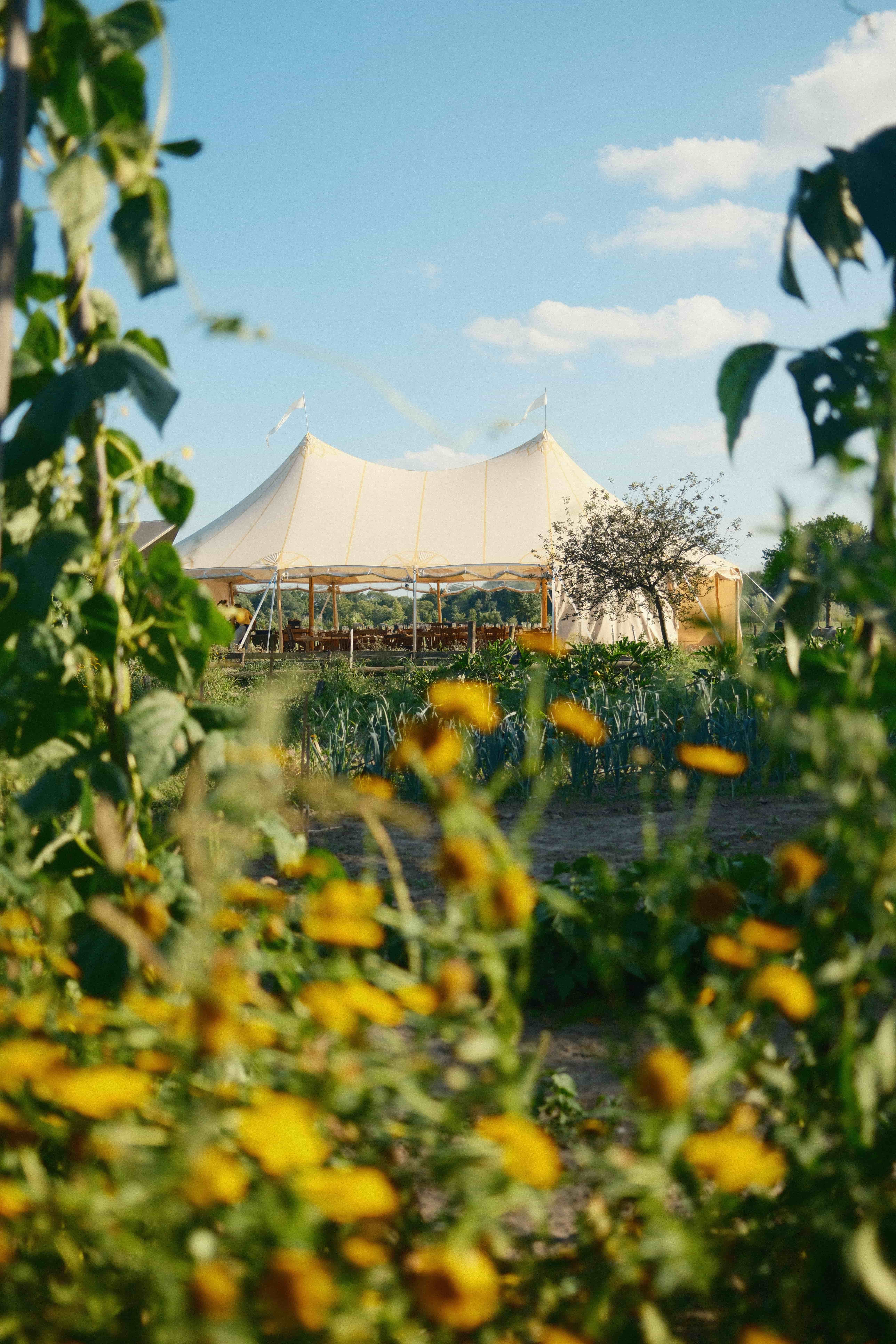
Cape Town’s food scene is set for an interesting addition in 2027, as Dutch culinary project Erloom brings its fire-led dining experience to South Africa for the first time. In partnership with Spier Wine Farm and celebrated South African chef Margot Janse, the eight-week programme will bring together some of the Cape’s leading chefs, farmers, winemakers and food producers around one long table.
Running from 29 January to 21 March 2027, Erloom South Africa will take place at Spier in Stellenbosch. The idea is simple but thoughtful: put the people who grow, source and prepare our food at the centre of the dining experience, with seasonal ingredients and open-fire cooking setting the tone.
A Dutch concept finds a home in the Cape
Founded in 2025 by Gijs Bruurs, Erloom began on an organic farm called ‘t Schop in Hilvarenbeek in the Netherlands. What started as a summer restaurant has since grown into a culinary platform built around the relationship between food, nature and people.
South Africa marks its first international edition, but this isn’t a case of importing an established restaurant concept and simply recreating it here. Erloom South Africa will be shaped by the Cape’s landscape, its seasonal produce and the people who work the land.
Spier Wine Farm was a natural choice for the collaboration. Known for its regenerative farming practices, ecological restoration and commitment to sustainable agriculture, the Stellenbosch farm shares Erloom’s belief that good food begins long before it reaches the kitchen.
Cooking takes place over an open fire, with ingredients moving from the farm and local producers to the plate. Indigenous plants, wild herbs, seasonal vegetables, seafood and traditional preservation methods will all inform the menus.
Putting farmers at the centre of the table
One of the most interesting aspects of Erloom South Africa is its approach to menu planning. Rather than beginning with a chef or a particular style of cooking, each weekend starts with the farmers, makers and producers supplying the ingredients.
Their produce and stories help shape the experience, with two chefs paired together to create a five-course menu using what’s available that season. The idea is to encourage creative exchange between chefs who might not ordinarily work together, while giving guests a better understanding of where their food comes from.
No two weekends will be quite the same, with each collaboration offering a different interpretation of the Cape’s ingredients and culinary traditions.
Margot Janse joins as culinary partner
Helping bring the project together is Margot Janse, one of South Africa’s most celebrated chefs. Born in the Netherlands, Janse moved to Africa in 1989 and became internationally recognised for her work at The Tasting Room at Le Quartier Français in Franschhoek, which featured on the World’s 50 Best Restaurants list year after year.
In 2007, she became Africa’s first Relais & Châteaux Grand Chef. She later founded Isabelo, Feeding Hungry Minds, in 2009, an initiative that provides nutritious meals to schoolchildren in the Franschhoek Valley.
For Erloom South Africa, Janse will connect the project with her network of local chefs, farmers and winemakers, as well as help select participating chefs and community initiatives.
Her involvement also brings an important social dimension to the programme, with the aim of encouraging greater awareness of food production and the people behind the ingredients.
Eight weekends, 16 chefs and one communal table
Each experience will feature two South African chefs working together on a five-course menu, with a wine pairing included in the ticket price. Guests will sit at communal tables close to the open-fire kitchen, creating an informal setting where the cooking, conversations and people behind the food are all part of the experience.
The chef line-up includes some familiar names in South African food:
-
29–31 January: Ivor Jones and Charné Sampson
-
5–7 February: Ollie Swart and Neil Jewell
-
12–14 February: Kobus van der Merwe and Ismail Amos
-
19–21 February: Vusi Ndlovu and Chris Erasmus
-
26–28 February: Amori Burger and Jess van Dyk
-
5–7 March: Caitlin Kennedy and Jason Lilley
-
12–14 March: Nina du Toit and Anouchka Horn
-
19–21 March: Shaun Scrooby and PJ Vadas
With a different pairing and seasonal menu every weekend, the programme offers a reason to return for another meal, particularly for those interested in the people, produce and techniques shaping South African food.
Good food with a purpose
Beyond the dining experience, Erloom South Africa has a community focus. All proceeds after operational costs will go towards three local initiatives, selected respectively by Margot Janse, Spier and Erloom.
Janse has chosen Isabelo, Feeding Hungry Minds, which provides nutritious meals to 1,500 children in the Franschhoek Valley every school day.
Spier has selected Tree-preneurs, part of its Growing for Good programme. The initiative gives people the opportunity to grow indigenous trees from seed and exchange them for essentials such as food and school fees.
Erloom’s chosen beneficiary is Abalimi Bezekhaya, a community organisation established in 1982 that supports people in Cape Town’s townships, including Khayelitsha and Nyanga, with organic food gardening. Its work helps households grow their own vegetables, improve food security and build livelihoods through small-scale urban agriculture.
Together, these initiatives reflect the project’s wider ambition: to make food a way of strengthening relationships between people, the land and their communities.
An invitation to experience food differently
Erloom South Africa brings together several ideas that are increasingly important in the food world: seasonal cooking, regenerative agriculture, local sourcing and a better understanding of the people responsible for producing what we eat.
But it also offers something less complicated. A meal cooked over a fire, a table shared with strangers, a glass of local wine and the opportunity to hear the stories behind what’s on your plate.
For eight weekends, Spier will become a meeting place for people who care about food and where it comes from. And with a new chef pairing and menu each week, there will be plenty to look forward to.
Feature image: Daniela Zondagh