Mortars and pestles have been used for thousands of years in almost every culture and community on the planet (give or take a few). They’ve been used to process grains, make curry pastes, sauces, grind herbs and spices, and even medicines. Mortars and pestles come in a range of sizes and shapes and are also made with different materials. The best type of mortar and pestle you can choose depends wholly on your cooking style.
Before you start doomscrolling for the right one on the interwebs, use our guide to help you first.
Mortar and pestle types
Each culture has its unique mortar and pestle. A unique size, shape, and material for specific tasks like the large wooden mortar and pestle seen in many African cultures (like Ugandan and Nigerian) that is used to pound grains, cereals and roots (like mielies, sorghum and cassava). Or the very specific Japanese mortar and pestle, used to make pastes (like sesame seed pastes). The type that will best suit you will depend on the foods you make in your kitchen.
1. Size
- Large: mortars and pestles that are large, i.e. measure to your calf or waist from the floor, are commonly used to pound large amounts of grains, cereals and roots; medium to fine texture
- Medium: mortars and pestles that measure about 10 to 20 cm in height are considered medium-sized, and are perfect all-rounder tools to have in the kitchen (i.e. for making curry pastes, sauces like pesto, and grinding large amounts of herbs and spices); medium to fine texture
- Small: while these can measure 20 cm or more in height, their circumference or diameter is small – about 5 to 10 cm; these are great for small amounts of herbs and spices, and generally not used for bigger tasks; coarse to medium texture
2. Shape
- Round and deep: the most common shape is a mortar that is round and deep (i.e. the bowl); an all-purpose design that can hold both solids and liquids with ease
- Round and flat: a round, flatter design of the mortar gives you a bigger surface area to work with; commonly used to make pastes from spices, aromatics and herbs
- Oval (deep or flat): similar to flatter mortars, an oval shape gives you more surface area to work with and thus more space to achieve a finer paste
- Flat (various sizes): also known as a grinding stone or flat stone mortar and pestle, this design is commonly used for creating extremely fine pastes from grains, cereals, spices, herbs and other aromatics (usually for curries, soups, porridge or poultices)
3. Materials
- Marble and granite: nonporous and long-lasting, marble and granite mortars and pestles provide a hardy base for grinding hardy ingredients; their smooth surface can help with emulsifications (like pesto), and they are super easy to collect every last drop of what you’ve ground and then easy to wipe clean
- Metal: perfect for grinding spices or harder ingredients into a coarse texture; you can buy brass and stainless steel mortars and pestles
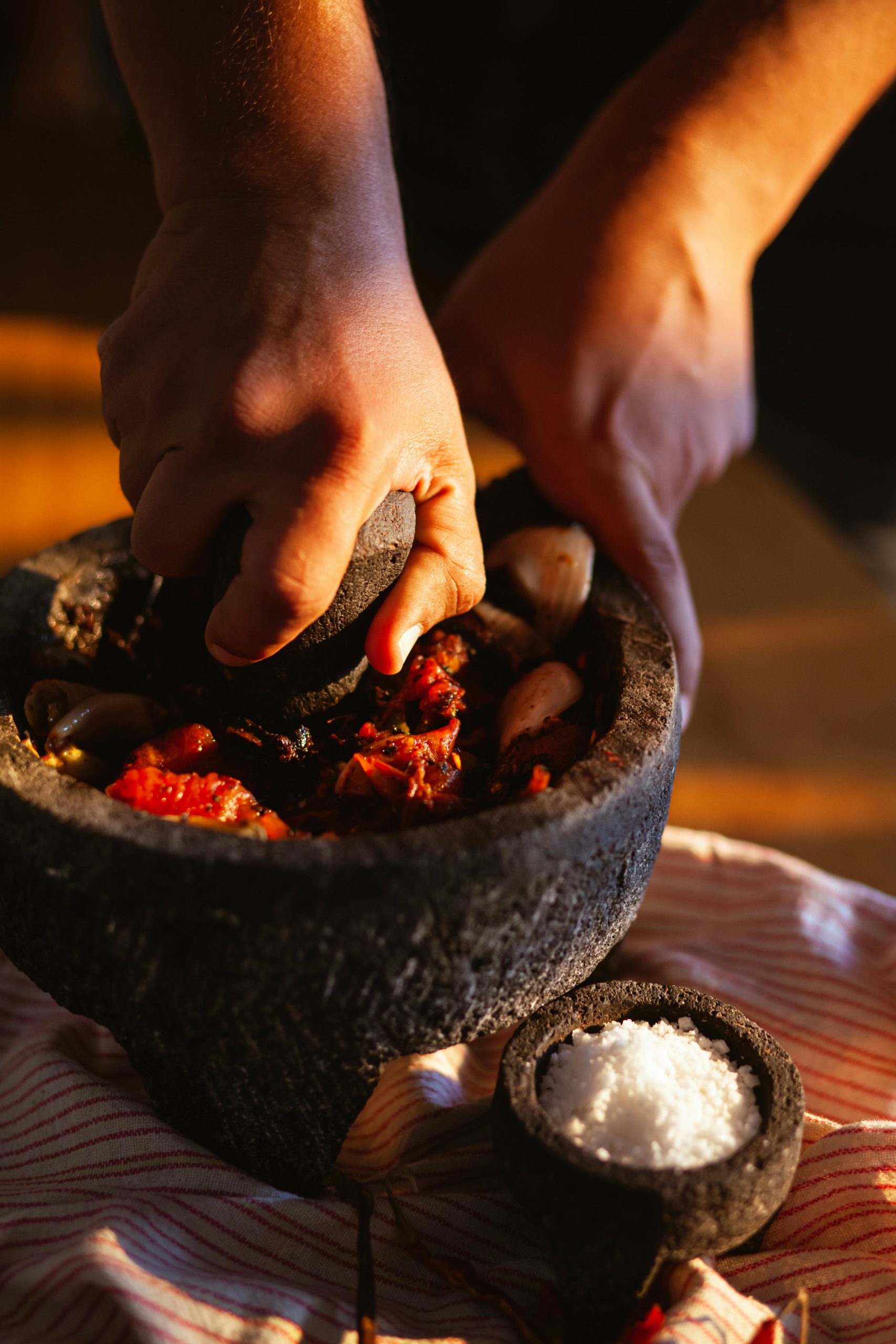
- Molcajete: an ancient Mexican mortar and pestle that has been carved out of a single piece of basalt (volcanic rock); they are porous and textured and great for making pastes and sauces
- Porcelain and ceramic: common types found in most kitchen stores, this material is best for grinding herbs and spices; they are non-porous but are at risk of chipping or cracking if used with too much force
- Glass: yep, glass mortars and pestles are a thing; they’re non-porous and easy to clean, but also at high risk of chipping or cracking when used with large quantities or too much force; glass mortars and pestles are great when working with vibrant ingredients you’d like to show off, or in medicinal/make-up labs
- Agate: this material is quite pricey because agate is a semi-precious stone; best used to achieve fine/smooth pastes made from smaller quantities of herbs and spices
- Wood: this material helps provide a softer grinding surface, great for achieving a smoother or finer texture; they are porous and can harbour bacteria if not cared for properly; best for grinding grains, cereal, spices and herbs, but not for pastes and sauces (their porous nature absorbs oils, odours and flavours)
How to season your mortar and pestle
When you’ve chosen your preferred mortar and pestle, you’re almost set to start using it. The final step is to identify whether the material is porous or not. Materials like agate, marble, granite, metal, glass, porcelain and ceramic aren’t porous and can be used straight away. However, materials like molcajete and wood are porous.
When these are used straight away, without seasoning, bits of food you grind can become stuck inside the surface, leading to off odours and flavours, and the growth of harmful bacteria. The best way to prevent this is to season the mortar and pestle before first use (and every six months to a year, depending on how often you use it).
Step-by-step guide for seasoning a mortar and pestle
- Add a handful or two of uncooked rice (any grain type will do) to the mortar.
- Use the pestle to pound, grind and smear the rice grains around in the mortar.
- Continue until you have a super fine rice dust or powder.
- Remove the rice, wipe the mortar and pestle with a damp cloth.
- Leave to air-dry before using or storing.