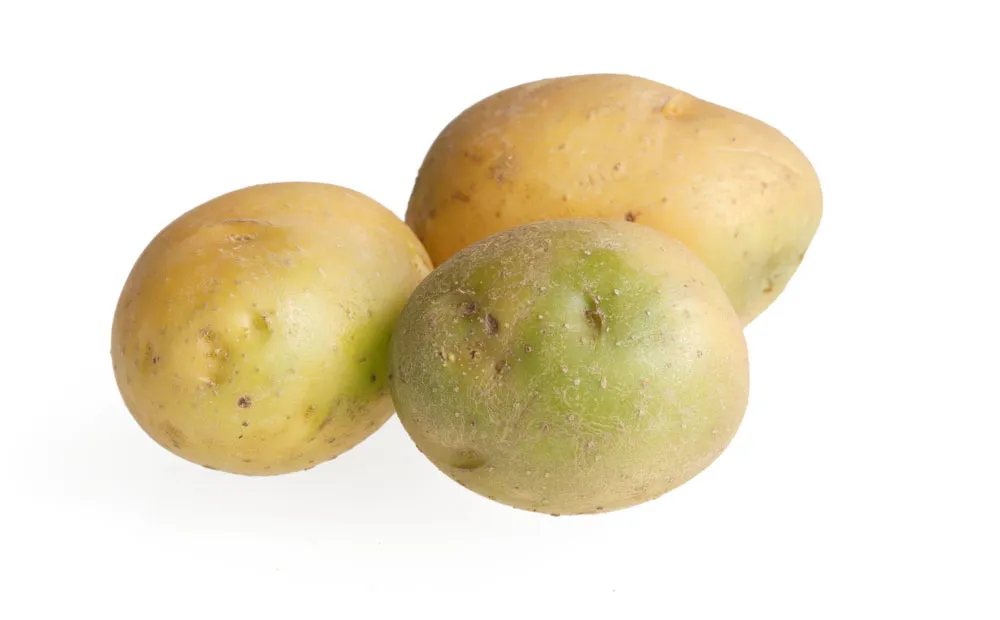
It feels like potatoes last forever in storage – so much so that I’ve had one growing into a new plant! However long you’ve had a bag of potatoes, there will almost always be one or two that have turned green. Does that mean they’re still raw and need time to ‘ripen’, or is it something else? Can you still eat green potatoes?
We’ve found out the real reason they go green and whether they’re safe for dinner.
Why do potatoes turn green?
Potatoes aren’t harvested from the soil, needing to be ripened further – that all happens in the dark over many months. Potatoes are at risk of turning green when they’re cleaned, packaged and sold to you from the store. Whether you store them in a vegetable basket on your windowsill or in an area that gets a lot of sunlight, that’s when the colour change happens.
When potatoes come into contact with direct sunlight, their skin starts to produce chlorophyll – the green pigment we encourage all our green veggies to have (beans, peas, spinach and so on). While chlorophyll is completely harmless and totally natural, it can signify the presence of a harmful toxin called solanine.
Can you still eat green potatoes?
While your potato’s chlorophyll levels aren’t what we’re concerned about, this natural process can signal the root vegetable to produce solanine to help protect itself from insect, bacterial, and fungal damage. When consumed in high doses, green potatoes can be toxic to humans.
While green potatoes would need to be tested to find out the exact amount of chlorophyll versus solanine, they are usually safe to consume after being prepared properly. However, another sign to indicate solanine levels is in cooked potatoes. They will taste very bitter and even cause a burning sensation in your mouth or throat.
Eating large amounts of potatoes with high levels of solanine (i.e. more than 250 mg per kilogram of raw potatoes), you might experience more than a burning sensation in the mouth and throat. The following symptoms can indicate high levels of solanine consumption:
- diarrhea
- vomitting
- abdominal pain
- sweating
- headache
While these symptoms don’t always develop into a more serious condition, it is advised that you check in with your GP.
There are a few ways you can prepare green potatoes to avoid consuming solanine.
- Peel the skin off: Solanine is mainly found in the skins of potatoes. While there might be some amounts left in the flesh, it won’t cause much harm.
- Remove sprouts, eyes and green flesh: These areas contain concentrated levels of solanine, and so removing them should lessen the risk.
- Cook the potatoes: Cooking, boiling, baking and roasting peeled and trimmed green potatoes can help reduce solanine levels. However, if cooked potatoes still taste extremely bitter or give you a burning sensation, then rather throw them out.
To avoid any harmful toxins, ensure you store potatoes in a dry and super dark area.
Also See: Why potatoes sprout and how to stop it
Feature image: britannica.com