While it’s true that microorganisms (bacteria, fungi and viruses) surround us and populate our homes every second of the day, simple cleaning and handwashing remain the best way to keep yourself and your home healthy. However, when overthinking gets the best of you, and you scour the internet (specifically cleantok) for the best routines, only to get more confused about when to clean and sanitise, versus when to clean and disinfect. Don’t even get us started on sterilising.
So, to help clarify and set things straight, we’ve created a simple, easy-to-follow guide you can use at home, at the office, and when you’re out in the wild (aka the airport or on public transport).
1. Cleaning is always necessary
Cleaning involves soap, water and a sponge. It’s the first and most important line of defence against dirt, grime, and several germs in your home. The combination of soapy water and physical scrubbing removes microbes.
It’s also the first step you need to take before even attempting to sanitise or disinfect. To effectively sanitise or disinfect surfaces, they need to be free of crumbs, other dirt, and grime. If not, they won’t be able to penetrate and kill off harmful microorganisms – defeating the point of the whole exercise.
Regular cleaning, focusing on high-touch surfaces (door handles, light switches, cupboards, kitchen counters, appliances, etc.), will keep your home healthy.
2. Disinfecting
When someone in your home has recently (or still is) sick, or you’re working with raw meat in the kitchen, then your second step is to disinfect. Disinfecting destroys, or inactivates, 99.99% (when done correctly) bacteria, fungi, and viruses on surfaces.
We suggest buying an accredited disinfectant solution from your local grocery shop for the best results. However, if you need a disinfectant and can’t get to the store, then a diluted solution of bleach will suffice.
The most important step during disinfecting is what people call the “dwell time”. Disinfectants need to remain on surfaces for at least 10 minutes to effectively kill bacteria and viruses before being wiped down. Always check the disinfectant’s label for precise instructions, ensuring you use the correct solution for each surface. Some solutions should not be used to disinfect surfaces that come into contact with food, or are accessible to children or pets.
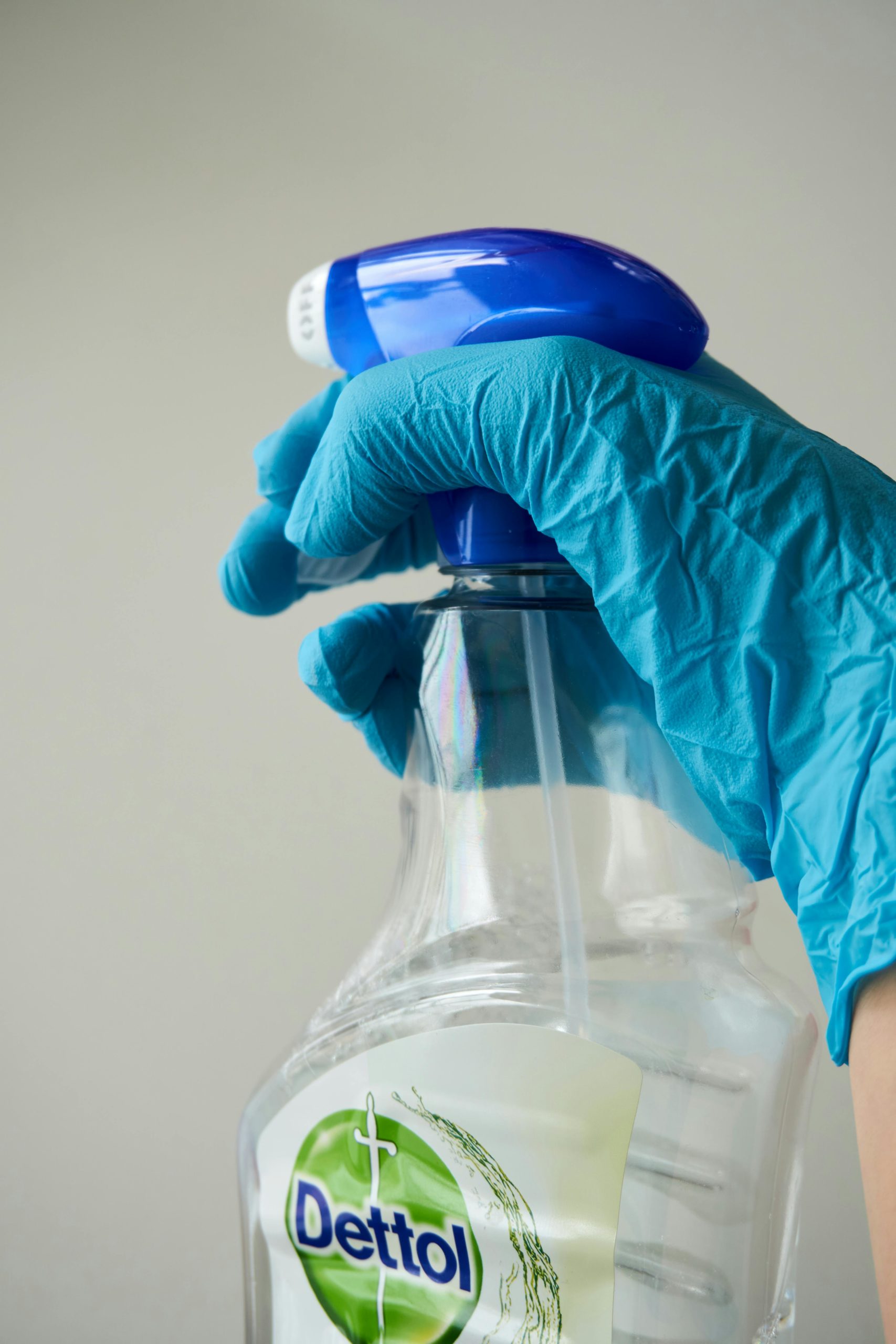
Use gloves to protect your hands, and an apron to protect your clothes (especially if you’re using a bleach solution). Never mix bleach with rubbing alcohol, ammonia, baking powder, vinegar, or other acids, since doing so can produce toxic fumes.
Last resort: Sanitising
If you can’t clean or disinfect, because you’re in an airport or hotel room, or have appliances that don’t mix with cleaning liquids, then sanitising is your next best bet. While sanitising doesn’t kill as many germs as disinfecting, it does reduce the number of harmful microorganisms to a safer level.
The most potent and quick-acting sanitisers are made with rubbing alcohol, or a solution of isopropyl alcohol and water. It’s also less damaging to most household surfaces and irritates your skin less compared to bleach- or ammonium-based disinfectants.
Similar to disinfecting, leave sanitising solutions on surfaces for at least 30 seconds or longer for best results.
What about sterilisation
Best left to the pros, sterilisation kills all microorganisms – the good and the bad. This step is used in medical environments and includes detailed and exact processes. You probably don’t need to worry about this one.
Instead, consistent cleaning, disinfecting and sanitising will keep you and your home safe and healthy.