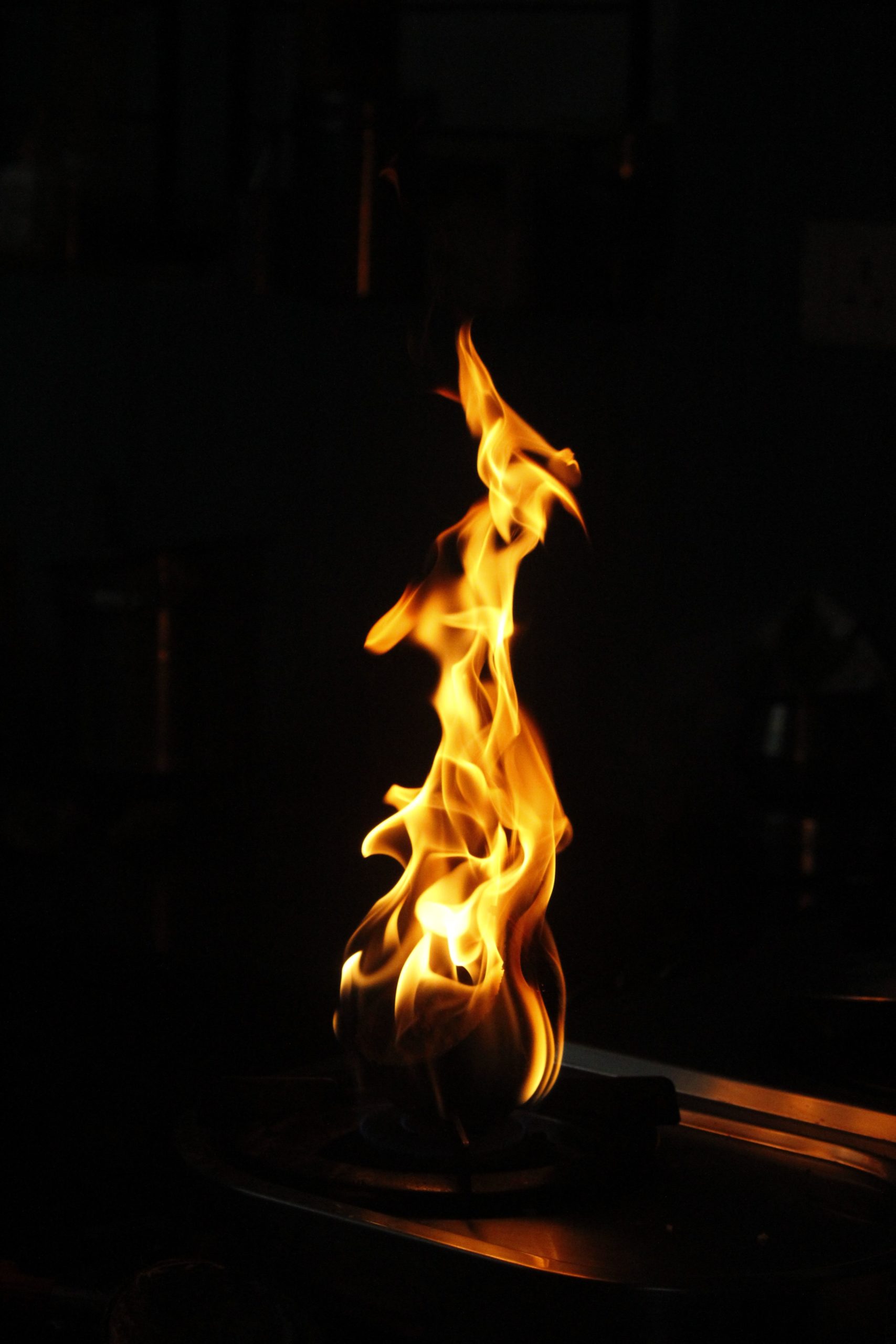
While tasty meals are commonly made in a kitchen, they’re also the most common place for a home fire to start. Whether it was an old appliance, grease buildup, or because some oil got that little bit too hot, there are 5 things in your kitchen that could start a fire – and spread to the rest of your home in mere minutes.
Keep you and your home fire-free by keeping an eye on these 5 kitchen fire hazards.
5 Things in your kitchen that could start a fire
While the obvious things that can and will start a fire in your kitchen are open flames and burnt foods that continue cooking, there are 5 others that might just surprise you.
1. Oven mitts & kitchen towel
While it is aesthetically pleasing (and like everyone does it), keeping oven mitts and/or kitchen towels close to the stove or oven is a serious fire hazard.
I know draping them over the oven door makes your kitchen look that little bit more cosy; once the fabric dries out and gets hot, the continual heat from the stovetop or oven can ignite the fabric. Keep oven mitts and kitchen towels hanging close to an open window to prevent them from getting too hot, and away from the stove.
Moreover, check what you’re wearing while cooking supper. Roll up long sleeves and avoid loose or dangling clothing that could easily make contact with an open flame or hot surface. Keep things rolled and tied up to prevent any disasters.
2. Grease buildup
Grease buildup in and around stovetops, behind ovens, and in the hood is at the highest risk of bursting into flames. Yes, bursting is how it happens.
Grease is the best fire starter, and if your kitchen has even the smallest amount of grease puddling up somewhere close to an open flame or constant heat, then you have a serious problem. The hood over the stove is where most grease buildup commonly occurs, especially in busy home and commercial kitchens. When left uncleaned, any open flame or intense heat will ignite and start a massive grease/oil-based fire that’s tricky to put out.
Simply use warm, soapy water and a sponge to clean stovetops, oven racks and doors, behind the stove, and grease traps in the hood.
3. The microwave
When used incorrectly, microwaves can easily become a fire hazard. Never use metal or aluminium foil while cooking or heating things. If any food burns in the microwave (like that bag of popcorn), clean it and any food debris inside the microwave immediately. If left inside and the microwave is reused, it may ignite and catch fire – potentially spreading throughout the kitchen in mere moments.
4. Overloaded outlets
Whether it’s an extension cord or the main plug, when an electrical circuit is overloaded, it’s at risk of overheating and combusting into flames (we don’t want any electrical fires here, please).
While adapters and extension cords are what help us connect our favourite kitchen appliances in one convenient spot, too many of them are major fire hazards. Keep to the adapters’ limit, and don’t add more adapters or extensions to the previous one and think that helps – it makes it a lot worse. Follow the manufacturer’s instructions for electrical use, update adapters and keep them clean (grease and dust buildups on adapters are fire hazards too).
5. Unattended stove
The most important fire hazard to avoid is leaving the kitchen while something is cooking (especially something greasy).
Sure, while the soup is bubbling away or the chicken is roasting in the oven, we all take a break and watch something on TV or call our mom. It is imperative that you stay in the kitchen when you’re grilling, searing, frying, and deep frying foods. Roasting, boiling, baking and simmering doesn’t need the same closeness, but check in every 5 to 10 minutes to be safe.
Moreover, once you’ve finished cooking, keep in mind that the stoveplate or oven is still hot, and will be for a while (electrical stovetops moreso than gas ones). Keep the area clear of any fabric (oven mitts and kitchen towels), and any other utensils and foodstuffs. Ensure the stoveplates are switched off (you can even switch the stove off at the wall to be extra cautious) before you leave. And always keep an eye on the kids during and after cooking – they might unknowingly leave an oven mitt on the hot stoveplate or touch it and burn themselves.