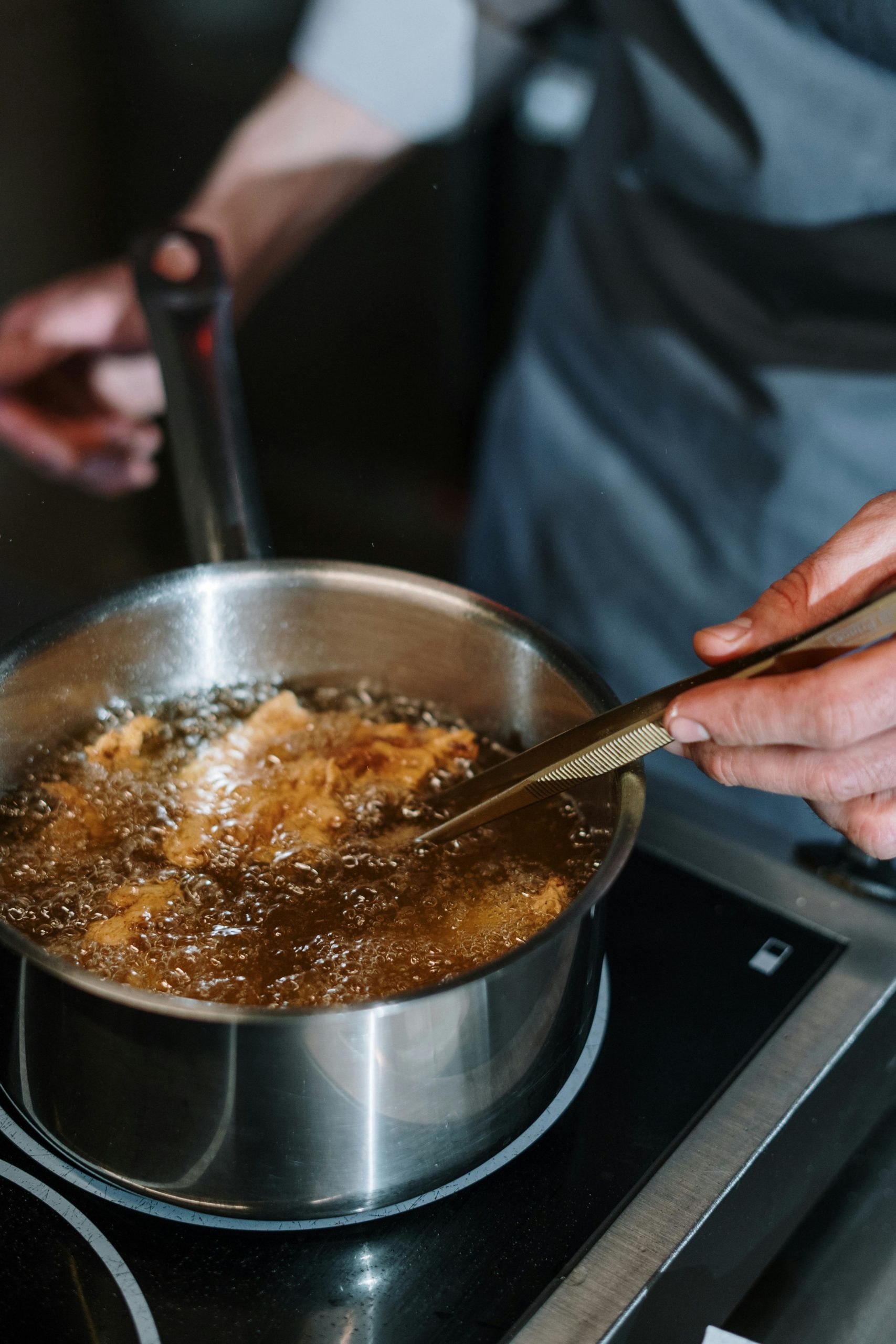
As much as we love deep-frying dhaltjies, pumpkin fritters, and, of course, vetkoek, disposing of the used oil can get a little tricky. There are a ton of videos online on how to clarify used oil to make it last longer, and somewhat confusing advice on whether to drain it or trash it (there’s even talk about flushing used oil, too).
We’re here to tell you how many times you can reuse cooking oil, when it’s time to toss it, and how to do so safely.
How many times can you reuse oil for frying?
The most commonly asked question when it comes to shallow and deep-frying is how many times you can reuse the oil. And in this economy, we think the answer should at least make up for the price of cooking oil in the first place, right?
- Can you reuse oil? Yes! Frying oil (like sunflower or other seed oils) can be reused several times before you need to dispose of it.
- Exactly how many times can you reuse oil for shallow frying? If you’ve strained and stored heated oil and want to shallow fry foods without heavy coatings (like crumbs or batter), then you can reuse the oil 4 to 8 times.
- Is this number the same for deep-frying? No. Because the oil is heated to much higher temperatures for deep-frying, and the foods you usually deep-fry have heavy coatings (like crumbs and batter), you should only reuse oil for deep-frying 2 to 3 times.
When you need to dispose of oil
Always keep an eye out for these signs. If your cooking oil has any one of these, it’s time to dispose of it.
- Bad smell/rancid taste: If the oil smells or tastes fishy, greasy, musty or rancid, it’s time to dispose of it.
- Change in colour: If the oil has turned from a golden to a dark brown or black colour, get rid of it.
- Cloudiness or foamy: If you notice the oil is thicker than usual, looks very cloudy or foams when heated, it needs to be disposed of.
- Smokes too early: When heating the oil, if you notice it starts smoking at a much lower temperature than it used to, it’s time to get rid of it.
How to dispose of used cooking oil safely
Well, first things first: never throw hot or cold oil down the drain (and that goes for the loo, too)! The oil will eventually start solidifying and start collecting other bits of gunk. This may easily turn into a massive blockage in the sewer system, causing a whole lot of damage for you and your community.
Here are your options:
- Solidify it, then dispose: If you’re working with hydrogenised oils or animal fats (like margarine or duck fat), let it cool down and solidify before scraping it into a bag and throwing it in the trash.
- Cool it down: When working with the usual cooking oils (like sunflower oil), you first need to let them cool down completely. Hot oil will melt plastics and other materials that bins are usually made from.
- Transfer it to a closed container: Once completely cooled, pour the oil into a closed container like an old ice cream tub or other plastic container with a sealable lid. Some people like placing this into a plastic bag and tying it tight, just to ensure that if it does leak, it won’t cause a mess in their bin.
- Trash it: Once in a sealed container, you can dispose of it in your bin.
Also See: Understanding your cooking oils, smoking points and how to choose the right oil
Understanding your cooking oils, smoking points and how to choose the right oil