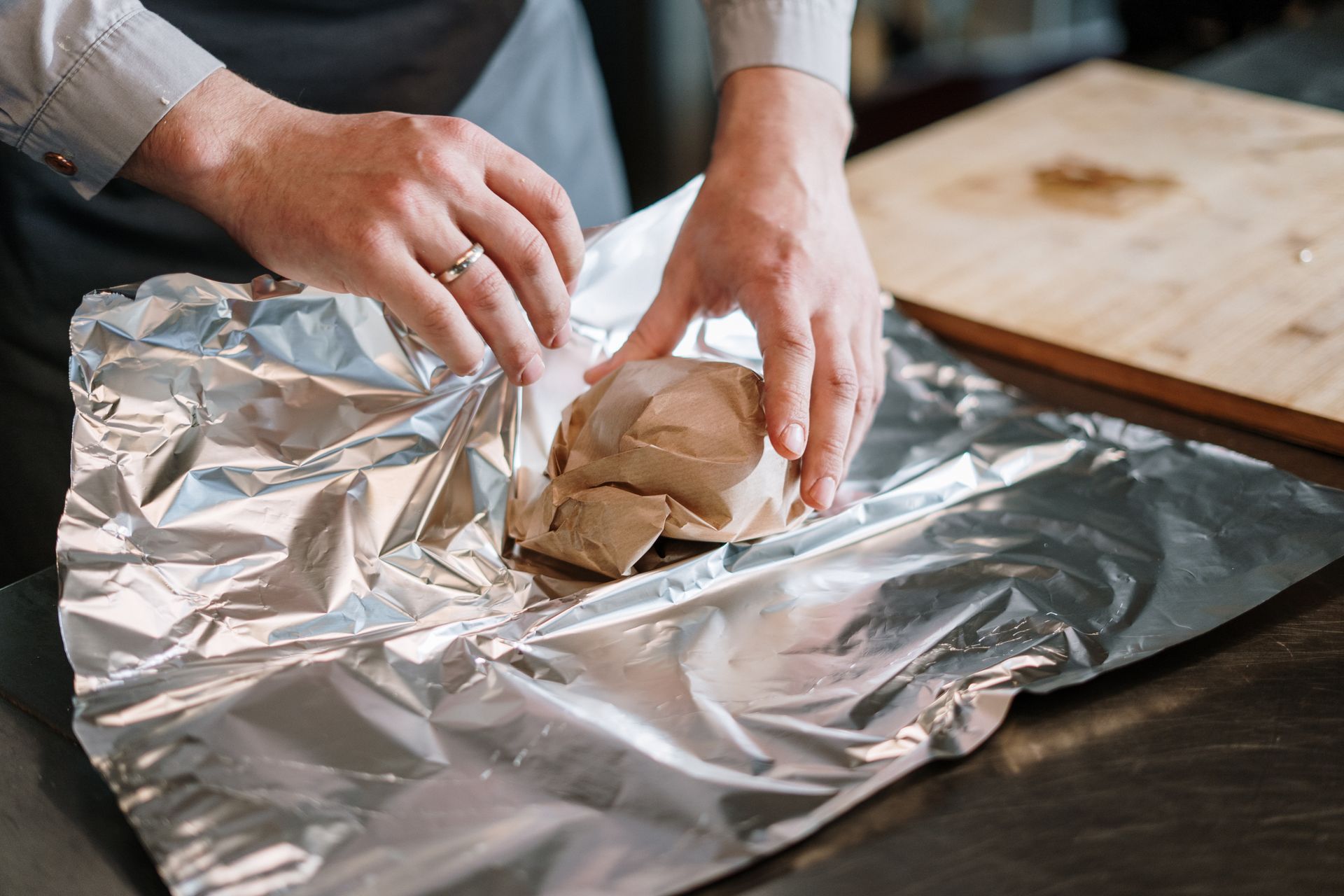
Aluminium foil is one of those kitchen staples that rarely gets a second thought. From covering leftovers and wrapping sandwiches to lining baking trays and keeping food warm, it has plenty of uses. However, it isn’t suitable for every type of food, particularly when certain ingredients are involved.
Foods that are highly acidic or salty can react with aluminium, potentially causing the metal to transfer into the food and affecting its taste, appearance and quality. There are also a few food-storage habits worth reconsidering, especially when it comes to leftovers and food safety.
The good news is that you don’t need to throw away your roll of foil. You just need to know when to use it, when to avoid it and which alternatives work better.
Foods you should avoid wrapping in aluminium foil
1. Tomatoes and tomato-based dishes
Examples: Fresh tomatoes, tomato slices, tomato pasta sauce and tomato-based leftovers.
Tomatoes are naturally acidic, making them one of the foods best kept away from direct contact with aluminium foil. The acid can react with the metal, allowing aluminium to transfer into the food, particularly when it is stored or heated for extended periods.
This applies to more than fresh tomato slices. Leftover pasta with tomato sauce, homemade tomato chutney and dishes such as lasagne with a tomato-based sauce are also better stored in glass or food-safe plastic containers.
Use instead: An airtight glass container or a food-safe plastic container with a secure lid.
2. Citrus fruits
Examples: Lemons, limes, oranges, grapefruit and dishes containing citrus juice.
Citrus fruits contain citric acid, which can react with aluminium. Wrapping cut lemons or oranges in foil, or covering food with a generous amount of lemon juice before wrapping it, is therefore not ideal.
The same applies to foods marinated in lemon or lime juice. If you’re preparing fish or chicken with a citrus-based marinade, avoid using aluminium foil as the direct storage material.
Use instead: Glass or food-safe plastic containers. For cut citrus fruit, a reusable food-storage container works particularly well.
3. Pineapple and other acidic fruits
Examples: Pineapple, rhubarb, sliced apples and other acidic fruit preparations.
Fresh fruit might seem harmless to wrap in foil, but some varieties are naturally acidic enough to react with aluminium. Pineapple and rhubarb are particularly worth keeping in mind.
Sliced apples are also included in the German Federal Institute for Risk Assessment’s (BfR) guidance on foods that should not come into contact with aluminium foil.
The reaction can affect the fruit’s flavour and appearance, while increasing the amount of aluminium transferred into it. This is particularly relevant when fruit is wrapped for longer periods rather than briefly covered.
Use instead: A sealed food-storage container or a reusable silicone food bag.
4. Pickles and vinegar-based foods
Examples: Gherkins, pickled onions, sauerkraut and vinegar-based salads.
Pickled foods are another category to keep away from aluminium foil. Vinegar contains acetic acid, and the acidic liquid surrounding pickled vegetables can react with the metal.
This includes leftover pickles from a braai, homemade pickled onions and sauerkraut. Even if the vegetables themselves are not particularly acidic, the pickling liquid is enough to make direct contact with foil a poor storage choice.
Use instead: Glass jars or airtight containers. These are also useful for keeping pickled foods properly contained in the fridge.
5. Salty foods and cured meats
Examples: Salted fish, bacon, ham, cured meats and heavily salted leftovers.
It isn’t only acidity that causes problems. Salt can also encourage aluminium to dissolve and transfer into food.
According to the BfR, foods such as salted herring and other salty or marinated fish should not be stored in direct contact with aluminium foil. The same precaution applies to heavily salted foods and cured meats.
This is worth remembering when packing a charcuterie platter, storing leftover bacon or wrapping up salted meat after a meal.
Use instead: An airtight glass or food-safe plastic container. Baking paper can also be used as a temporary food separator, provided the food is then stored appropriately.
6. Marinated meat and fish
Examples: Lemon-and-herb chicken, vinegar-marinated steak and fish with citrus-based marinades.
Marinated meat deserves special attention because it often combines two ingredients that can react with aluminium: salt and acid.
A marinade containing lemon juice, vinegar, wine or other acidic ingredients, alongside salt, can encourage aluminium transfer when left in contact with foil.
This doesn’t mean you need to abandon foil when cooking meat. Rather, avoid using it to store raw marinated meat for extended periods or to cover acidic marinades directly.
Use instead: A glass or food-safe plastic container for marinating and refrigerating meat. If you need to cover a baking dish, use a suitable alternative that does not come into direct contact with the food.
7. Cheese with a high salt content
Examples: Feta, brined cheese and other salty cheeses.
Cheese is often wrapped in foil to keep it fresh, but certain varieties are better stored differently. Feta, for example, is typically kept in a salty brine, which can react with aluminium.
The BfR specifically includes cheese among the examples of foods that should not be stored in direct contact with aluminium foil.
This doesn’t mean every type of cheese is unsuitable for foil. The concern is particularly relevant to salty varieties and those stored in brine.
Use instead: A sealed container, ideally one suitable for storing cheese and its brine.
What should you use instead of aluminium foil?
You don’t need to stop using aluminium foil altogether. The trick is choosing the right storage material for the food you’re preparing.
| Alternative | Best used for |
|---|---|
| Glass containers | Acidic foods, sauces, leftovers and marinated dishes |
| Food-safe plastic containers | Everyday leftovers, fruit and sandwiches |
| Stainless steel containers | Salty foods and meal preparation |
| Silicone food bags | Cut fruit, vegetables and snacks |
| Baking paper | Separating food or lining baking trays, where suitable |
Glass is particularly useful because it is non-reactive and can be used for a wide range of foods. It is also a practical option for storing leftovers and reheating meals, provided the container is designed for the intended use.
ALSO SEE: Penne with tuna, olives and tomato sauce
Feature image: Pexels