While there are a lot of cleaning products and techniques out there claiming to be the best, most of them are myths and leave you out of pocket and with dirtier spaces than when you started. We’ve tried, tested and scoured the internet for 10 cleaning myths you should stop believing asap. Don’t worry, we won’t leave you in the lurch; we’ve added what you should be doing instead.
10 cleaning myths you should stop believing
1. Vinegar and bicarbonate of soda are a power combo
While vinegar and bicarb have their strong points when it comes to cleaning tasks, they work at their best individually – not together. Vinegar is an acid and bicarb is an alkaline/base. Mixing them cancels each other out, and you’ll be left with a neutral and fizzy puddle of salt water. While the bubbles look impressive, they don’t clean as effectively.
Do this instead: Use them individually. Vinegar can help dissolve mild hard water stain deposits, soap scum, and calcium buildup. Use it to clean glass surfaces and the sink. Bicarb is a great mild abrasive and also helps cut through grease and oil. But they both have their limits (and can damage natural surfaces like stone). Test an area first to avoid damage, and use a stronger cleaning product for more serious messes.
2. Disinfect, wipe, and it’s clean
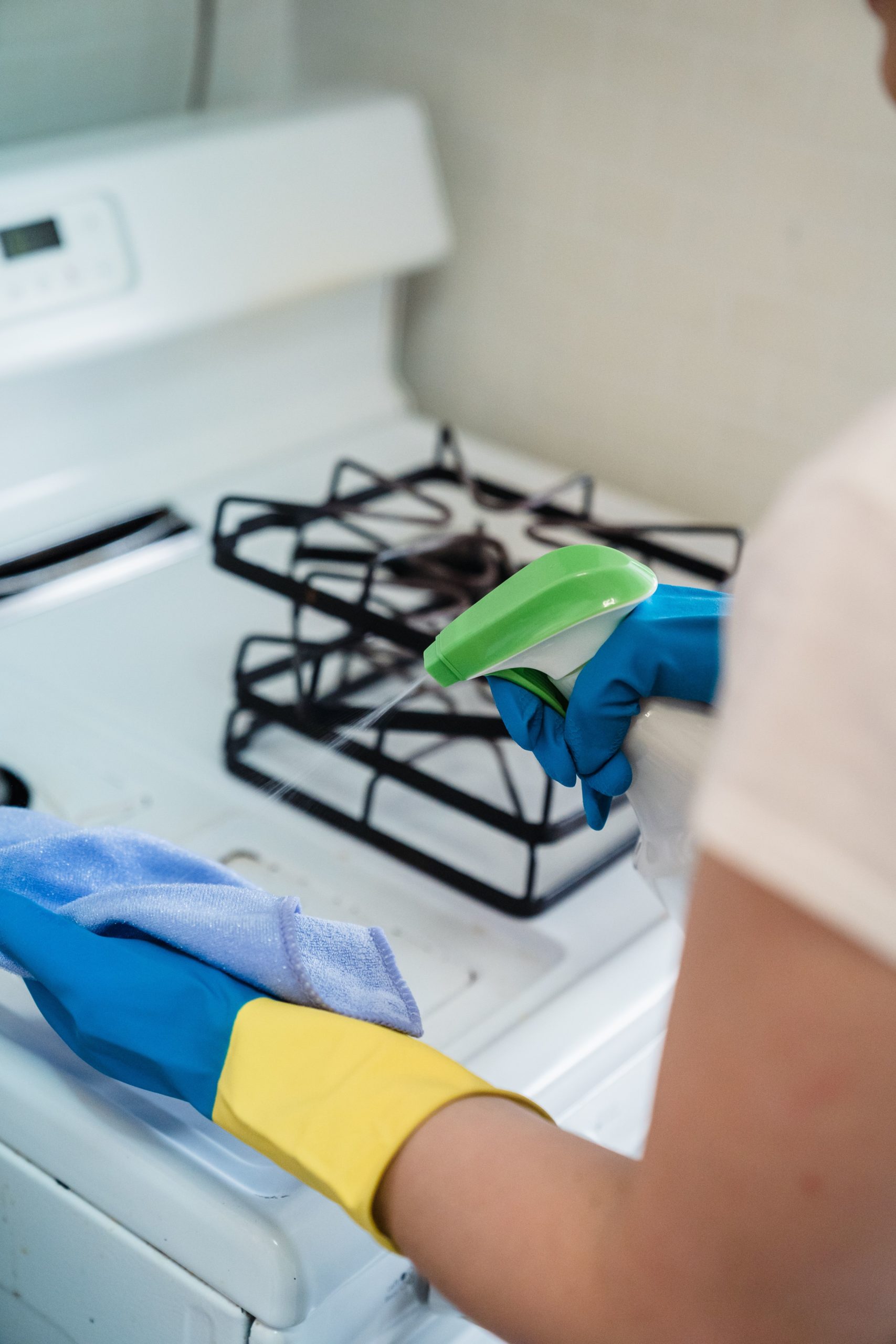
Disinfectants don’t work instantly. They need time to do their job, and wiping them away just after spraying them onto a surface is very counterintuitive. Not to mention that disinfectant needs to be used after an initial clean – it’s not an all-purpose cleaner. Disinfectant spray should be the last step.
Do this instead: Make sure the surface you’re spraying has been cleaned first, then spray the disinfectant onto the surface. Leave it for at least 30 seconds (check the product label for exact times) and then wipe it down with a clean cloth.
3. More product = cleaner
I am definitely guilty of this. A little extra Sunlight here, more Handy Andy there: it all helps clean better, right? Unfortunately, this actually leads to a dirtier kitchen. Too much product leaves residue that will trap dirt, dull surfaces and lead to more cleaning. Not to mention how expensive this practise is.
Do this instead: Read the product label to find out how much you should actually be using. One dishwashing tablet is enough for a full load. One teaspoon of Sunlight soap does the trick. Limiting yourself will help you save money, time and actually do a better job.
4. Natural or DIY cleaners are always better
While consumers have been shying away from using harsh chemicals or highly processed cleaning products, not all DIY cleaners are better. Don’t get me wrong – I still use bicarb and vinegar to lift stains and keep my drains clean – but not all cleaning tasks will benefit from DIY or natural products.
Do this instead: Suss out how intensely you need to clean. Is your stovetop mildly dirty or heavily greasy? Does your sink drain smell just a tad, or are you actually dealing with a major blocked drain? Natural or DIY cleaners are great for mild to medium situations, but won’t do the trick with majorly soiled areas (use the expertly formulated products for these).
5. Sponges and kitchen towels are nasty
Shame, these guys have a bit of a bad rep. While sponges and kitchen towels can trap and harbour nasty bacteria, it all depends on what you’re cleaning, how long you’re using said item, how often you clean said item, and when you decide to replace them.
Do this instead: Ensure your sponge and kitchen towels dry completely before next use. Run your sponge through the dishwasher or microwave them damp for 60 seconds to kill any bacteria. Replace your sponge at least every two weeks. Machine wash kitchen towels at least once a week (or more if you use them to clean and dry kitchen items daily). Dry them in direct sunlight to disinfect them. If they feel dirty even after you’ve machine washed them, then it’s time for a new set.
6. The foamier the cleaner
We’ve all seen cleaning content where people use a lot of foamy products. While it may make you feel like it’s working harder than products that don’t foam at all, it’s all for the gram. Real cleaning happens with the right contact times and enough effective agitation. The more foam, the more residue is left behind, the reduced contact with the soiled surface and the more rinsing needs to happen.
Do this instead: Let the process and technique do the heavy lifting. Use appropriate cleaning products for each cleaning task. Agitate the product and leave it to sit for at least 30 seconds before wiping away.
7. The hotter, the better
While heat can help loosen, lift and remove fats and oils, too much heat can backfire. Some cleaning enzymes and disinfectants lose effectiveness at higher temperatures, and products with fast-evaporating solvents can become redundant with higher temperatures. Not to mention how excessive heat can soften coatings, cause whitening or haze, and loosen adhesives on sensitive floors and fixtures.
Do this instead: Use warm water. Check product labels for specific instructions. Ensure you’re focusing on contact time and type of agitation, more than whether your water is piping hot.
8. Bleach cleans all
Bleach is actually an oxidiser and disinfectant, not really a cleaner. If you’re using bleach to clean heavily soiled countertops, stovetops and ovens, you’ll still be left with dirt, grime and bacteria. Bleach needs to be used like a disinfectant to work.
Do this instead: Always clean an area before disinfecting. Ensure bleach sits on the surface for at least 30 seconds before rinsing off. Use bleach as a last step, not the one you start with.
9. You don’t have to rinse after cleaning
While this would be a luxury, not rinsing after cleaning will leave surfaces and areas much dirtier than when you started. Leftover cleaning residue will form a thin film. This film attracts new soil, causes streaks and can render disinfectants useless. Repeat not rinsing, and you’ll end up with a super tacky surface that is almost always dirty and grimey.
Do this instead: Avoid “spray and wipe” techniques. Always remove any excess cleaning products (even if you can’t see them) by rinsing with clean water or using a clean, damp cloth.
10. Mixing products saves time
I’ve seen countless cleaning videos where two to four cleaning products are mixed. While it might feel like this power combo will end up cleaning things better, the only thing that will happen is less effective cleaning and dangerous chemical reactions. Life-threatening is definitely not on the cleaning tasks list.
Do this instead: Use one (max two) product at a time. Dishwashing detergent and vinegar? Sure. Sunlight and bicarb? No problem. Oven cleaner and Jik? Chlorine gas that can kill. Skip the damage, keep your airways clear, and spend an extra 10 minutes cleaning rather than end up in a hospital bed.
Also See: Natural cleaners vs commercial cleaners: When to use each and avoid damage
Natural cleaners vs commercial cleaners: When to use each and avoid damage