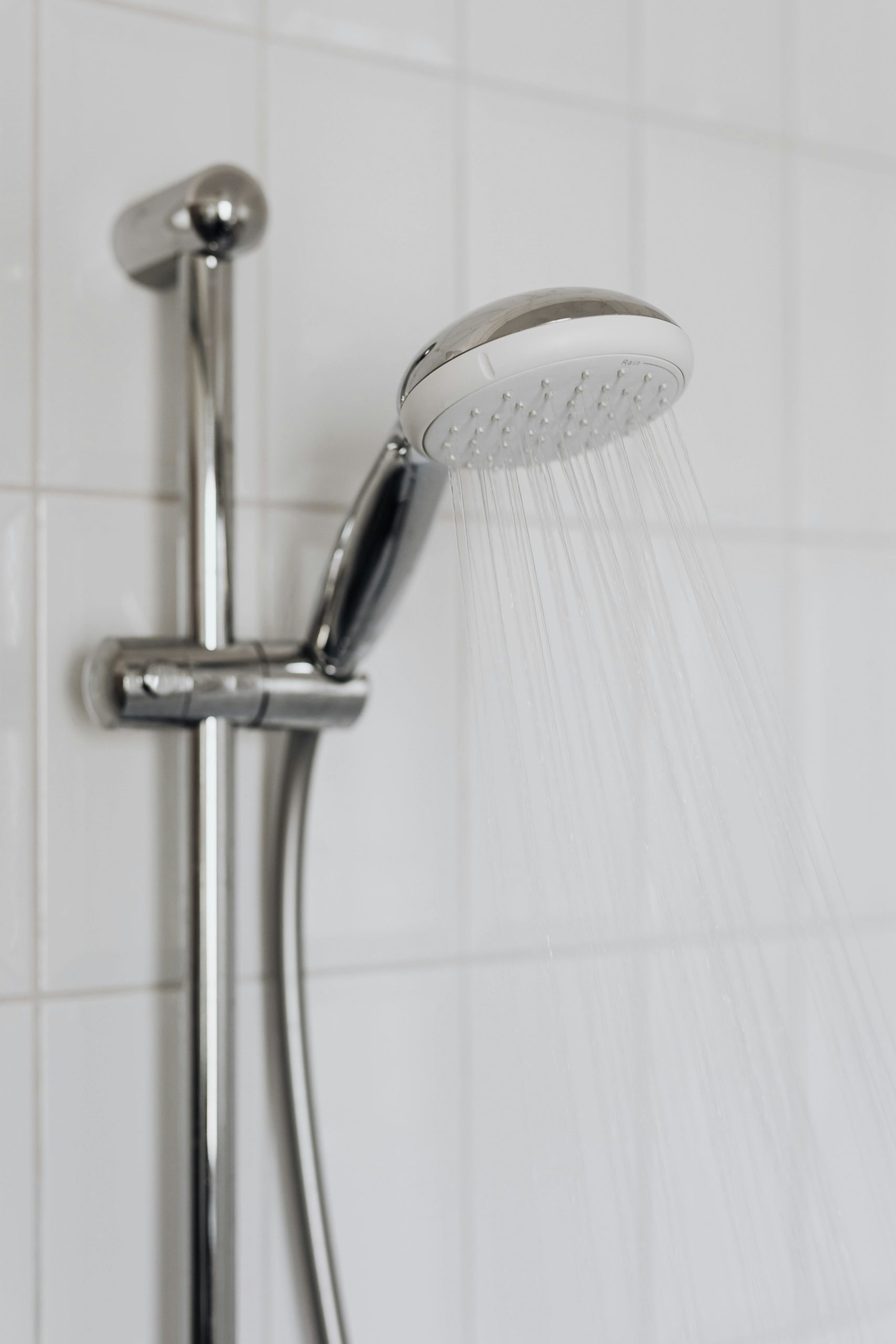
Our shower heads can sometimes become clogged with debris and limescale deposits over time – especially if you live in an area with hard water or after your municipality’s water system maintenance. Luckily, there is an easy fix to get your shower back in optimal working order: descaling. We guide you step by step on how to use items you probably already have in your cupboard to unclog and descale your shower head in 30 minutes!
How to descale your shower head
There are three methods for descaling a shower head, which we will discuss below. Here’s what you’ll need before choosing a method:
- Pliers and a microfibre cloth (to help you twist off the shower head, use a cloth underneath the pliers to prevent harm to the shower head)
- Large freezer bag
- String or rubber band
- Method 1: Bicarbonate of soda
- Method 2: Table or distilled vinegar
- Method 3: Citric acid
Method 1: Bicarbonate of soda
- Unscrew the shower head (use pliers and a cloth if you need to).
- Carefully remove the washer and rinse under tap water. Replace it.
- Place the shower head in the freezer bag. Fill with warm water – enough to submerge the shower head completely.
- In a small bowl, pour 1 single-use packet of bicarbonate of soda (or 2 tablespoons). Add 2 tablespoons of warm water to the bowl and mix thoroughly.
- Pour this bicarb solution into the freezer bag.
- Tie the freezer bag closed with a string or rubber band.
- Shake/swirl the water around to coat the shower head.
- Leave to soak for a few hours, or overnight for stubborn limescale deposits.
- Remove the shower head from the bag and rinse with warm water, flushing out all the nozzles and checking if all debris and deposits have been removed.
- Reattach the shower head.
Method 2: Vinegar
- Remove the shower head and rinse out the washer.
- Place in a large freezer bag and submerge with vinegar.
- Close the bag tightly around the handle of the shower head with a string or a rubber band.
- Swirl the vinegar around and leave to soak for about 30 minutes, or for 2 hours for more stubborn deposits.
- Remove the shower head and rinse in warm water, checking that the water runs freely through all the nozzles.
- Reattach the shower head.
Method 3: Citric acid
Citric acid is a faster method for descaling your shower head, but it’s pretty corrosive. Use gloves and follow the package instructions carefully so as not to harm your skin or damage your shower head.
- Unscrew the shower head and rinse out the washer.
- Place in a large freezer bag and submerge with water.
- In a small bowl filled with about 1/2 cup of water, dissolve a level teaspoon of citric acid. Pour this mixture into the freezer bag.
- Close the bag by securing it to the shower handle with a string or a rubber band. Swirl the contents to ensure it is distributed evenly.
- Leave to soak for 15 minutes, or 45 minutes for stubborn deposits.
- Immediately remove and rinse the shower head with warm water, checking if the water passes through all the nozzles.
- Reattach the shower head.
Top tips
- Use a toothpick to clear out stubborn limescale deposits or debris from nozzles
- Clear out the shower head washer regularly (especially after water system maintenance) to prolong the need for descaling
- Use bathroom cleaner to sanitise and clean marks after reattaching
- Descale your shower head at least once every month or every two months if you live in a hard water area