Before buying new cans of paint, consider sprucing up dull-looking paint without spending a single cent.
If you’ve noticed your painted walls looking duller than usual, it’s probably time for some TLC. And repainting shouldn’t be your first option. The good news is you can revive your painted walls with tools you use for daily cleaning tasks. Follow our simple guide on how to spruce up dull-looking paint.
Why do your walls look dull?
The main reason for dull walls is a buildup of dust and grime. Not necessarily old age. Our walls go through a lot without us really noticing: cooking fumes, an “everything shower” humidity, smoking, incense, and dust buildup from open windows and August winds.
All this stuff gradually builds up, and suddenly your walls look dull and in need of a repaint. But before you do, there are two things you can try first: cleaning them and, if that doesn’t do the trick, a touch-up coat.
How to spruce up dull-looking paint
Method 1: Cleaning
Did you know that (ontop of the other million-and-one cleaning tasks), we should dust and clean our walls regularly? Professional cleaners recommend we dust walls at least once a month, and then clean them four times a year – after each seasonal change. And don’t worry, you won’t need anything special. In fact, you probably have all the tools and cleaning products stocked in your cupboards.
Here’s what you’ll need:
- Two microfibre cloths (one for dusting and one for cleaning)
- Swiffer or step ladder
- Two buckets filled with warm water (one for rinsing and one filled with dish soap)
- Liquid dish soap (Sunlight is perfect)
- Bicarbonate of soda (for spot cleaning stubborn scuff marks)
Steps
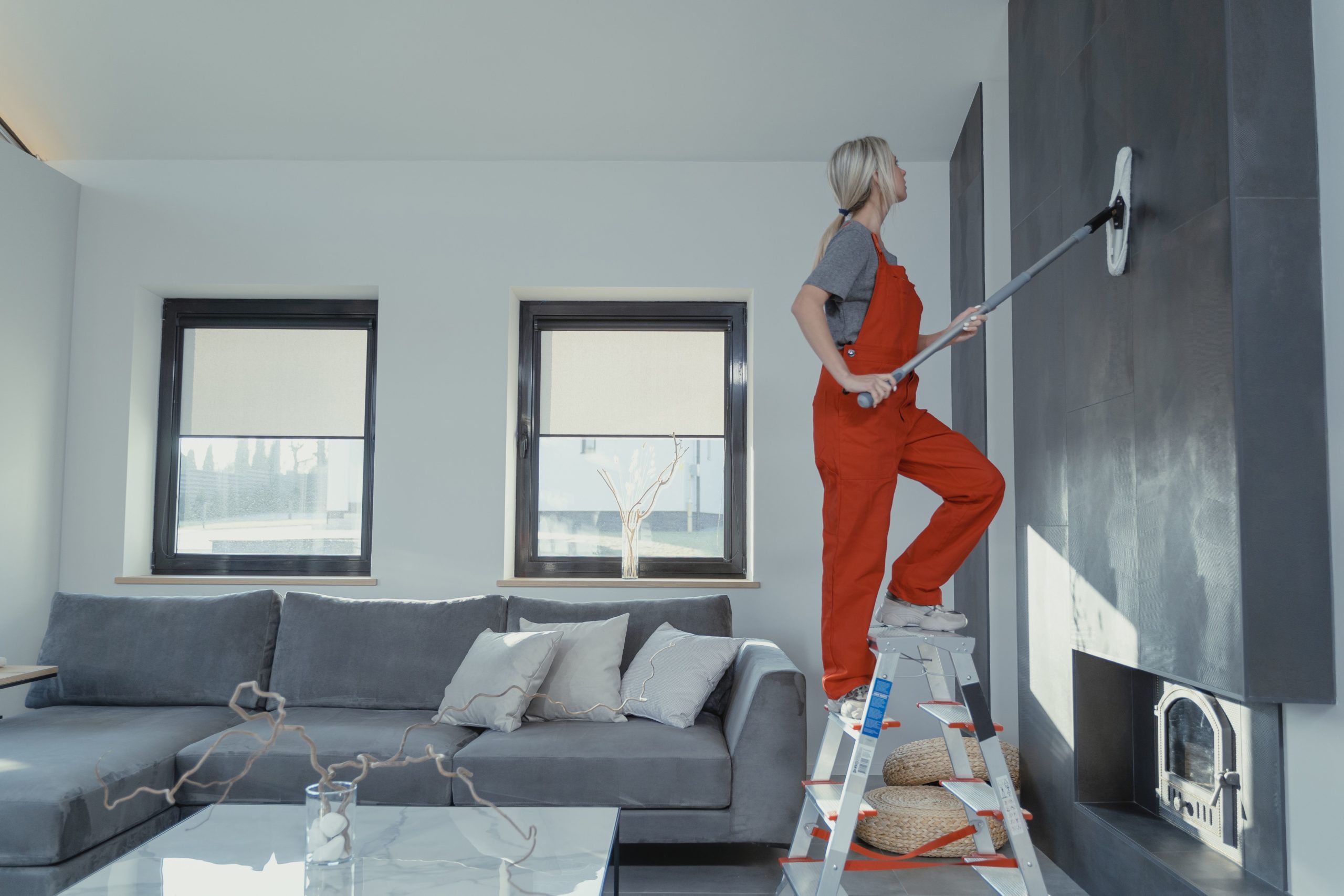
- Use a clean microfibre cloth clicked into a Swiffer (or something similar) to dust your walls, working your way from the top to the bottom. A step ladder and your hand with the microfibre cloth work just as well.
- Add a couple of drops of liquid dish soap to one of the buckets filled with warm water. Use the second microfibre cloth for cleaning.
- Dampen the cloth with soapy water and wipe the dusted wall from top to bottom. Keep the moisture level of the cloth slightly wet or damp, so as not to damage the paint layer.
- Use the second bucket with plain warm water to rinse the cloth as it becomes dirty. Dampen again with soapy water before wiping.
- Once cleaned, use a clean and damp cloth to wipe away any excess soapy residue before moving on to another section.
- Leave to air dry – it’s always a good idea to have windows and doors open to provide some necessary airflow.
- If there are any stubborn scuff marks, use bicarbonate of soda to spot treat. Dip the microfibre cloth in some bicarb and lightly rub the area. The gentle abrasion should do the trick.
Method 2: Clear coat
If, after dusting and cleaning, your walls still look dull, you can apply a thin layer of clear wall paint. This coat offers additional protection from everyday wear, scratches and fading from the sun.
Clear coats with a sheen, or glossy finish, will brighten a space and hide fingerprints, scratches, and other marks easily.
Matte or luxe finishes create a luxurious, soft feel to a space. But they don’t hide fingerprints, scratches and other marks as well as glossy finishes.
Tips for maintaining painted walls between cleans
Many professional cleaners will tell you that the best solution for preventing painted walls from becoming dull is being proactive.
- Reduce the amount of open flames (from candles, incense, fireplaces and smoking) in a room because the soot settles quickly on walls, thickening the dust layer that develops over time.
- Spot-clean walls as soon as you see any marks, scuffs, splatters, smudges or fingerprints. A spot is easier to clean than a whole wall.
- Draw shades, blinds, or light curtains closed in front of windows and doors to minimise harsh sunlight/UV rays from causing the paint to fade faster. Early morning and late afternoon sun are the best times to practice this.
- Humidity causes more buildup and fading. Ensure kitchens and bathrooms are well ventilated. Keep windows open for airflow, or consider installing fans and vents to help keep humidity levels low.
- Never use harsh or abrasive cleaning products or tools for cleaning your painted walls.