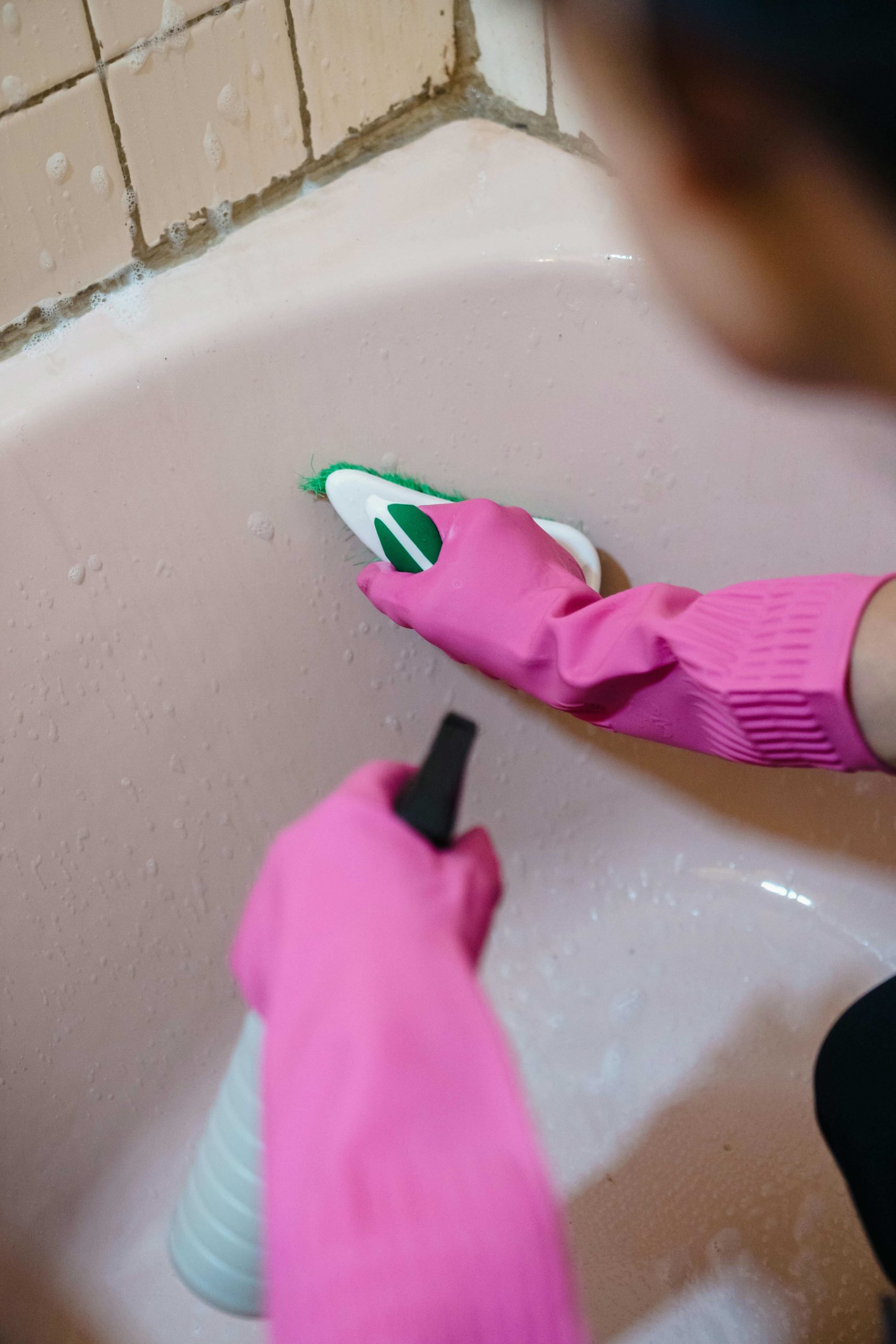
The best thing at the end (or even start) of a busy day is a nice hot, bubbly bath. But over time, and after many a busy day, soap scum, hard water deposits, rust stains and even mildew can accumulate on the bath’s surface. This can lead to unwanted discoloured areas that prove difficult to remove.
But luckily, with the right cleaning products (you no doubt already have stocked in your cupboards), you can easily lift these stubborn stains and return your bath to its former glory (and enjoy pristine, calming soaks).
Use our guide below to discover how to remove stubborn bath stains.
How to remove stubborn bath stains
Not all stains are created equal – different types require different treatments and cleaning methods. However, not all bathtub materials can be treated in the same way.
Acrylic and fibreglass baths scratch easily – so ensure any scrubbing happens with a soft-bristled brush. Avoid vinegar and acid-based cleaners on stone or speciality finished baths, as the acid may etch and dull the surface.
1. Hard water stains
After a while of regular use, and if you live in an area with hard water, your bath and all its accessories will succumb to hard water deposits. The best way to remove hard water stains is to buy an effective commercial product, or, more naturally and sustainably, to use white vinegar. Vinegar is a natural germ killer, and the acid helps break down the hard water minerals. Spray the vinegar (or commercial product) directly onto the stains, let sit for 10 to 15 minutes and wipe clean. For stubborn stains, soak a cloth in vinegar (or product) and lay it over the stain and leave to soak for longer (not more than 8 hours), before wiping clean.
2. Soap scum
Those bath bombs, bath salts, and bubble bath soap do wonders, but eventually lead to soap scum. Make a paste with bicarbonate of soda and liquid dish soap, spread over the stain or area, and gently scrub with a soft-bristled brush (an old, clean toothbrush works). Rinse with warm water and wipe dry. Repeat as necessary (even letting the paste sit for 10 to 15 minutes).
3. Rust and other coloured stains
Old bath accessories, dripping taps and even bath bombs can lead to rust or coloured stains. You can buy a commercially made product for this, or make a paste with bicarbonate of soda and hydrogen peroxide. Apply the paste to the stain, gently scrub with a soft-bristled brush, rinse with warm water and wipe dry.
4. Mildew & mould
Hydrogen peroxide is the best cleaning material to use for mildew and mould. Ensure you use a 3% solution, spraying it directly onto the area. Let it sit for 30 to 45 minutes before gently scrubbing with a soft-bristled brush, rinsing with warm water and wiping dry. Alternatively, buy a strong and effective commercial product, and follow instructions.
Cleaning tips
Not all cleaning materials will make the problem go away; in fact, some might just make things worse. Follow these tips to avoid further staining or damaging your bath:
- Avoid harsh cleaning products: Such as bleach and ammonia, as they can damage the finish and are harsh to breathe in while you clean
- Avoid using too much product: Too much of a good thing does the opposite, and leaves behind residues that attract more dirt and buildup
- Avoid abrasive scrubbers: Prevent scratches and further build-up from happening by keeping to soft- to medium-bristled brushes, avoiding steel wool and scouring pads. The same goes for using foam cleaning sponges on a glossy finish – the sponges act as fine sandpaper and dull the surface
- Stick to regular cleaning: Inconsistent cleaning will lead to stubborn stains that may or may not be removable. Professional cleaners recommend cleaning the bath once a week