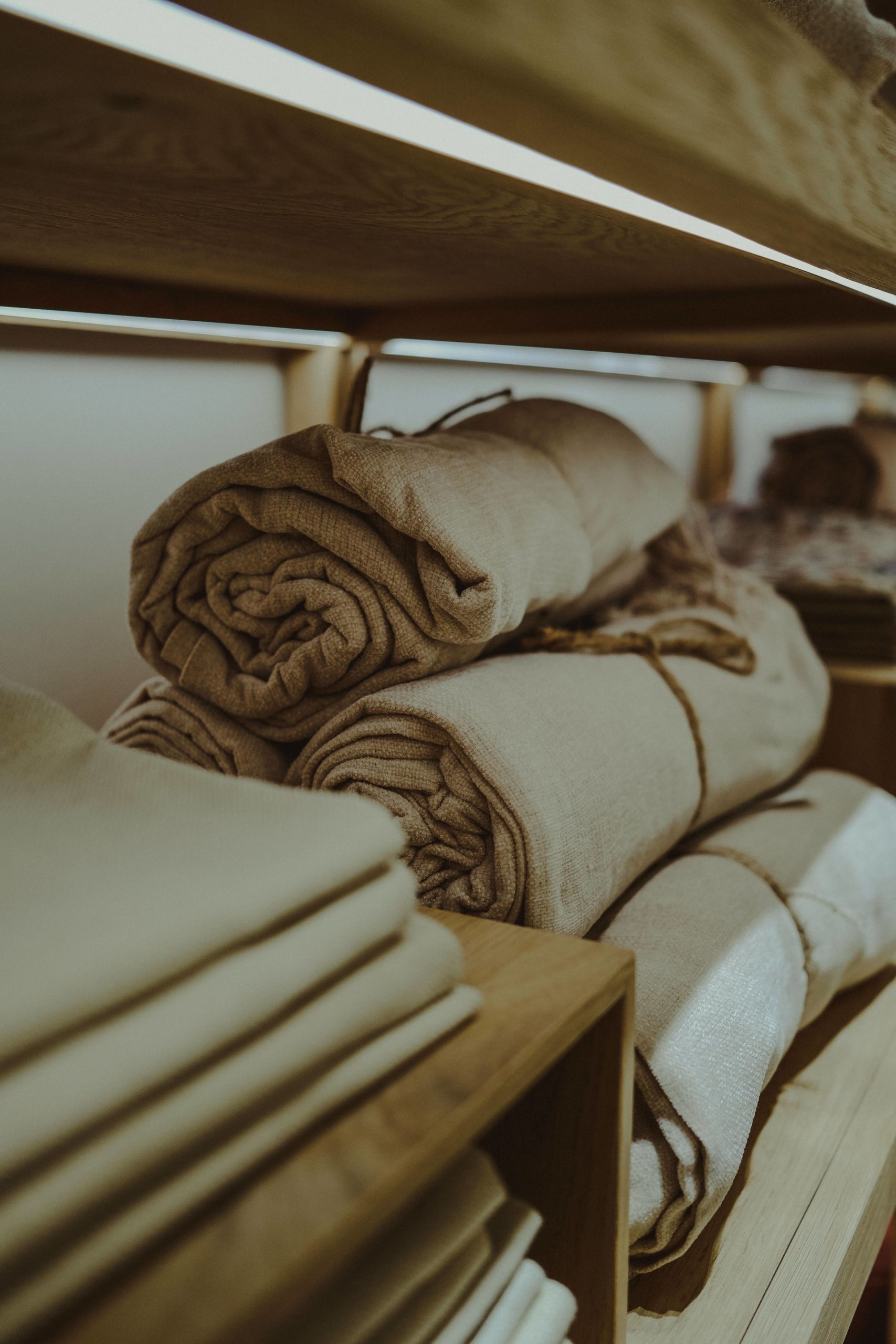
Linen is loved not only for its versatility (making stunning garments and bedding) but also for its resilience. Made from natural fibres, linen is a lightweight and breathable material, perfect for those of us who struggle to stay cool in summer and want to feel free and not stifled when snuggling in bed.
However, linen does have some drawbacks. The fabric needs its own wash and care routine, compared to other fabrics. But don’t worry, we cover the essentials in our cleaning guide below.
Our linen cleaning guide
Before you start anything, the first step is to take a look at the care label. Each garment or bedding will have specific washing and care instructions. From there, you can avoid detergents or stain-removers that may be too harsh for the fabric, and choose the best setting on the washing machine, resting assured that the fabric will come out clean and unharmed.
How often should you wash linen?
Experts recommend washing linen garments after each use and bedding at least once a week. This is because the fibres are more prone to sweat, salt, sebum, dirt and grime build-up. Remember to use cold to lukewarm water to preserve fibre strength and colour, and to always check the care label for specific instructions.
What you’ll need:
- A mesh garment/bedding bag
- Stain pre-treatment (see below for our DIY recipe): any commercial product should do, but enzymatic stain removers are the best
- Washing machine or hand-washing detergent
- A fabric steamer or iron
Step 1: Pretreat stains
Before diving into the wash cycle, pretreat any stains on the linen. Rinse the spot under cold water to remove any excess, then spray on the stain remover, gently rubbing and working it into the fibres. Any commercial stain remover will do, DIY solutions are great alternatives, but enzymatic stain removers are the best for stubborn stains and buildup like grease/oil, ink, sweat and dirt.
A handy DIY solution to make is made up of items you no doubt already have stocked in the cupboard. Simply fill a spray bottle with water, add a drop or two of liquid dish soap, a teaspoon or two (depending on the size of the spray bottle) of bicarbonate of soda, and shake until combined. Spray this directly onto the stain, gently working the solution into the fibres.
For stubborn stains, experts recommend leaving the stain remover on for a good 10 to 20 minutes before washing. Alternatively, you can mix a paste made from equal amounts of water and bicarb (or salt/cornstarch/talcum powder). Apply, work into the fibres and leave to sit for 10 to 20 minutes.
Always test an inconspicious patch when using stain removers, just in case they’re too harsh and damage the fabric. Never use bleach or other harsh chemicals as stain removers.
Step 2: Cold wash
Linen needs to be washed in cold to lukewarm water. Any warmer, and experts warn that the high temperatures will cause potential shrinkage, weaken the fibres, and fade vibrant colours.
Machine washing
If your care label allows for machine washing, make sure to select the “delicate” or “gentle” cycle, and that the water temperature is 30º to 40ºC. Avoid over-filling the drum, or washing with harder fabrics like jeans or heavy blankets.
Place the linen garment or bedding into a mesh bag to protect it during washing, and add the appropriate amount of laundry detergent before starting the washing cycle (1/4 to 1/2 cap is more than enough, depending on how full the drum is loaded).
Rinse once and promptly remove the linen and shake vigorously before hanging it on the line. This helps smooth out the fibres, preventing wrinkles.
Hand washing
When instructed by the care label, or you’re washing a delicate or old garment, like a blouse or handkerchief, then hand washing is the way to go. Fill a wash basin or large container with cold to lukewarm water, pouring in about 1/4 to 1/2 cup of gentle hand-washing detergent or powder. Agitate the water to distribute the detergent before adding the linen item.
Let the linen soak for 20 to 30 minutes. Gently work the stain remover out of the fabric where used – taking care not to wring or rub the fabric on itself. Then rinse with fresh cold water.
Use the side of the wash basin or container to press the linen against to remove excess water. Shake vigorously and hang on the line immediately, or pop into the tumble dryer.
Step 3: Drying
Line-drying linen is the recommended method, although some garments allow for tumble drying (using medium to low heat settings). Make sure the linen is fully dry when removing from the line, to avoid wrinkles when storing. However, when tumble drying, remove slightly damp linen from the tumble dryer. This helps avoid wrinkles from forming while sitting in the dryer after a cycle has finished.
While not necessary, you can steam or iron linen before storing. A steamer is the safest option, as there’s minimal chance of burning or shrinking the fabric. But an iron on medium-low heat with steam is also an option. The steam and heat not only get rid of wrinkles, but also help soften the fabric after its wash, making it soft and comfy for use.
Store linen garments on a hanger in the cupboard where possible, to prevent wrinkles. For bedding, fold and smooth out before storing in a linen bag to prevent damage from moths and other linen-loving insects.
Also See: Tried and tested: The best way to lift grease stains from clothes, aprons, and tea towels.
Tried and tested: The best way to lift grease stains from clothes, aprons, and tea towels