Good knife skills are one of the simplest ways to become a more confident cook. You don’t need to chop at lightning speed like a professional chef or own a specialised knife set — mastering a few basic techniques will help you prep ingredients more safely, quickly and consistently. From holding your knife correctly to mastering essential cuts like dicing, julienne and chiffonade, here’s everything you need to know to sharpen your skills in the kitchen.
5 Need-to-know knife skill basics
1. How to position your hands
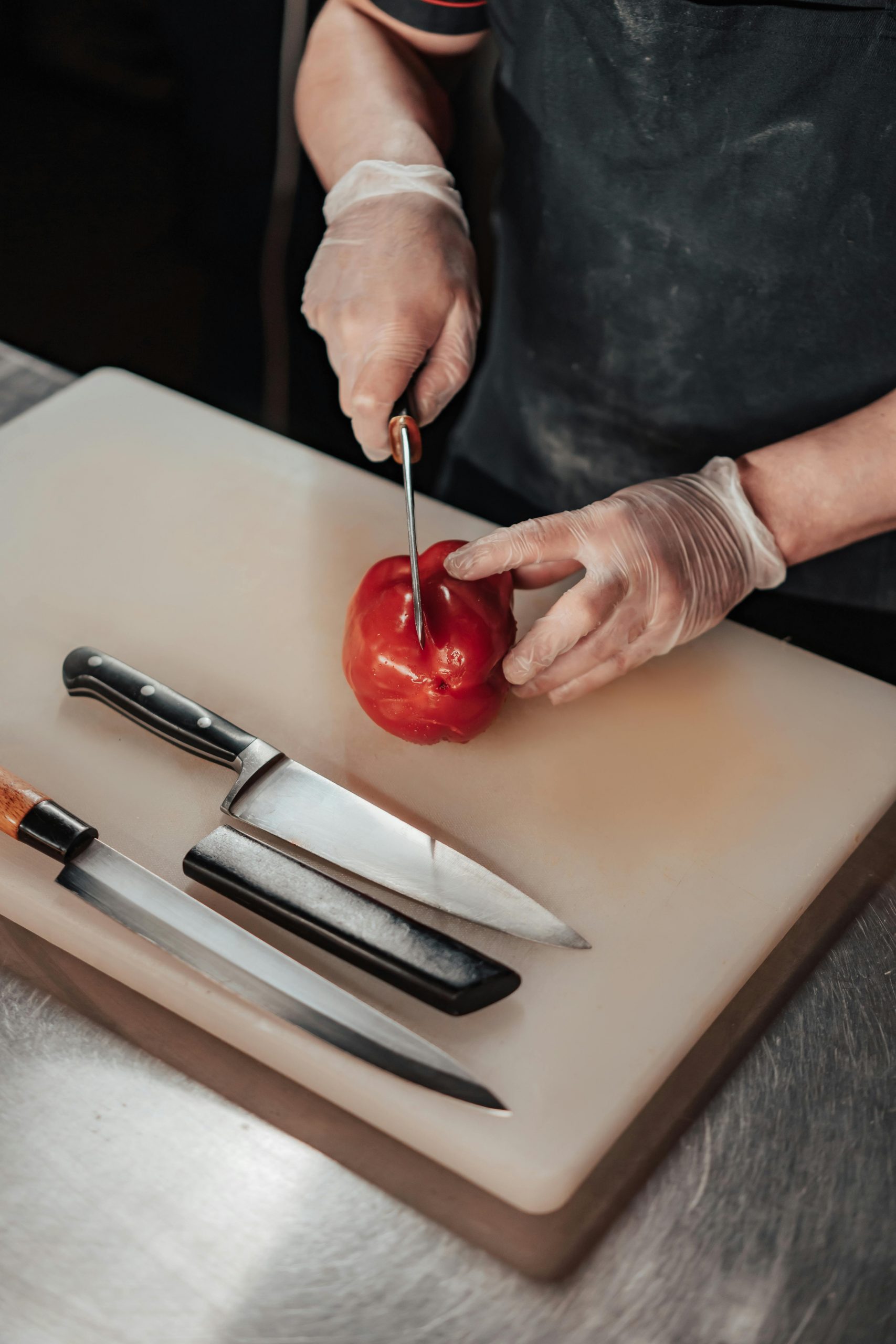
It all starts with safety and control. Hold the knife right where the blade meets the handle (where the centre of the knife’s weight is) with your dominant hand. This hand controls the blade. Your non-dominant hand should guide the food and determine the size of each cut. Think of your dominant hand as the stabiliser and your non-dominant hand as the navigator.
2. How to hold what you’re cutting
A wobbly chopping board is a safety hazard. Make sure your chopping board (preferably wood or plastic, never glass) is steady by placing a damp cloth underneath it. When cutting, shape your non-dominant hand into a claw shape, curling your fingertips inward and using your knuckles to guide the knife. This protects your fingers while controlling the cut.
3. Which knife to use
You don’t need a whole set of knives to chop like a pro. In fact, 3 high-quality knives are more than enough:
- Chef’s knife: Great for chopping larger veggies and meat cuts like pumpkins, onions, herbs, and portioning chicken.
- Pairing knife: Great for smaller and finicky foods like peeling fruits and veggies.
- A slimmer knife (like a carving or utility knife): A versatile option for in-between tasks and precision slicing.
4. When to sharpen and when to hone
Think of sharpening and honing knives like having a manicure.
- Sharpening: Cuts away the blunt and bent steel that no longer serves its purpose. It refreshes the blade’s edge or ‘teeth’.
- Honing: Maintains the blade’s edge, keeping it in shape, much like filing a nail.
Sharpening restores, while honing maintains.
5. Adjust your motion to what you’re cutting
Knife skills aren’t a one-size-fits-all. Bigger, bulkier veggies and meats need strong, controlled motions. Softer, delicate herbs and leafy veggies need delicate movements. Let your non-dominant hand help guide the pace and pressure as you adapt to the ingredient.
How to: Dice
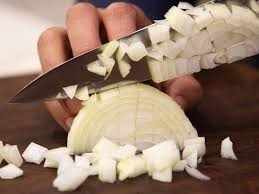
Dicing is a square cut for most fruit, veggies, and meats. The goal is to cut uniform pieces for even cooking and texture. Refer to the recipe for guidance on a larger or smaller dice.
- Slice the food into even slabs.
- Stack slabs and slice into strips.
- Rotate strips and cut into even cubes.
How to: Julienne
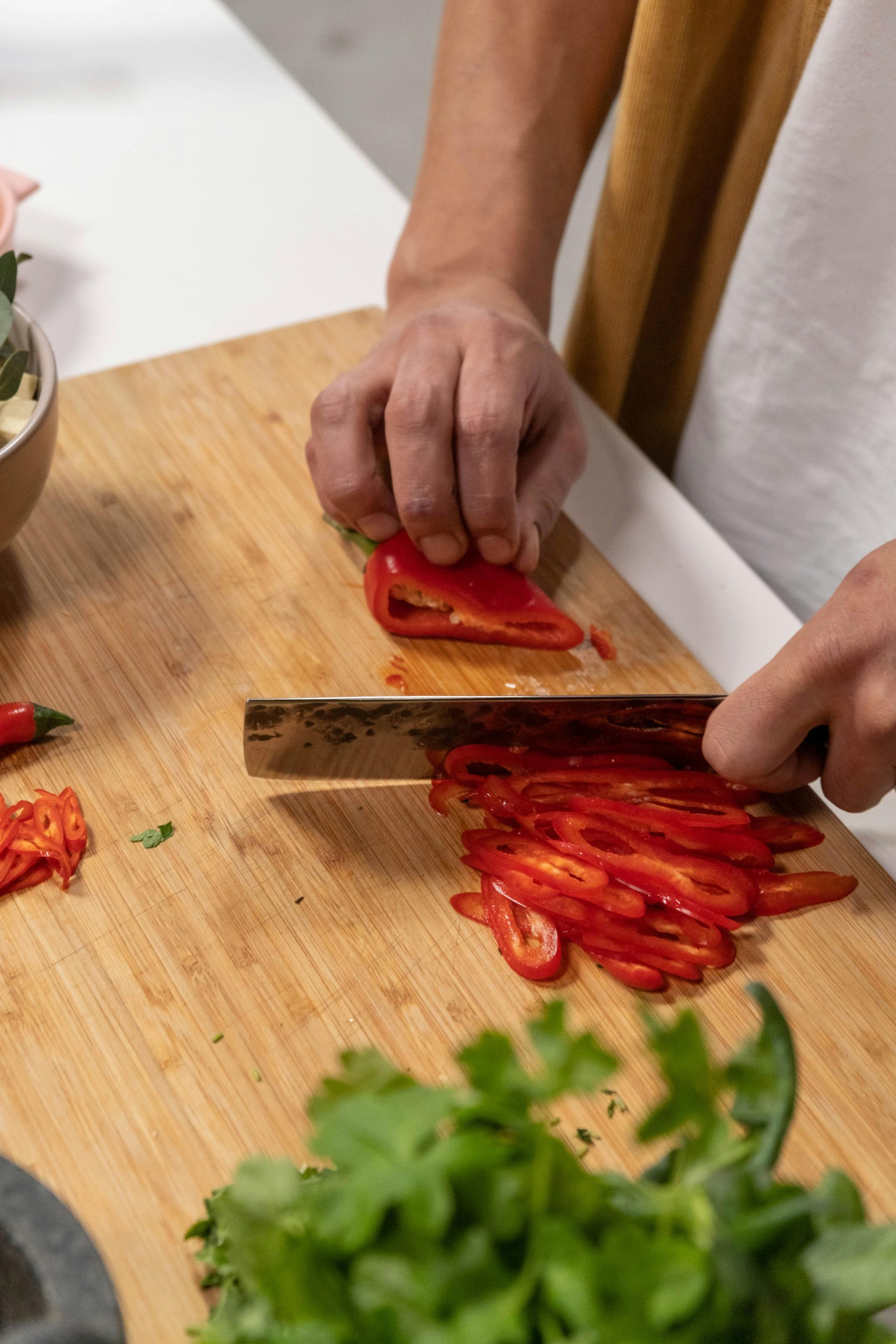
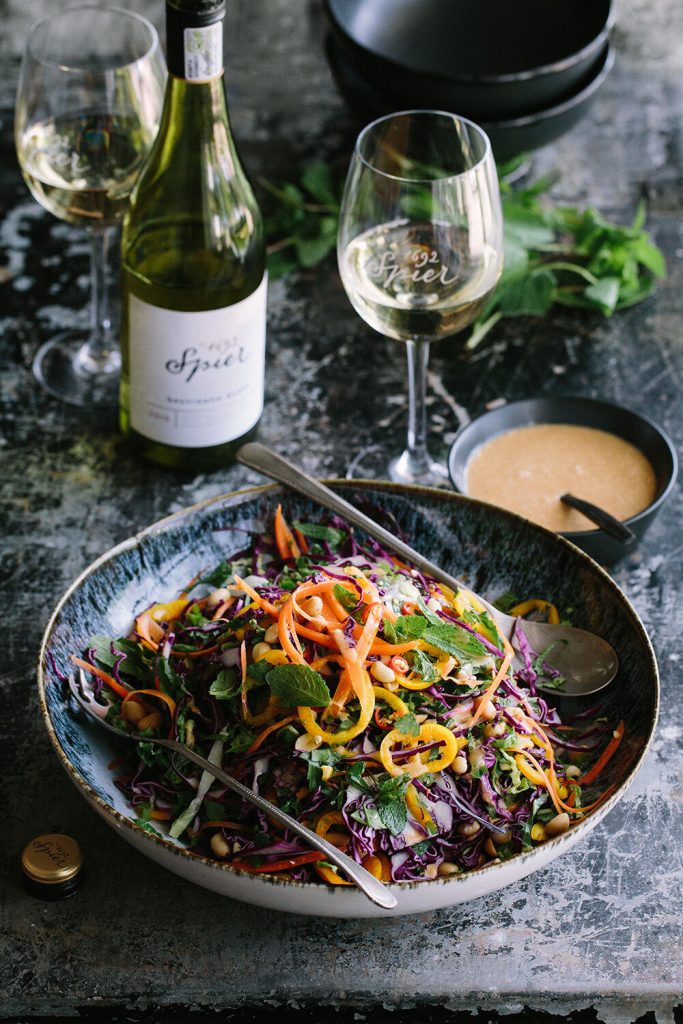
The julienne cut involves slicing fruits and veggies into thin, matchstick-like strips. Often used for veggies that will be eaten raw, used in salads or stir-fries, like carrots, bell peppers, and cucumbers.
- Trim and peel the veggies.
- Cut into uniform slabs.
- Stack slabs and slice into thin matchsticks.
How to: Chiffonade
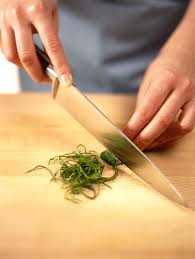
The chiffonade cut is used for leafy veggies and herbs, like spinach and basil. It aims to slice foods into thin ribbons without bruising them. Best for salads, stir-fries, and garnishing.
- Stack leafy greens or herbs.
- Roll tightly into a cigar shape.
- Use your non-dominant hand to thinly slice and create ribbons.
Also See: Slice, dice, chop: The kitchen knife guide you’ll actually use
Slice, dice, chop: The kitchen knife guide you’ll actually use
Feature image credit: Pexels