With all the slicing and dicing your knives help you do in the kitchen (especially for celebratory and festive meals), they really deserve some TLC. A sharp and well-maintained knife isn’t just a pleasure to use – it’s safer, faster, and more precise (which is exactly what we want when cooking). Here’s how to check if your knives are still in tip-top shape and what to do when they aren’t.
How to tell whether your knife is sharp
Before even deciding on an action plan, first take a few minutes to identify which knives are sharp and which are dull.
Signs your knife is dull:
- It crushes or tears food instead of slicing cleanly
- Chopping sounds loud and cluncky, and needs a lot of effort or force
- Produce releases more moisture onto the chopping board than usual
- Final test: Gently run your thumb across (not along) the blade – a dull edge will feel smooth and slightly rounded, almost like a small bump
Signs your knife is sharp:
- Cuts cleanly with minimal effort
- Chops and slices quietly and smoothly
- Minimal moisture on the cutting board
- Final test: Run your thumb gently across the blade – a sharp edge will catch on your fingerprints without slicing them
Sharpening versus honing
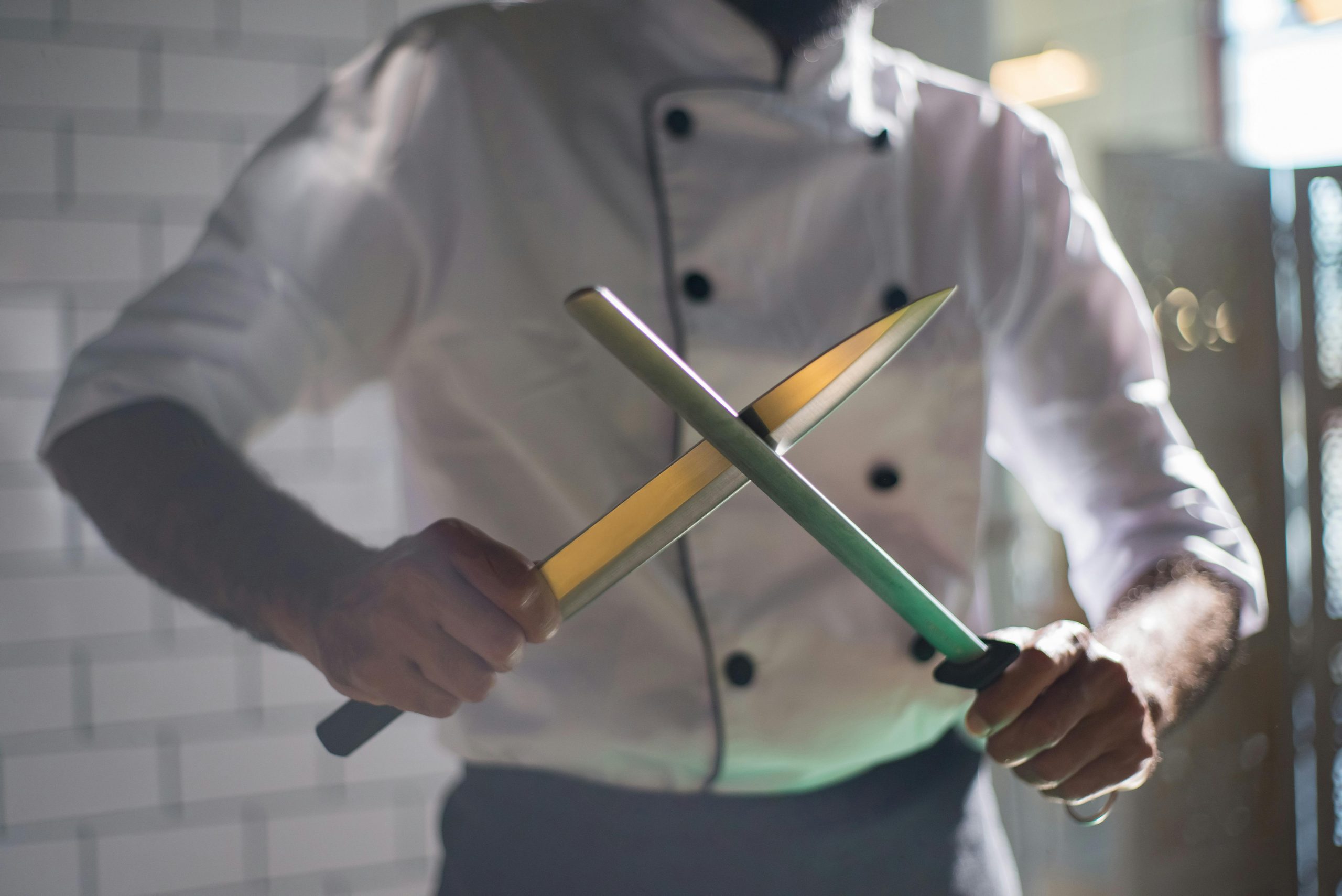
Honing a knife uses that odd-looking tool you usually see pro chefs wielding before they slice things up. It’s a long rod with a handle at the bottom, and raised edges on the steel bit. While it won’t ever sharpen your knife, it will maintain the edge of an already-sharp one. The raised edges help to realign microscopic steel fibres that bend with use. It’s best used regularly, daily, or even after prepping ingredients, before slicing others.
Sharpening physically reshapes the microscopic steel fibres of the blade. Small amounts of steel are remoulded (even removed) to create a new, thin edge. Sharpening knives should be done every few months, or when knives are desperately dull (even with regular honing).
Sharpening methods
1. Water stone or whetstone
One of the best and most precise methods for quality knives, a whetstone will produce a super sharp knife. A water stone or whetstone is a stone with two grits – a coarse grit on one side, and a finer grit on the other. Before it is used, it must be soaked in water (this helps sharpen the blade more precisely).
Then, to sharpen the knife, hold the blade at a 45º angle and draw from the tip to the base on the coarse grit first, repeating this motion evenly on both sides (a couple of run-throughs should do the trick). Finish off on the finer grit for a polished edge.
2. Manual or pull-through sharpener
A quick and easy method to sharpen knives, pull-through sharpeners are good for fast or emergency sharpening. It also uses two grits, coarse and fine. Instead of wetting anything or having to run the blade at a 45º angle, all you need to do is run the knife, blade facing down or towards the grit, straight through the sharpener with a pulling action. Start with the coarse grit and finalise with the finer grit.
This method can produce a lot of metal shavings, which means this technique is removing steel from the blade – not the best for any knife, especially high-end ones. Remember to rinse the knife in warm water with mild detergent and dry thoroughly before using or storing.
3. Electric sharpener
This is another contraption that uses two abrasive wheels with differing grits that sharpen knives automatically. Super simple to use, and similar to the manual sharpener, all you have to do is pull the knives through the grit wheels from tip to base. Start coarser and end finer.
This method is quicker than the manual or whetstone sharpening, but it can be harsh on the steel. Excess heat from friction and abrasion can weaken or damage delicate blades.
4. Professional knife sharpening
Instead of having to choose a tool or method to use yourself, why not hand your knives in to the pros? Best for beloved and expensive knives, experts can sharpen blades, repair chips and fix any damage to the blade. This is a great option for seasonal maintenance, or just in time for prepping celebratory or festive meals!
Sharp knives make festive cooking easier, safer, and far more enjoyable. Whether you maintain your knives with regular honing or invest in a full sharpening method, giving your blades a little love will keep your holiday prep stress-free, and your dishes and garnishes looking professional.