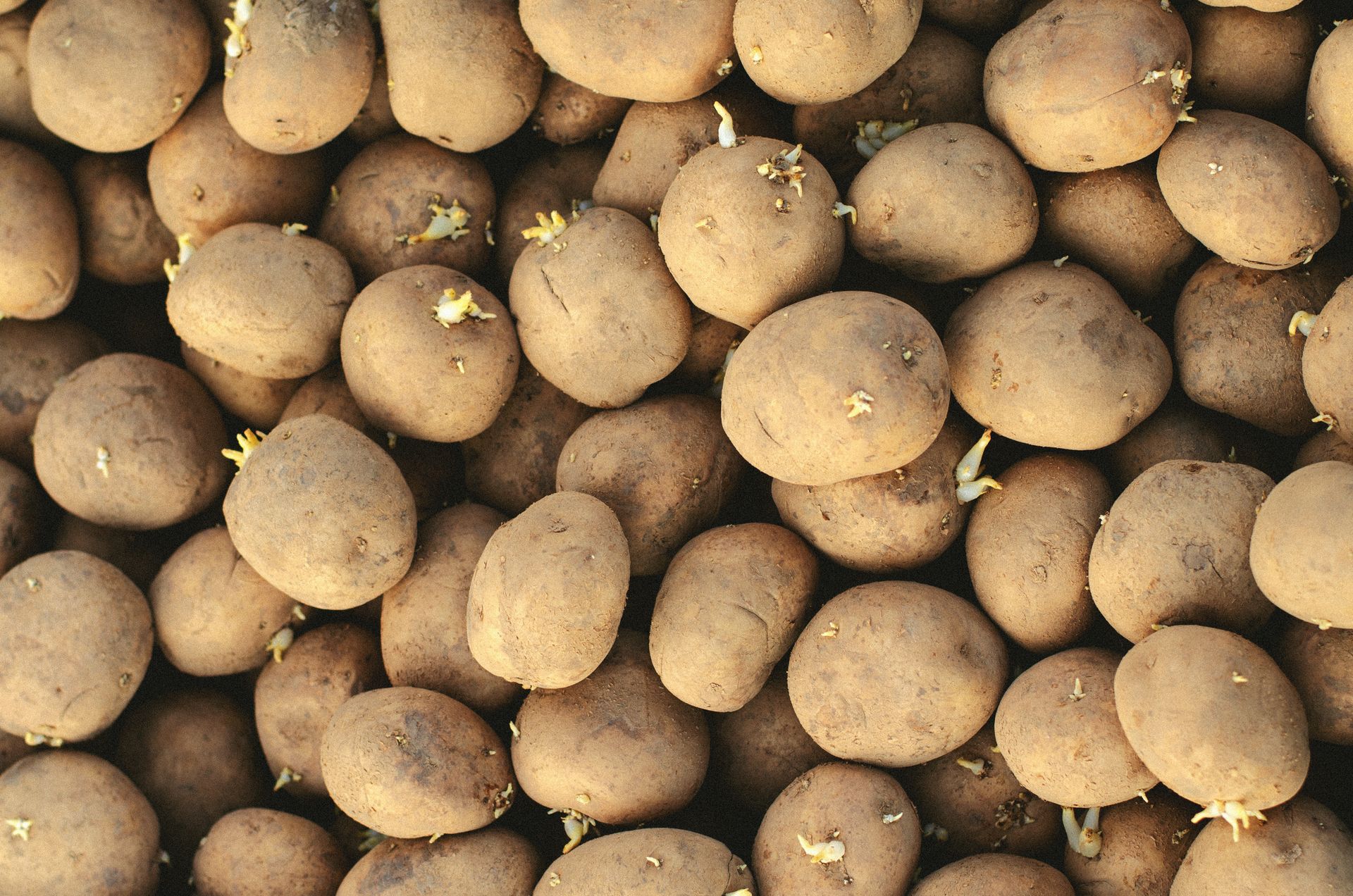
There’s nothing quite as frustrating as reaching for a potato, only to discover it has grown a collection of strange little shoots in the back of your cupboard. While sprouting potatoes may look alarming, it’s actually a completely natural process. A few simple storage tricks can help keep your potatoes fresher for longer.
Why do potatoes sprout?
Potatoes are living tubers. Even after they’ve been harvested, they remain dormant for a period before naturally beginning to grow new shoots, also known as sprouts or “eyes”. Several factors can speed up this process:
Warm temperatures
Potatoes stored in warm kitchens, pantries, or cupboards are more likely to sprout quickly. Heat signals to the potato that it’s time to start growing.
Light exposure
When potatoes are exposed to sunlight or bright indoor light, they can begin producing chlorophyll, causing them to turn green. This often goes hand in hand with sprouting.
Humidity
Excess moisture can encourage sprouting and spoilage, especially if potatoes are stored in poorly ventilated containers.
Age
Simply put, older potatoes are more likely to sprout. The longer they sit in storage, the more likely they are to wake from dormancy and start growing.
Are sprouted potatoes safe to eat?
In many cases, yes. If the potato is still firm and only has a few small sprouts, you can usually remove the sprouts and any green patches before cooking.
However, if the potato is soft, wrinkled, heavily sprouted, or largely green, it’s best to discard it. Green areas can contain increased levels of naturally occurring compounds called glycoalkaloids, which can cause digestive discomfort if consumed in large amounts.
How to stop potatoes from sprouting
While you can’t prevent sprouting forever, you can significantly slow it down.
Store them in a cool, dark place
A cool pantry, cupboard, or cellar is ideal. Aim for temperatures between 7°C and 10°C if possible. Avoid storing potatoes near ovens, dishwashers, or other heat-producing appliances.
Use a breathable container
Paper bags, cardboard boxes, woven baskets, or mesh bags allow air to circulate and help prevent moisture build-up. Plastic bags trap moisture and can speed up spoilage.
Keep them away from onions
Many people store onions and potatoes together, but this can actually shorten the lifespan of both. Onions release gases that can encourage potatoes to sprout more quickly.
Check them regularly
A quick weekly check allows you to remove any sprouting or damaged potatoes before they affect the rest of the batch.
Buy only what you’ll use
Buying in bulk may seem economical, but if your household doesn’t go through potatoes quickly, smaller purchases can reduce waste.
Should potatoes be stored in the fridge?
Surprisingly, no. Cold refrigerator temperatures can convert the potato’s starches into sugars, affecting both flavour and texture. Refrigerated potatoes may also brown more quickly when fried or roasted. A cool, dark cupboard remains the best option for most households.
A simple trick that may help
Some gardeners and home cooks swear by storing an apple alongside potatoes. Apples release a small amount of ethylene gas, which may help slow sprouting in certain storage conditions. While it’s not a guaranteed fix, it can be worth trying if your potatoes seem to sprout quickly.
ALSO SEE: Bacon & feta potato quiche
Feature image: Pexels