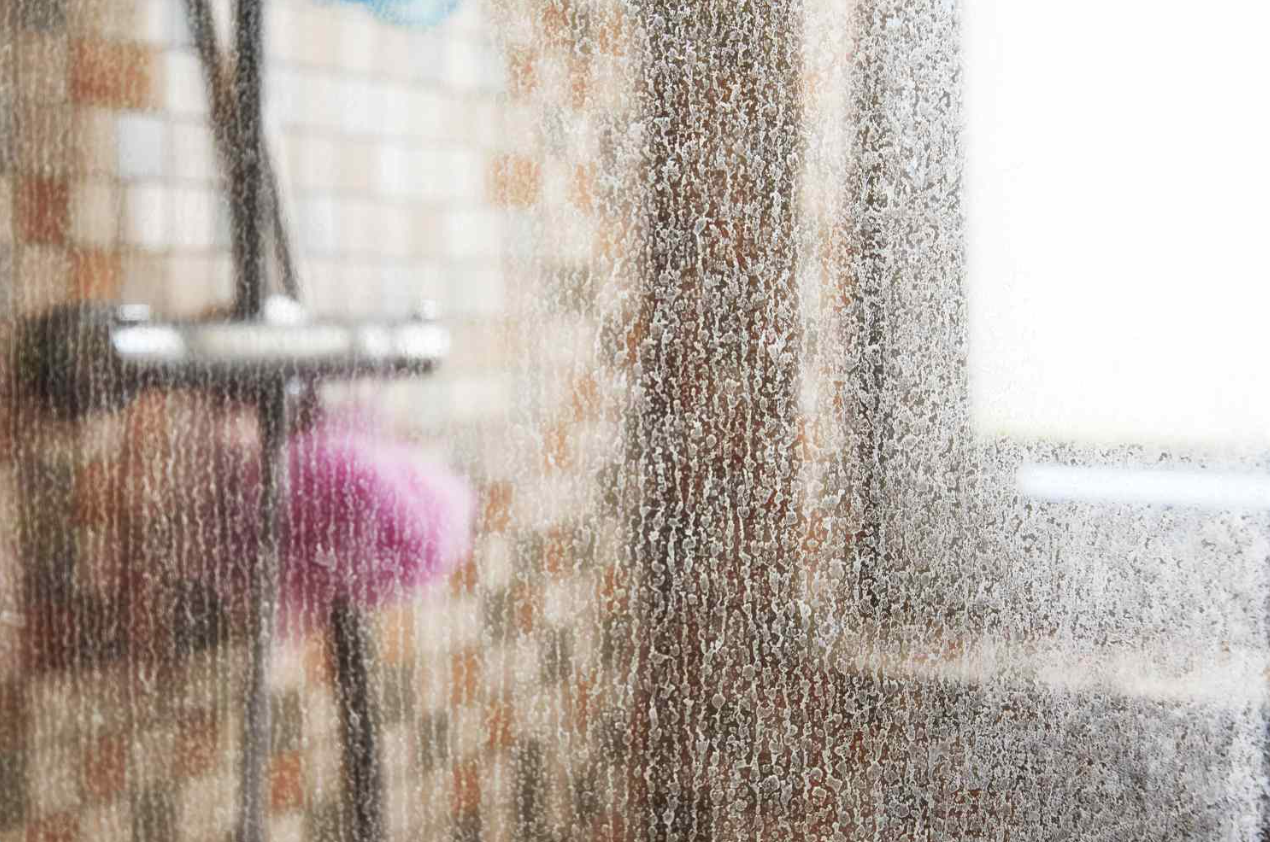
Hard water stains, also known as limescale, are the bane of many a homeowner’s shower cleaning experience. With areas that have water high in minerals, homeowners are struggling to overcome limescale deposits on glass doors around their showers and baths. As soon as the water evaporates, the hardy minerals remain, creating a misty-like coating that seems impossible to get rid of. Until now.
Use our practical guide to discover how to remove hard water stains from glass in and around your home. Plus a few handy tips to keep those glass areas sparkling.
How to remove hard water stains from glass
First things first, you need to assess the intensity of the hard water stains. This will determine the type of cleaner and scrubbing materials you’ll need to achieve that clear, sparkling outcome every homeowner is after.
Mild to moderate stain level
If your glass areas are patchy or streaky, or fully covered, but in a thin film, then they would be considered to have mild to moderate stain levels. A commercial shower cleaner, or even a DIY solution, should manage the slight buildup. Paired with a thick or tough-textured sponge or firm-bristled brush, those hard water stains will be removed easily.
An easy DIY solution recipe that uses items you have stored in your cupboard includes mixing the following into a spray bottle:
- Distilled water, enough to fill half the bottle
- 2 to 3 drops of liquid dish soap
- Distilled white vinegar, enough to fill the rest of the bottle
The acidity from the vinegar helps slightly soften and dissolve the limescale, making it easier to remove, while the liquid dish soap helps collect and cut through grease and grime.
Moderate to severe stain level
If your glass areas are so coated that you can barely see through them, then they are at the moderate to severe stain level and in serious need of elbow grease.
While DIY solutions still work, for more severe stain levels, stronger chemicals like citric and oxalic acids will offer better, clearer results. And again, paired with the correct scrubber, like a very fine steel wool (0000 level fine steel wool) and tough sponge, your glass will be sparkling in no time.
However, if you choose to use an intense solution and it comes into contact with wood, fabric, leather, mirrors, painted surfaces, gold, silver, or natural stone surfaces (like granite and marble), they will be damaged. Ensure you spray this solution directly onto the glass, keeping it from coming into contact with any areas containing the aforementioned materials.
Steps for removing hard water stains from glass
Mild to moderate stain levels
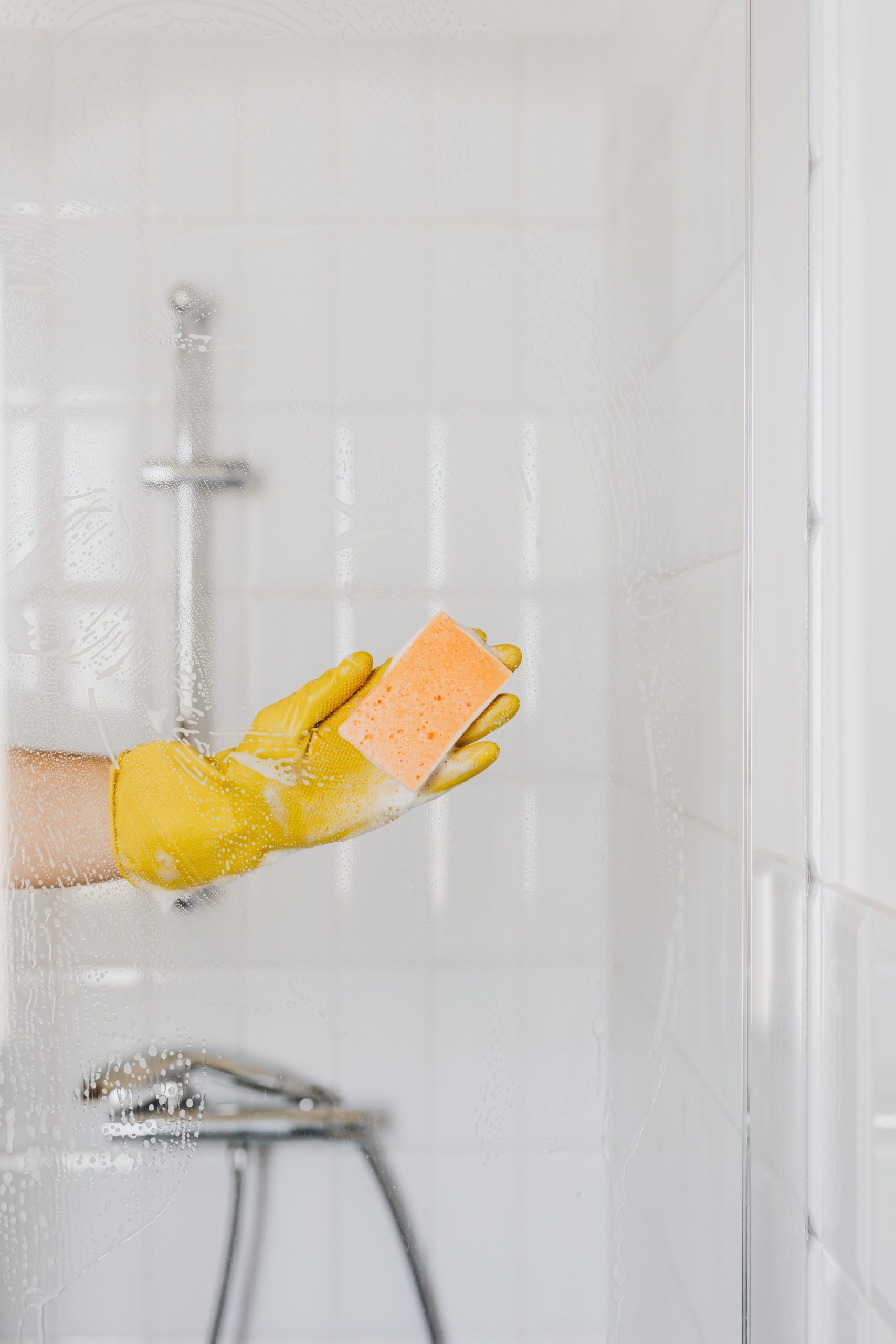
- Rinse the glass with hot water (with the shower head if flexible, a heat-resistant spray bottle, or simply a cup).
- Spray your preferred solution, be very generous here, onto the glass, working your way from the top to the bottom. Let this solution sit for a good 10 minutes.
- Spray another layer of solution onto the glass to ensure it’s well lubricated, and then use your sponge or brush to scrub. Work in circular motions starting at the top and moving to the bottom of the glass.
- Rinse with lukewarm water, assess the glass and repeat a second time if needed.
- Rinse with lukewarm water to ensure all solution residue is removed. Squeegee excess water and buff dry with a microfibre cloth to prevent streaks (or more stains).
Moderate to severe stain levels
- Rinse the glass with hot water.
- Liberally spray your preferred solution onto the glass and let it sit for 10 to 15 minutes.
- Spray another layer of solution to ensure it’s well lubricated and start scrubbing in circular motions with a tough sponge or the finest steel wool – ensure you’re wearing gloves.
- Rinse with lukewarm distilled water. Assess the glass and repeat the above steps if necessary.
- Squeegee excess water and buff dry with a microfibre cloth.
If you’re still struggling with stubborn stains or patchy areas, you can also try these natural methods:
- Hot distilled white vinegar, paper towels and a bicarbonate of soda paste:
Spray or rinse the glass with hot vinegar, placing vinegar-soaked paper towels onto the surface to completely cover it. Leave to soak, spraying regularly to keep the surface from drying out, for 10 to 20 minutes. Then, mix equal parts water and bicarb to form a thick, spreadable paste. Use a clean, old toothbrush or a hard sponge and scrub the surface, working in circular motions. Rinse with warm water. Use your usual shower cleaner to spray and scrub the surface again, thereafter rinsing and drying it.
- Toothpaste:
Toothpaste isn’t only great for keeping your oral hygiene in check, but it can also do wonders for glass doors and windows with hard water stains. Simply apply a layer of toothpaste directly onto stained surfaces and leave it to sit for 10 to 15 minutes. Use a wet sponge or brush to scrub in circles before rinsing off and cleaning a second time with your go-to shower cleaner solution. Rinse and buff dry.
- Salt and half a lemon:
Rinse the glass with hot water. Dip half a lemon into table salt and scrub the glass in circular motions. Clean a second time using your preferred shower cleaner, rinse and buff dry.
- Tin foil:
Use a 5cm by 5 cm square of tin foil to crumple up into a loose ball. Liberally spray the glass with shower cleaner. Use the tin foil ball to scrub the glass in circular motions. Ensure the glass is constantly covered in cleaning solution while you scrub. If not, the tin foil may scratch and damage the glass. Rinse and buff dry.
How to slow the buildup of limescale
- Use a daily leave-on shower spray (get our DIY recipe here)
- Wipe down the glass after each use (you don’t need to buff it dry, but ensure you remove excess water)
- Check your water quality and invest in a water softener if needed
Also See: How to descale your shower head
Feature image credit: southernliving.com