Standing at the cheese shelf wondering which to choose for that carbonara or risotto dish you’re making for dinner tonight? While many people use the names interchangeably, the difference between Parmigiano–Regiano vs Grana Padano is all in the name, processing, and flavour.
Parmigiano-Reggiano vs Grana Padano
While both Italian cheeses are slightly grainy, made with cow’s milk, and shaped into large drums, their different processing methods result in totally different textures, flavours and aromas.
Not to mention the region that they’re made in: both Parmigiano-Reggiano and Grana Padano cheeses have Protected Designation of Origin (PDO) status. This means that, just like Champagne, only cheeses made in their respective areas and using the same production methods may legally be named that way. Although these name designations are only legally recognised within the European Union, they are respected worldwide (leading to a few loopholes for copycats).
That’s one reason why we find so many imitation cheeses on the shelves (the other stems from costs). Those bags of pre-grated “parmesan” cheese? Not the real deal. No-name blocks claiming to be Grana Padano? Not it either. Let’s get into what exactly makes up each and how they differ.
Parmigiano-Reggiano
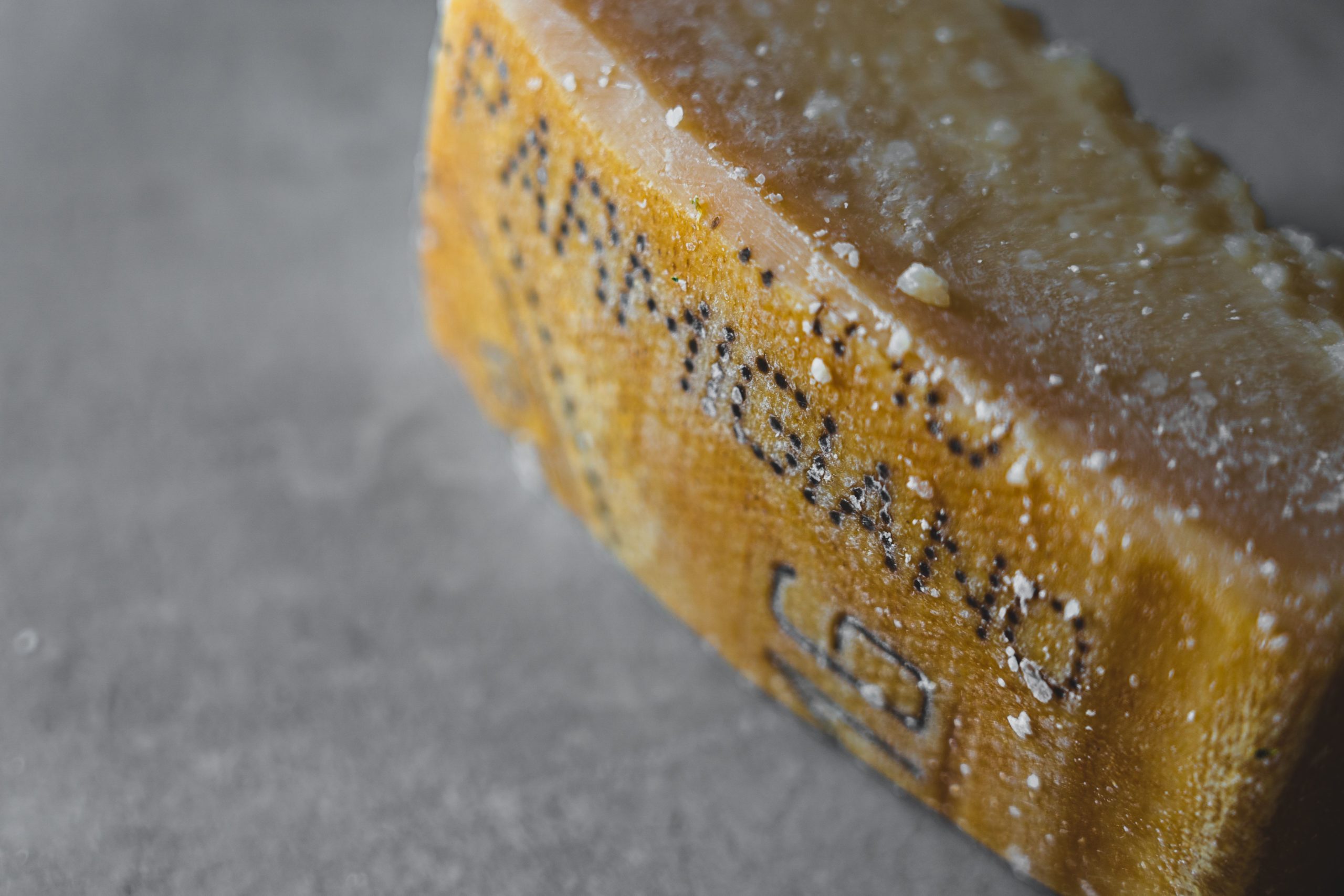
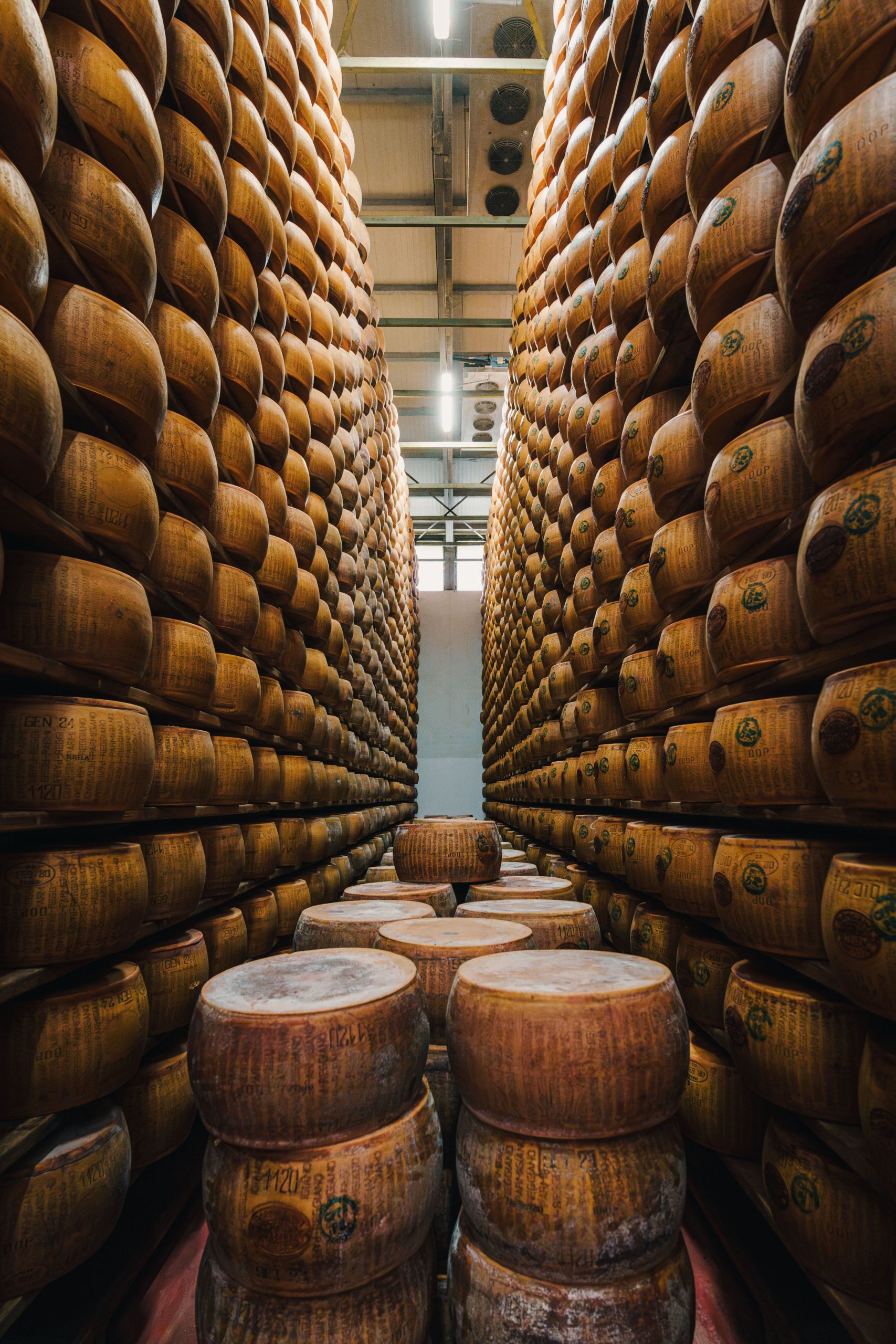
Parmigiano-Reggiano is over 1,000 years old – earning its nickname of the king of all cheeses! Only produced in a small part of Northwestern Italy named Parma, it’s made from raw cow’s milk collected from pasture grass-fed cows – collected in the morning and evening. The key here is Parma and grass-fed. Cows fed more than grass, like grains, won’t qualify, even if the same production method is used.
In terms of production, the cows have to be milked twice a day, and the milk must be delivered to the cheesery within 2 hours, being kept at a constant 18ºC to keep the natural bacteria alive and thriving. Two types of milk are used for this cheese-making: a mix of full-fat and skimmed milk. Once processed, the cheese is moulded into iconic drum shapes and matured or aged for a minimum of 12 months.
Parmigiano-Reggiano is distinctly crumbly and granular. Its flavours are strong, complex, nutty and salty, making it perfect for last-minute additions or garnishes on dishes. When used during cooking, however, you could run the risk of an overly salty and overwhelming dish.
What about Parmesan? This is an example of a copycat product. While there’s nothing wrong with it, and it has a similar flavour profile to the original, Parmesan cheese is produced worldwide and does not follow the strict milking and ageing processes as its counterpart. It does make for a great substitute, since the real deal can get quite expensive.
Grana Padano
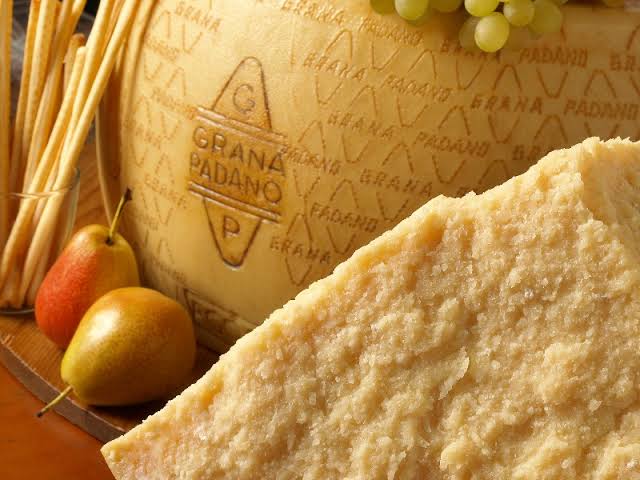
Another POD, extremely popular cheese from Italy, and a relative of Parmigiano-Reggiano, is Grana Padano. It’s produced only in Northern Italy, specifically the Po River Valley, and made with a totally different type of milk.
Cows are still grass-fed, the difference here being that they can graze on any pasture and eat a mix of grasses, cereals and grains – which has a major impact on the cheese’s flavour. Although the cows are milked twice a day, too, there’s a 24-hour limit for delivery, and the milk is partially skimmed before production begins.
Once moulded into iconic (yet slightly confusing) drum shapes just like its cousin, the cheese is aged and matured either for 9 to 12 months, 16 to 20 months, or 20 months plus, resulting in very different, distinct flavours.
- Aged 9 to 12 months: Delicate flavour, softer texture and pale yellow colour
- Aged 16 to 20 months: Butter, dried fruit and hay flavour, grainy texture, and a deeper yellow colour.
- Aged 20 months+: Rich buttery flavour, crystalline texture, and a deep golden colour.
Grana Padano’s milder flavours bode well for using it during cooking, contributing a sweeter and more present flavour to any dish. It makes for a worthwhile substitute for Parmigiano-Reggiano (yes, even better than the Parmesans on the shelves), not to mention how it won’t necessarily throw your budget off either.