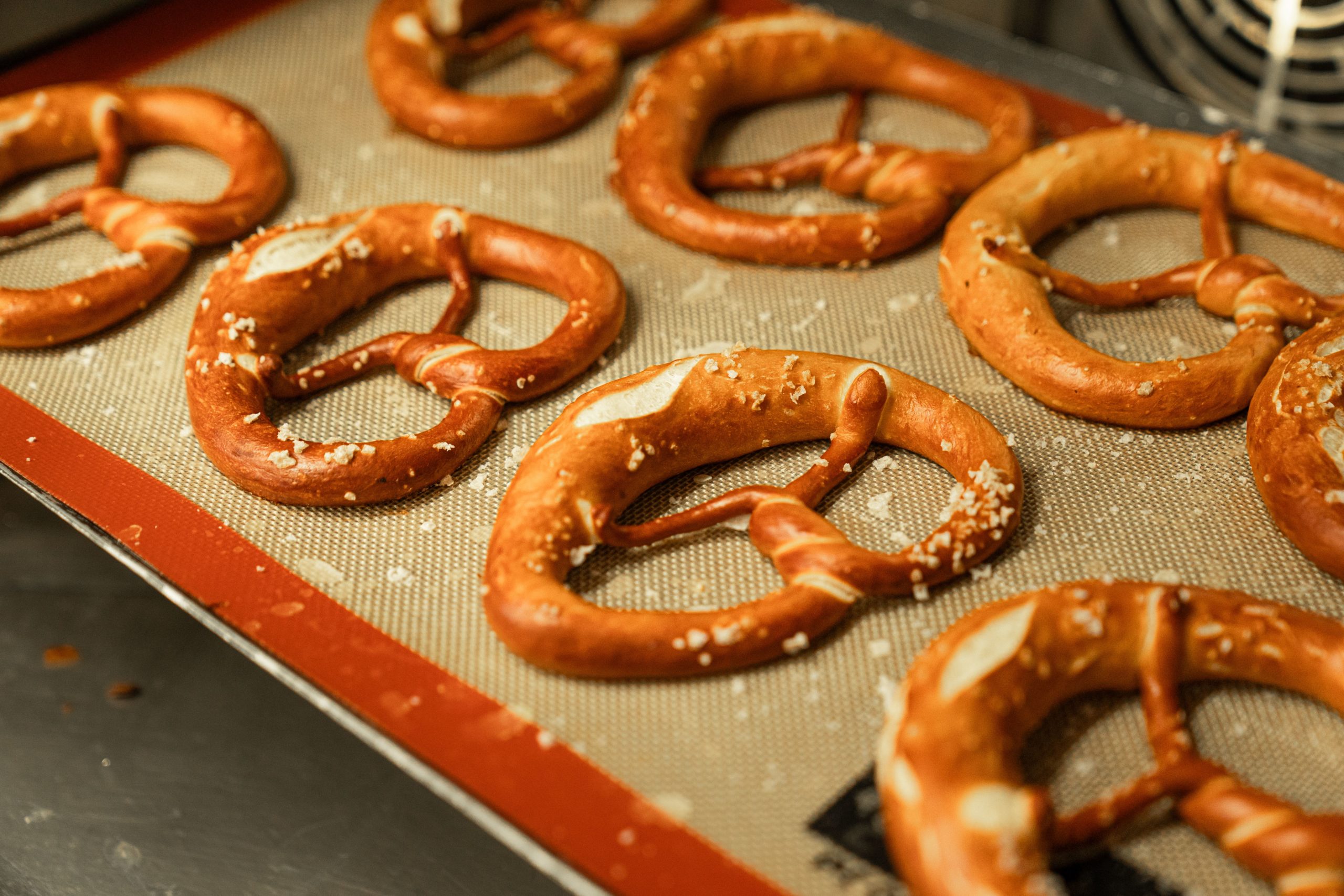
Whether you use them to bake your favourite cookies and pastries or to help make cleaning up the air fryer easier, cooking is a lot simpler with silicone mats. However, after a while, they seem to never be fully cleaned after a quick hand wash, leaving you seemingly stuck with a stubborn, greasy, oily residue. While there are a lot of hacks for getting your silicone mats to brand new condition on the internet, a lot of them end up damaging the non-stick surface instead of preserving it.
We’ve rounded up the best way to clean silicone mats and highlight important maintenance tips to help you keep them spick and span for a long time to come.
The best way to clean silicone mats
It’s a valid question: why do silicone mats get so sticky when they’re a) supposed to be non-stick, and b) we use dish soap that’s formulated to de-grease?
It’s all got to do with heat.
The sticky, grimey residue your silicone mats develop only after a few uses isn’t because you aren’t cleaning them properly, or from some magical pile of dirt roaming your kitchen – it’s a simple chemical reaction that actually occurs while they’re in use. While your batch of cookies is baking in the oven, or your chicken dinner is roasting in the air fryer, the fats and oils from the food oxidise. Oxidised fats and oils are then exposed to the heat from the oven or air fryer, causing the fats and oils to bond to the micro-textured surface that is your silicone mat.
Moreover, these newly formed compounds trap volatile organic compounds from roasted butter, sugars, herbs and spices. These compounds, thanks to repeated batches of delicious cookies and heat, are now hydrophobic (repelling water). And this is why your trusty dish soap isn’t able to de-grease the mats.
While there are no doubt a range of commercial cleaning products specifically made to clean silicone mats, there is another trusted method that uses supplies you most probably already have stocked in your cupboard.
What you need:
- 1 cup of white vinegar
- 1 tablespoon bicarbonate of soda
- 2 cups of hot water (not boiling)
- Dish soap
- Soft-bristled brush
I know what you’re thinking: the vinegar and bicarb mix does not make a natural cleaner – and you’re right. This mix won’t clean, but the reaction the combination causes does help lift embedded oil films from the micro-textured surface. The CO2 bubbles help agitate the oily film, while the acetic acid from the diluted vinegar disrupts the bonds formed from heating fats and oils. Below is exactly how to do it.
Steps
- Rinse off any excess food debris from the mat with water.
- Prepare the soak in a large container or in your sink. Combine the hot water, vinegar and bicarb and give it a quick stir.
- Submerge the silicone mat and let it sit for 10 minutes. Flip and soak for another 10 minutes.
- Next, use a soft-bristled brush to gently scrub the mats in small, circular motions. Focus on heavily greased areas.
- Drain the soaking liquid and finally wash the mats in hot (not boiling) water with a drop or two of liquid dish soap.
- Rinse and allow to air dry flat on a clean (rust-free) wire rack.
- Store flat once completely dried.
Maintenance tips
- Avoid boiling water or dishwashing: hot water and lengthy dishwasher cycles will degrade the silicone and won’t really help loosen oxidised oils or get rid of odours
- Never use bleach: bleach will damage your silicone mats and only masks the odours
- Cool baked or roasted foods on a wire rack or plate: always remove foods from silicone mats once out of the oven or air fryer – we don’t want odours and oxidised oils to seep into the mats
- Clean mats as soon as possible: the best way to beat grime is to stay ontop of a regular cleaning schedule; clean mats as soon as you’re done using them to avoid having to soak them as often (even wiping with a damp microfibre cloth to remove excess residue is a great start)
- Never slice on silicone mats: blades will create tiny slits in the mat, and this is the perfect environment for grime and bacteria to collect and flourish
- Never roll or stack mats: rolling damages the surface, and stacking traps moisture and other unwanted stuff; store flat with baking paper sheets in between each mat if you have more than one
- Still tacky and smelly after soak: soak again, but this time add hydrogen peroxide (3%) to the mix – it helps loosen the grime without harming the mat