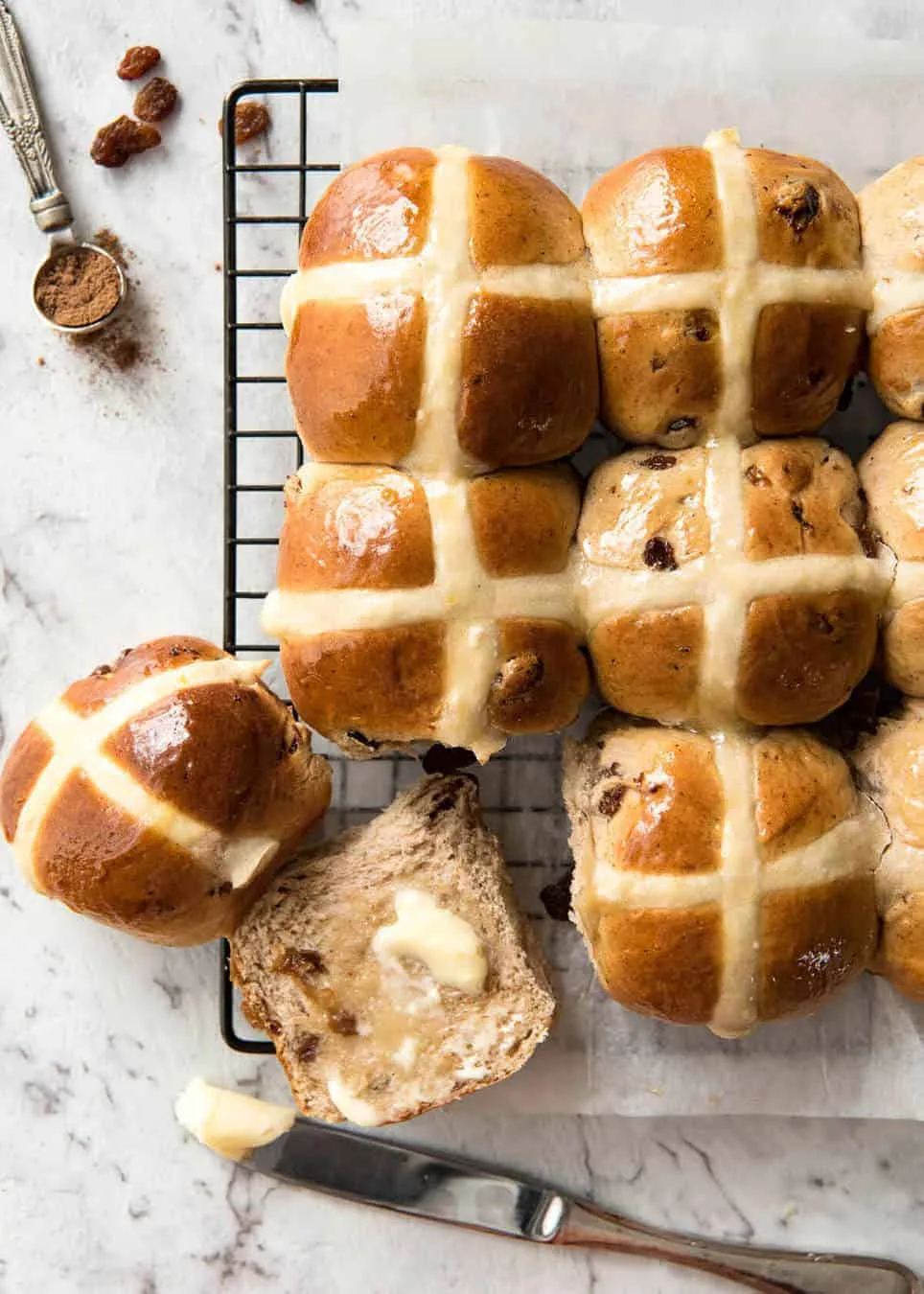
There’s a very specific kind of joy reserved for spotting hot cross buns back on the shelves. It’s warm, a little nostalgic, and smells faintly of cinnamon. Suddenly, Easter feels close enough to taste.
But beyond their soft centres and glossy tops, hot cross buns carry a story that’s far richer than their spice blend. So why have these sticky, cross-marked buns become so tied to Easter? It’s a tale of seasons, symbolism and a little bit of rule-breaking.
A bun with a past life
Long before Easter baskets and chocolate eggs, early spring was already a time worth celebrating. In pagan traditions, people marked the end of winter with baked goods, often decorated with a cross. This wasn’t the religious symbol we know today, but rather a nod to balance – the changing seasons, the phases of the moon, and the cycle of life beginning again.
These early buns were linked to the goddess Eostre, who symbolised renewal and rebirth. Sound familiar? That same sense of new beginnings still lingers in how we celebrate Easter today.
From pagan treat to Easter staple
As Christianity spread, many older traditions were gently reworked rather than erased. The cross on the bun took on new meaning, becoming a symbol of the crucifixion of Christ. The timing also aligned perfectly — a season already rooted in renewal now marked a different kind of rebirth.
And just like that, the humble bun found its place at the Easter table.
A slightly rebellious reputation
Hot cross buns haven’t always been as easy to come by as they are now. Back in 16th-century England, they were considered so special (and, apparently, a little too powerful) that their sale was restricted. Under the rule of Queen Elizabeth I, buns could only be sold on Good Friday, Christmas, or at funerals.
Naturally, people ignored this. Bakers kept baking, homes kept smelling delicious, and the buns refused to disappear. Eventually, their popularity won, and the rules quietly faded away.
Superstitions, anyone?
Where there’s history, there’s usually a bit of folklore. Hot cross buns have gathered their fair share over the years. Some believed a bun baked on Good Friday would never go mouldy. Others swore that hanging one in the kitchen would protect the home and guarantee baking success all year round.
Sailors even took them on voyages, just in case they needed a little extra luck at sea.
True or not, it all adds to the charm.
More than just a seasonal snack
Today, hot cross buns are less about rules or rituals and more about comfort. They signal a shift in season, a slower morning, a reason to gather. Whether toasted with butter or eaten straight from the bag (no judgement), they’ve become part of the rhythm of Easter.
And maybe that’s why they’ve lasted so long – not just because of tradition, but because they feel like a small celebration in themselves. Soft, spiced, and steeped in story, hot cross buns are Easter in edible form.