
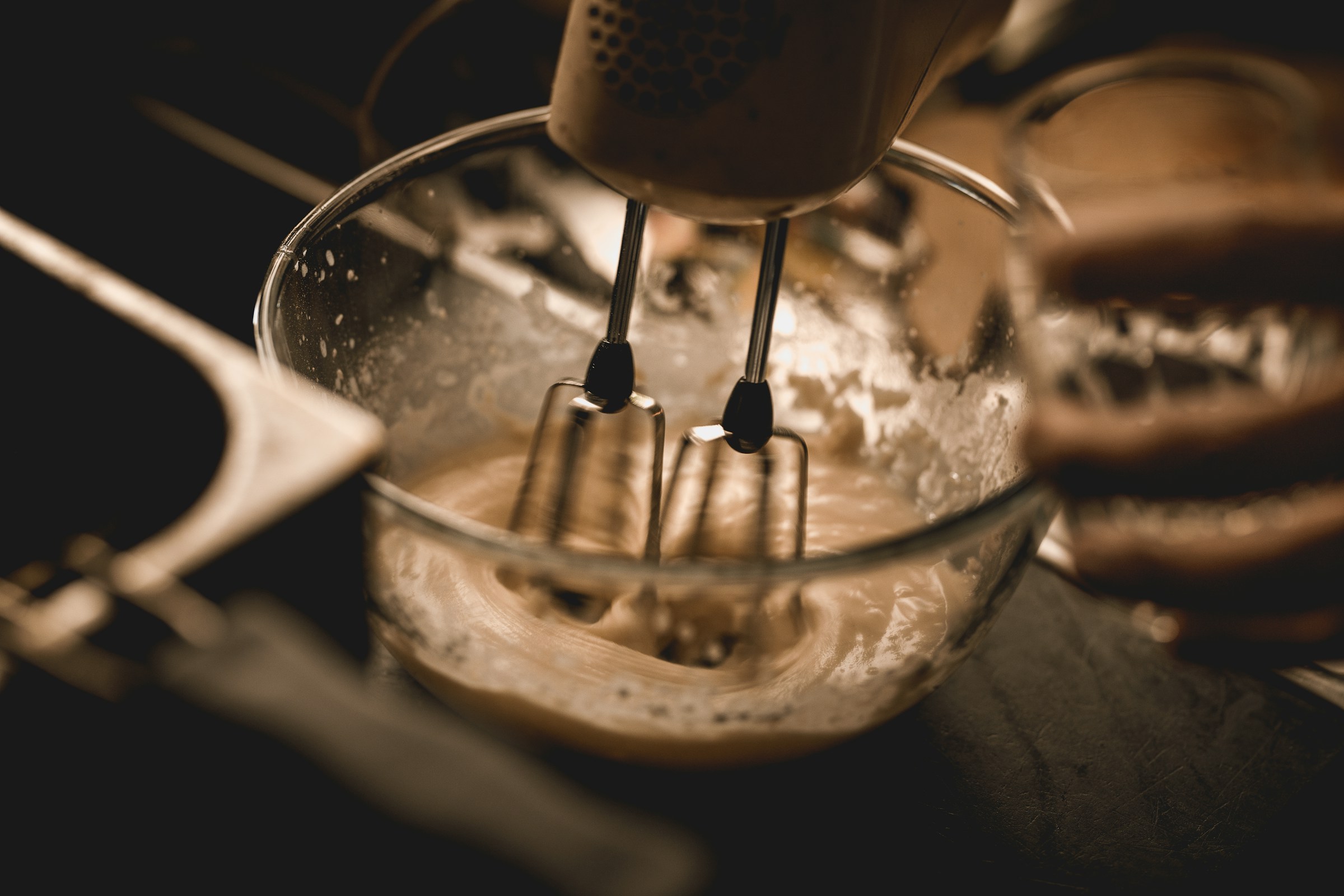
Found a cake recipe you want to try, only to realise you don’t have an electric mixer? Don’t abandon your baking plans just yet. Plenty of recipes can be made with basic kitchen utensils, and you probably already have a few useful alternatives in your cupboards.
The trick is knowing which tool works best for the job. While a fork can beat eggs and a wooden spoon can mix cookie dough, recipes that rely on incorporating lots of air, such as meringues and certain sponge cakes, require a little more effort.
Whether you’re a beginner with a handful of kitchen essentials or an experienced home cook with a few more gadgets at your disposal, here’s what to use instead of an electric mixer.
1. Use a balloon whisk
A balloon whisk is one of the best alternatives to an electric mixer, particularly when you need to beat eggs, combine ingredients or incorporate air into a mixture.
It’s ideal for pancake batter, scrambled eggs, custards and whipping small quantities of cream.
To use it, hold the bowl steady and whisk in quick circular or side-to-side movements. The faster you work, the more air you can incorporate.
A tip for beginners: A basic balloon whisk is a worthwhile addition to your kitchen if you enjoy baking. You don’t need an expensive set of utensils to get started.
For experienced bakers: Use a wide, deep bowl to give yourself room to whisk without splashing. A chilled bowl also helps when whipping cream.
2. Reach for a wooden spoon
A wooden spoon is useful for mixing thicker ingredients, particularly when making biscuits, brownies, muffins and some cakes.
It can also be used to cream butter and sugar by hand. Start with softened butter, then press it against the sides of the bowl before beating in the sugar with firm, circular movements.
This takes longer than using an electric mixer, but it can work well for smaller batches.
A tip: If the mixture becomes difficult to work with, check that the butter is soft enough. Butter straight from the fridge will be much harder to combine.
When making muffins or quick breads, stir the ingredients only until combined. Overmixing can leave the finished bake tough.
3. Try a fork
If you have very little kitchen equipment, a fork can still be surprisingly useful.
It works well for beating eggs, mixing small quantities of liquid ingredients and combining the wet ingredients for pancakes or simple cakes.
Beat eggs with quick, repeated strokes, lifting the fork slightly as you work. For small quantities, tilt the bowl so the ingredients collect in one place.
A fork isn’t ideal for thick cake batter or large batches, though. It also won’t incorporate as much air as a whisk, so it’s not the best choice for meringues or fluffy buttercream.
4. Use a silicone spatula
A silicone spatula is particularly useful when a recipe calls for folding rather than vigorous beating.
Folding involves gently combining ingredients while retaining as much air as possible. It’s commonly used when adding flour to sponge cake batter or incorporating whipped egg whites into a mixture.
Scrape around the sides of the bowl, then bring the spatula through the centre and lift the mixture over itself. Rotate the bowl and repeat until everything is combined.
A tip: A spatula is also handy for scraping the sides of the bowl, ensuring that ingredients are evenly incorporated and reducing waste.
It won’t replace an electric mixer for creaming butter and sugar, but it’s an essential companion for many baking recipes.
5. Shake ingredients in a jar
A clean jar with a tightly fitting lid can do the mixing for you, provided you’re working with the right ingredients.
It’s particularly useful for salad dressings, vinaigrettes and small quantities of sauces. Simply add the ingredients, secure the lid and shake until combined.
You can also use a jar to make whipped cream. Pour in cold cream, leaving plenty of room for it to move, and shake vigorously. Check the consistency regularly and stop once the cream thickens to your liking.
Keep shaking for too long and the cream can turn into butter.
For experienced home cooks: Shaking is a quick way to emulsify a salad dressing, helping the oil and other ingredients combine temporarily rather than remaining in separate layers.
Use a sturdy, undamaged jar and avoid shaking hot liquids in a sealed container.
6. Consider a manual egg beater
If you bake regularly but don’t want to buy an electric mixer, a manual rotary egg beater is worth considering.
It uses a hand crank to rotate the beaters, making it easier to mix ingredients continuously without relying entirely on wrist movements.
Depending on the design, it can be used for beating eggs, mixing thin batters and whipping small quantities of cream.
It’s particularly useful if you want to expand your baking toolkit without buying an electrical appliance.
Check the manufacturer’s instructions before using it for thicker mixtures, as not every model is designed for the same tasks.
7. Use a blender for liquid mixtures
Already have a countertop blender? It can help with certain recipes, especially those that require ingredients to be blended until smooth.
Pancake batter, crêpe batter, sauces and some liquid cake mixtures are suitable candidates.
Add the ingredients in the order specified by the recipe, then pulse briefly or blend on a low setting until combined.
A blender isn’t designed to cream butter and sugar or whip air into mixtures in the same way as electric beaters. Running it for too long can also overwork some batters.
Avoid using a standard blender for thick doughs or hard, cold butter unless the manufacturer specifically allows it.
8. Put your food processor to work
A food processor can be useful for recipes that involve combining ingredients quickly, particularly pastry, biscuit dough and crumb bases.
It’s excellent for crushing biscuits for a cheesecake base or cutting cold butter into flour when making pastry.
Use the pulse function when you want greater control over the texture, and follow the recipe and appliance instructions carefully.
Some food processors also come with whisking attachments, which may be suitable for lighter mixtures.
However, the standard chopping blade isn’t a direct replacement for electric beaters. It won’t necessarily produce fluffy buttercream or a properly aerated sponge cake.
9. Check whether your stick blender has a whisk attachment
An immersion blender, also known as a stick blender, is usually designed for puréeing soups and sauces. Some models, however, come with a separate whisk attachment.
If yours does, you may be able to use it to beat eggs, whip cream or mix lighter batters, depending on the manufacturer’s instructions.
Fit the attachment correctly, choose a suitable bowl and start at a low speed to prevent splashing.
If your stick blender only has a blending blade, stick to recipes that need blending rather than whipping. The two attachments perform different jobs.
10. Choose recipes that don’t need extensive beating
Sometimes, the easiest solution is to choose a recipe that works with the equipment you already have.
Oil-based cakes, muffins, brownies and quick breads often require little more than stirring. They’re good options for beginners or anyone baking in a kitchen without specialist equipment.
Try these adjustments:
- Choose oil-based cakes. These often involve combining wet and dry ingredients rather than creaming butter and sugar.
- Make muffins. Mix the wet ingredients in one bowl and the dry ingredients in another, then stir them together until just combined.
- Soften butter before mixing. If a recipe calls for creaming butter and sugar, softened butter is easier to work with by hand.
- Make smaller batches. Smaller quantities are generally easier to mix by hand, provided you adjust the recipe accurately.
- Allow extra time. Beating ingredients manually can take longer, particularly when you’re trying to incorporate air.
Remember that not every recipe can be adapted without changing the result. If a cake depends on whipped eggs or creamed butter for its structure, simply stirring the ingredients together may produce a denser bake.
Can you make a cake without an electric mixer?
Absolutely. Many cakes can be made by hand, particularly oil-based cakes and recipes that rely on stirring rather than extensive beating.
Some butter cakes can also be made without an electric mixer. You’ll need softened butter, a sturdy wooden spoon and a little patience to cream the butter and sugar until the mixture is pale and fluffy.
Sponge cakes can be more challenging because their texture often depends on incorporating sufficient air into the eggs or batter. A balloon whisk can work, but it requires more effort and may take longer.
If you’re baking for a special occasion, try the method beforehand rather than experimenting on the day.
Can you whip cream without an electric mixer?
Yes. A balloon whisk is the easiest option, while a clean jar can work for small quantities.
Use cold cream and, ideally, a chilled bowl. Whisk until the cream reaches the consistency you need. Soft peaks bend over when the whisk is lifted, while stiff peaks hold their shape.
If you’re using a jar, shake the cream and check it frequently. Stop as soon as it thickens to avoid turning it into butter.
What about meringues and buttercream?
These recipes are possible without an electric mixer, but they require more effort and careful technique.
Meringues: Egg whites need to be beaten until they reach the appropriate peaks, with sugar added as directed by the recipe. A balloon whisk can do the job, but it requires sustained effort. Make sure your bowl and whisk are clean and free of grease, as fat can prevent egg whites from whipping properly.
Buttercream: Softened butter can be beaten with a sturdy wooden spoon. Add the icing sugar gradually, mixing thoroughly between additions. The result may be denser than buttercream made with an electric mixer, but it can still work for simple cake toppings and fillings.
If you regularly make meringues, buttercream or large batches of cakes, a manual egg beater or electric hand mixer may be a worthwhile investment.
ALSO SEE: Crêpes Suzette cheesecake with caramelised oranges
Feature image: Unsplash
