
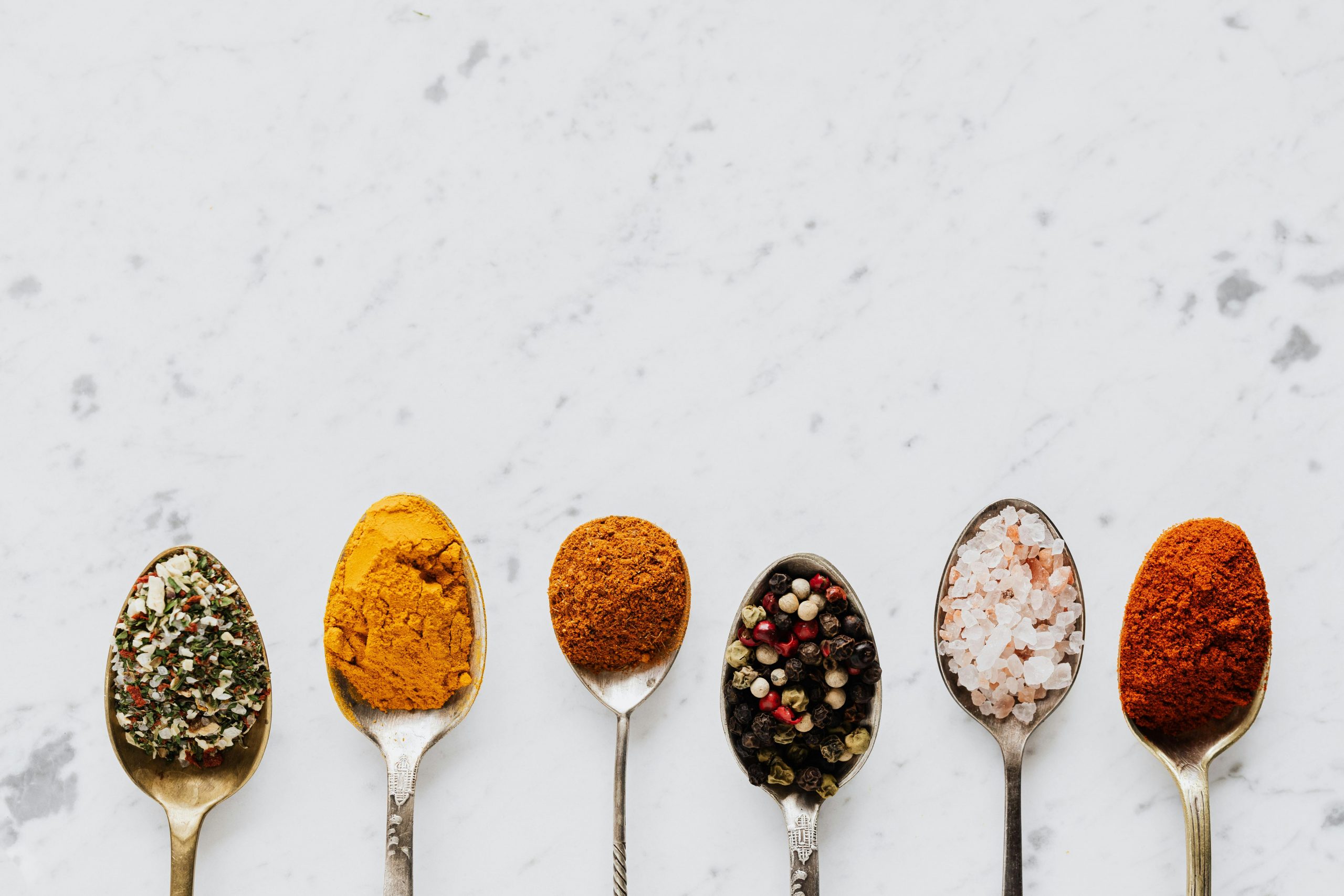
‘Season to taste’ – it sounds simple, but to many, it can feel vague and ambiguous. How much salt is enough? Is your pinch and Nigella Lawson’s pinch the same? When should you season? When should you taste? And how do you know when you’ve reached the point where flavours are truly balanced?
Seasoning to taste is less about guessing and more about using salt (and sometimes pepper) to naturally enhance the flavours of the dish (and satisfy your palate). With a little guidance, you can train your palate to recognise when a dish is flat, when it needs brightness, and when to stop before crossing in the too-salty zone.
Season to taste 101
In a nutshell, season to taste isn’t just a guideline – it’s a fundamental cooking technique. Among other spices, herbs, aromatics, and foods, salt is an essential cooking ingredient – whether you’re cooking a sweet or savoury dish. It works best when it’s added in small increments throughout cooking, instead of right at the beginning or only at the end. When done correctly, it will maximise taste by balancing other flavours like acidity, sweetness, and bitterness.
Does ‘season to taste’ always mean salt? Generally speaking, yes. But for some savoury dishes, it might also call for freshly ground black pepper, or the author will indicate the specific item (like ‘Parmesan, season to taste’).
But what if the dish is salty enough, but still missing that something extra? If this is the case, salt ain’t gonna do any more justice. You will need to identify which of the five or 6 elements of a dish (salt, sweet, acid, spice, umami, and bitterness) is not balanced. There are many ingredients you can use to achieve harmony in a dish that you most likely have stocked in your pantry:
- Salt: table salt, kosher salt, sea salt, rock salt
- Acid: lemon juice, vinegars and other acidic fruits and veggies (citrus, tomatoes)
- Spice: chillies, cloves, ginger, cinnamon, allspice, Sichuan pepper, black pepper, white pepper
- Umami: soy sauce, mushroom stock, miso paste, parmesan, worcestershire, fish sauce
- Sweet: honey, white sugar, brown sugar, molasses, caster sugar, icing sugar, sugar cane cubes, golden syrup
When to season and when to stop
When will you know that the dish has been seasoned enough? Simply put: by tasting it. What you’re looking for is a balance of the top five or six elements (depending on the dish, of course). All the elements should be in harmony, each complementing the other, bringing out the true flavours of the dish. Not too salty, but not too acidic. Not too many umami flavours, but also not too spicy. Not too sweet, but also not too acidic either.
The golden rule of thumb for seasoning dishes is logical and not overly complicated.
- Begin with a light hand and add a small amount of salt, together with the other flavours of the dish.
- After a few minutes or a couple of steps into the recipe, taste.
- Identify whether there is a balance of flavours, whether more ingredients will be added later on, and what flavour or element is more prominent than the others.
- Adjust. But remember, a small amount goes a long way! A dash of lemon juice here, or a drop of chilli oil there, can make all the difference.
- Let the flavours mix and allow time to sort things out for a bit.
- Taste again before adding any finishing touches.
- And once more, before finishing the dish.
You don’t need years of experience to be able to taste when a dish is balanced or well-seasoned – you’ve been eating your whole life! We all have that intuitive skill; we just need to practise acting on it while we cook. Trust your gut, and remember that salt is not the only star of the show. Instead, think of seasoning as a toolkit: salt builds depth, acid sharpens, umami harmonises, spice adds warmth, and sweet balances. With mindful tasting and gentle adjustments, every dish can reach that harmonious point where flavours feel complete – never overwhelming.
