
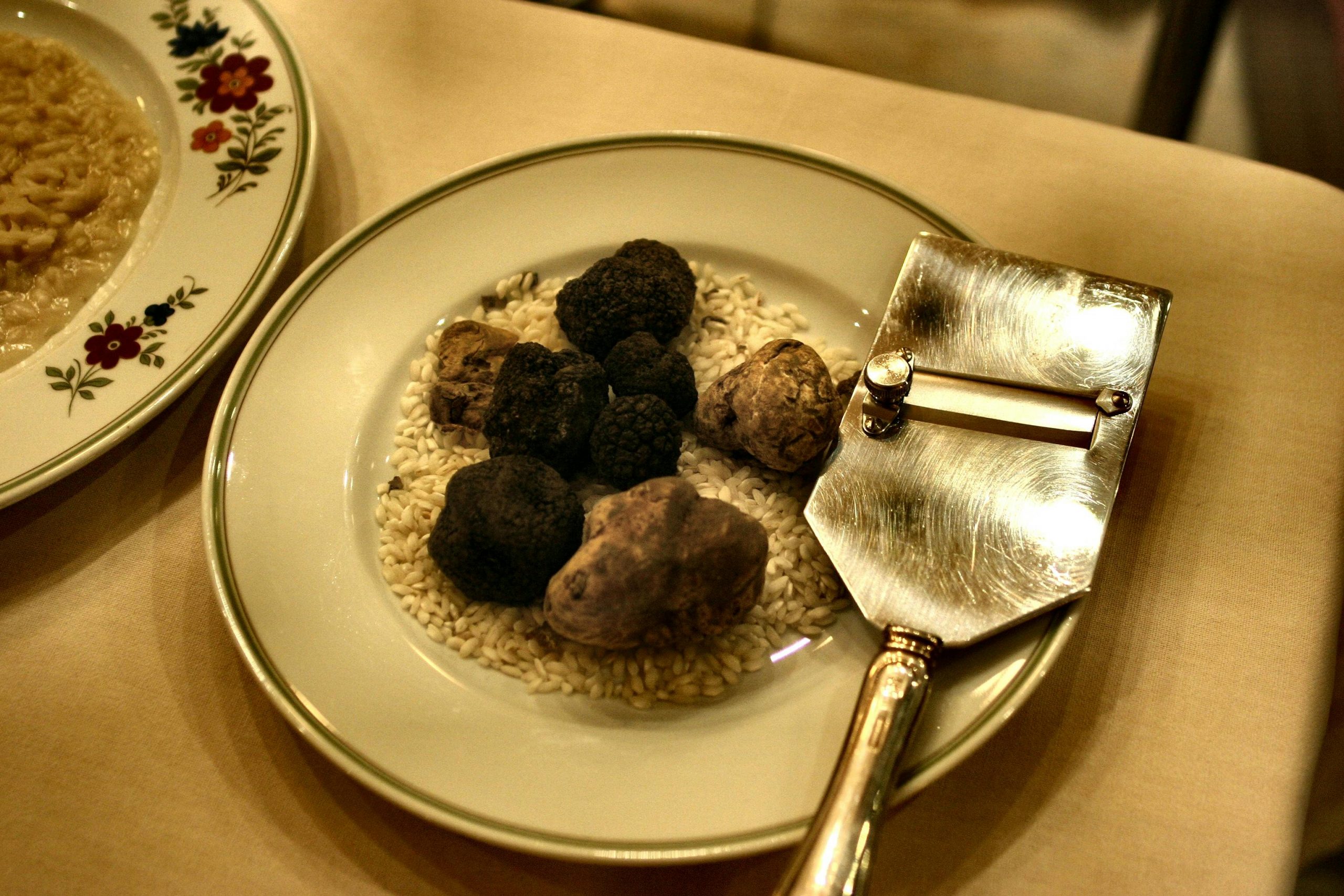
Every chef is mad about truffles, using a few shavings to transform a plain dish into something so unique and amazing, thanks to their rich, earthy aroma and taste. They’re one of the most revered and expensive ingredients in the world, alongside caviar, but are more than just luxurious. Truffles are a way of life for many, fascinating and extremely difficult to grow. And we break down all you need to know below.
What exactly are they?
Truffles, affectionately called “the black diamond of the kitchen” by chefs, are a type of fungus – similar to mushrooms. But, unlike mushrooms, truffles grow underground, intertwining with the roots of certain trees (mainly oak). This is not an easy process – truffles are finicky with root type, soil type, and temperature. They thrive under oak trees, in sandy soil and in cold temperatures.
In the past, pigs were used to sniff them out, but since they were also too eager to eat them, sniffer dogs are now used to identify the spot, and hand-dug to retrieve them safely. Truffle season occurs from late spring to early winter, and they are farmed in parts of Europe, South Africa, the United States, Chile and Australia.
Why is this fungus so popular (and pricey)?
To put their popularity into perspective, truffles have been revered since ancient times, with Egyptians, Romans and Greeks enjoying their potent earthy flavour. Although the Middle Ages gave them a bad rep (truffles became associated with witches, so people became too afraid to eat them), their cultural significance has made them a luxurious and cherished ingredient in many kitchens.
Truffle foraging and festivals keep their age-old traditions alive and help preserve the knowledge of the best truffle-producing areas. In fact, truffle hunting in Italy is recognised by UNESCO as an important cultural practice, with families passing down truffle-finding knowledge for generations. For many, truffles are a way of life – not just a punchy ingredient.
Truffles are costly for several reasons:
- Grow in limited spaces: since they need very specific environments to grow and flourish, there are only a few countries here and there that can grow them
- Finicky: without the right tree roots, soil type and climate, truffles won’t grow – making farming practices, or finding wild truffles, extremely difficult and costly
- Short season: they grow and ripen for a short time during specific times of the year, limiting their availability
- Short shelf-life: once they’re hand-picked, their scent fades quickly, meaning they need to be transported and distributed very quickly to keep their strong aroma and flavour intact
Types of truffles
Surprisingly, there are over 200 species in the world! But the most popular truffle varieties sold and used for cooking include:
- White truffles (Tuber magnatum): These are the most expensive truffles on the market. They have a strong aroma and flavour, almost exclusively shaved fresh and served raw over hot dishes like pasta, eggs, or risotto.
- Black truffles (Tuber melabosporum): Famously known as the Périgord truffle, these have an intense, earthy and complex flavour. They’re used as garnish, sliced thinly over dishes, or lightly mixed into sauces or oils – used both raw and cooked.
- Summer truffles (Tuber aestivum): These have a milder, subtler aroma and flavour; they are more common and less expensive. They can be used raw, shaved over salads, pasta, or infused into oils.
- Burgundy truffles (Tuber uncinatum): Harvested in late autumn, they have a delicate aroma and flavour. They’re less pungent than the Périgord truffles, but also cheaper. Use them in cooked dishes or raw.
From ancient Roman feasts to modern fine-dining plates, truffles have held onto their mystique for good reason. Their rarity, short season and demanding growing conditions make them precious, but it’s their unmistakable aroma that keeps chefs and food lovers obsessed. Whether it’s a few delicate shavings of white truffle over pasta or the earthy depth of black truffle folded into a sauce, a little truly goes a long way. Luxury, yes. But also tradition, craftsmanship and a reminder that some of the most extraordinary ingredients grow quietly beneath our feet.
