
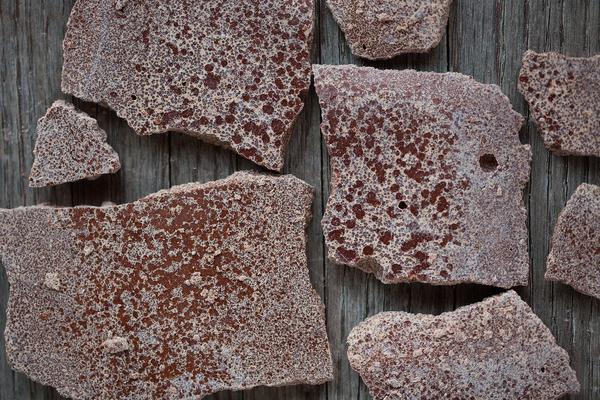
Ever found a forgotten slab of chocolate, excited at the recipe prospects, only to see that it’s developed a strange sci-fi-like white film? Yeah, me too. Not only is it a bummer, but it also makes you wonder whether it’s safe to eat at all.
Here’s how it impacts the taste and safety of that slab.
What is it?
Although those streaks and patches might look suspicious, they aren’t – and you should not panic, or chuck it. That white patch is what’s called, in the world of chocolatiering, “bloom”. It does not mean the chocolate has gone bad, only that it has lost its temper.
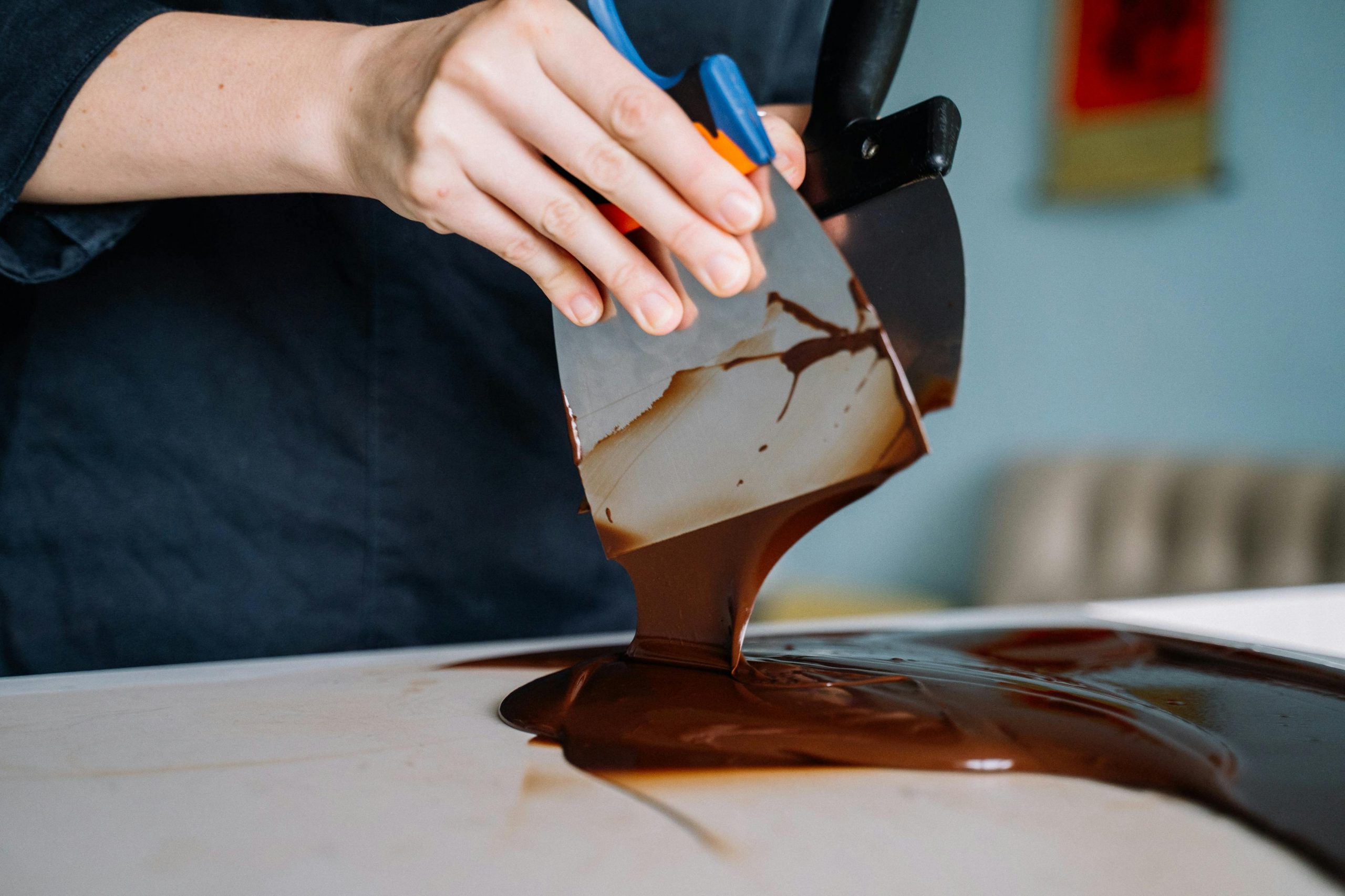
In the wonderful world of chocolate, “temper” or “tempering” is the process of meticulously heating, cooling and agitating chocolate. This process aims to align the fat crystals in just the right way to create a smooth texture, perfect snap, and glossy finish. The fat crystals we’re referring to are specifically the cocoa butter itself.
Cocoa butter can solidify into six different crystal forms, each with its own melting point. Of the six, chocolatiers aim to form the beta crystal during tempering. It’s the most stable enough form to create that smooth, glossy finish.
So, what causes it?
Blooms happen when the chocolate has not been perfectly tempered, or there’s a change in temperature and humidity in storage. Maybe a shipment sat too long in storage before being dispatched, or your pantry cupboard became humid last summer, or you opened the package and forgot to seal it again before shoving it back in.
Any temperature and humidity change pulls the chocolate out of its temper, making the cocoa butter crystals unstable and allowing less stable crystals to take over. Different fat crystals cause sugars to migrate and recrystallise on the surface, resulting in two types of blooms.
- Fat bloom: a white, streaky or greasy surface
- Sugar bloom: a mottled, chalky, dusty surface
Is it still safe to use?
No matter the bloom, that chocolate is safe to use. It just means it’s not in its most stable form. It won’t affect taste or safety, but it does affect the texture and snap. Instead of silky-smooth and crisp snaps, the chocolate might be slightly grainy and crumbly. The change in temper changes how you perceive its flavour – it may taste muted or slightly bland, but not off or expired.
The good news is that it’s entirely reversible, and once restored to the proper temper, the chocolate’s full richness and flavour will be ready for that cup of tea or chocolate muffin recipe.
