
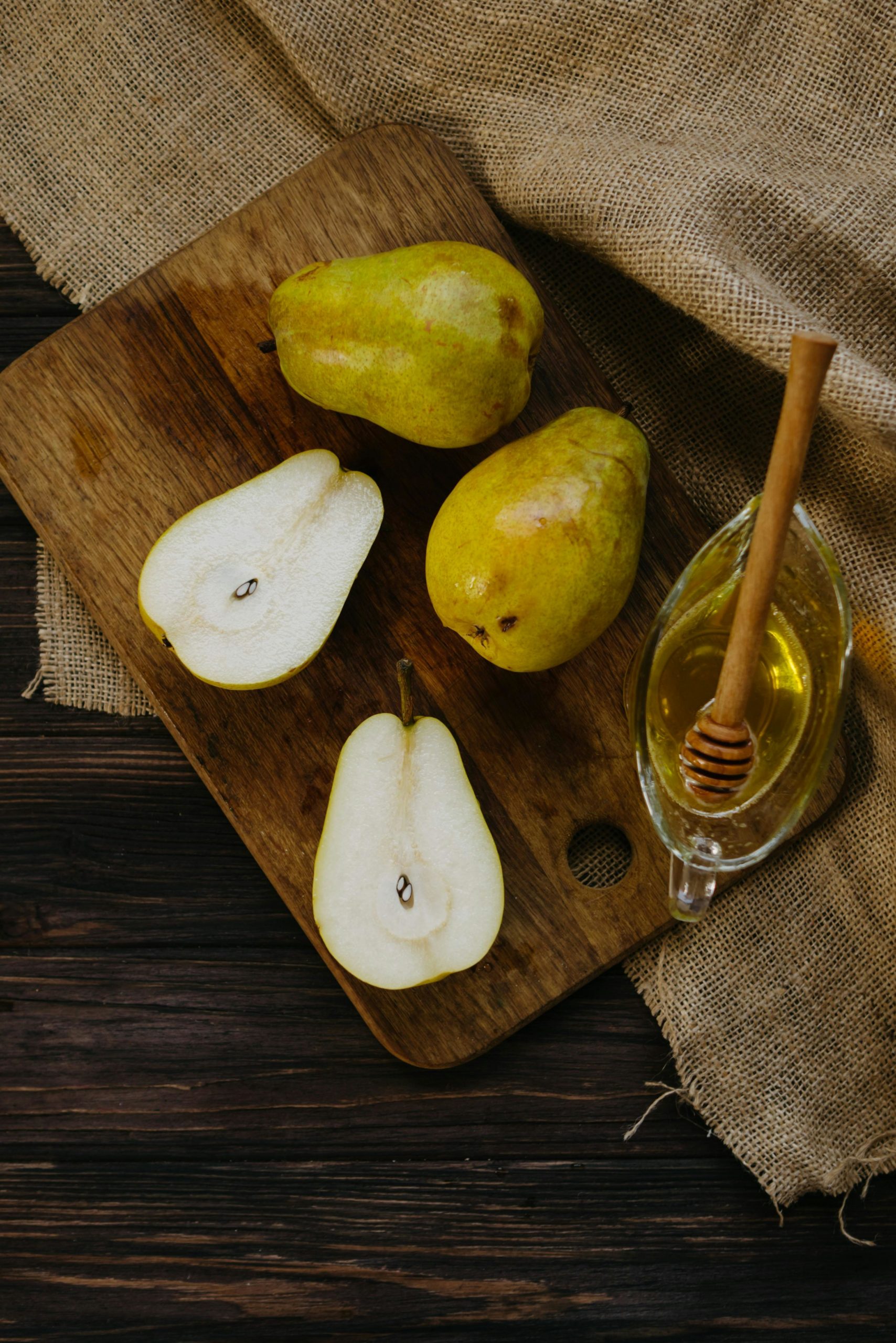
There’s something quietly luxurious about a perfectly ripe pear. Not rock-hard, not mushy – just that sweet spot where the flesh gives ever so slightly and the juice practically does the talking. But pears can be a little… temperamental. Treat them right, though, and they’ll reward you handsomely.
Here’s how to store them like a pro (and avoid that all-too-familiar “why are they all overripe at once?” moment).
The ripening rule you didn’t know you needed
Unlike many fruits, pears are picked before they’re fully ripe. Translation: what you do once they’re in your kitchen matters. A lot.
Different varieties play by slightly different rules:
- Bartlett pears soften quickly and shift from green to a sunny yellow.
- Anjou pears take their time and stay mostly the same colour.
- Bosc pears hold their shape – firm, even when ready to eat.
The trick? Don’t rely on colour alone. Gently press near the stem – if it yields slightly and smells sweet, you’re in business.
Storing unripe pears (a lesson in patience)
If your pears are still firm, resist the fridge. They need a little warmth to do their thing.
Keep them at room temperature in a cool, dry spot – ideally in a single layer so they don’t bruise. Airflow is key here, so avoid piling them into a fruit bowl like a game of Jenga.
Want to speed things up? Pop them into a paper bag with a banana or apple. These fruits release ethylene gas (nature’s ripening shortcut), giving your pears a gentle nudge towards perfection.
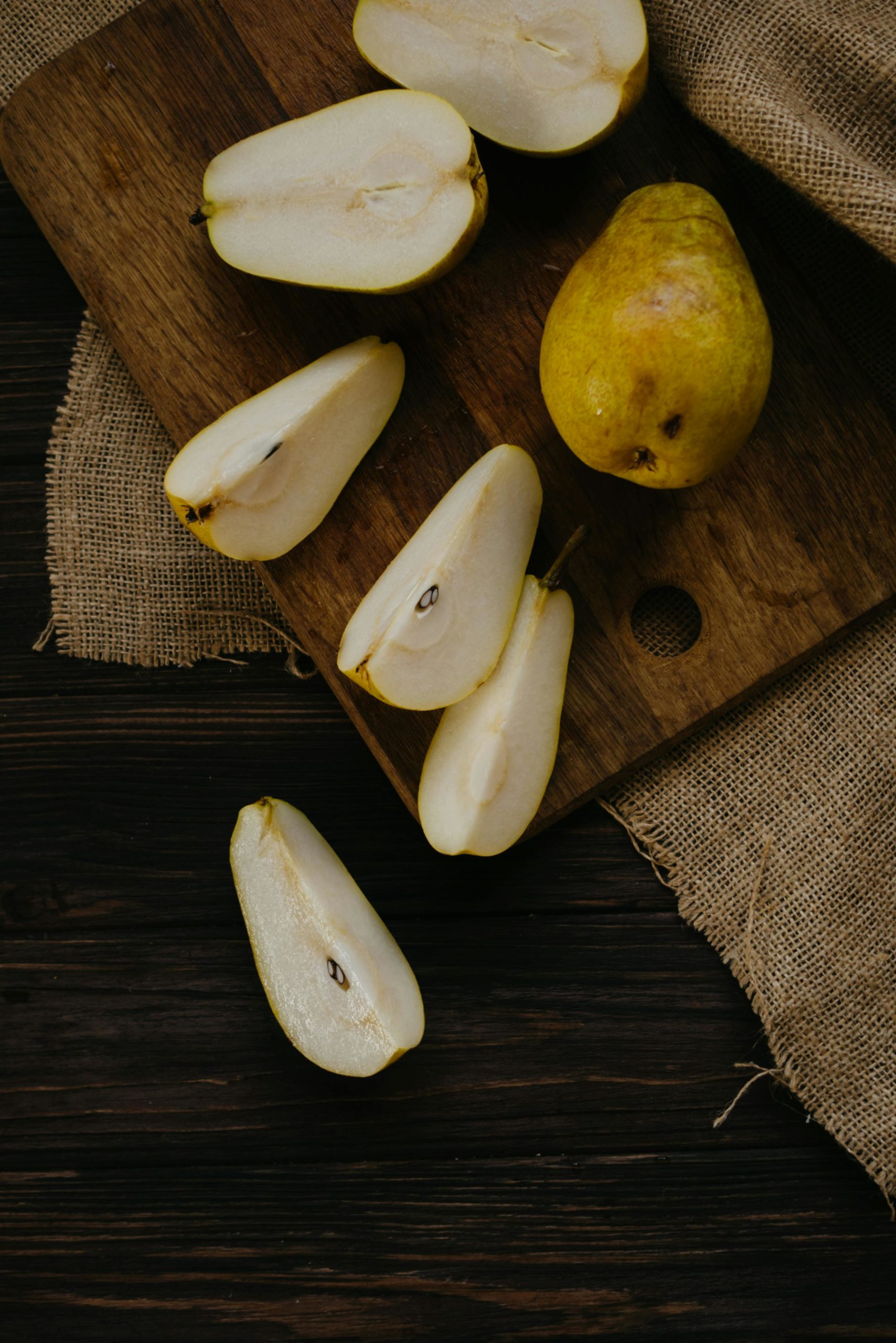
Once they’re ripe – now what?
Ripe pears are fleeting, but that’s part of their charm.
On the countertop, they’ll happily sit for two to three days. After that, move them to the fridge to buy yourself a little extra time – about a week, depending on the variety.
Store them in the crisper drawer if you can, ideally in a ventilated bag or container. Pears bruise easily and absorb odours like gossip, so keep them away from anything particularly pungent.
Got too many? Think long-term
If you’ve gone slightly overboard at the market (it happens), pears are surprisingly versatile when it comes to preserving:
- Freeze them: Slice, toss in a little lemon juice, and freeze until solid before storing.
- Cook them down: Think silky pear butter, syrupy preserves, or a softly spiced compote.
- Dry them out: Dehydrated pear slices make for an easy snack – or a very chic garnish.
When to say goodbye
A ripe pear is soft – but there’s a line.
If you notice large mushy patches, a sour smell, or any sign of mould, it’s time to let it go. A small bruise can be trimmed, but anything more is best left uneaten.
A few smart storage habits
A little care goes a long way:
- Don’t refrigerate too early – it stalls ripening and dulls flavour.
- Wash only when you’re ready to eat – extra moisture speeds up spoilage.
- Store in a single layer to prevent bruising.
- Eat the ripest ones first (future you will be grateful). Honestly, there’s nothing quite like biting into a pear that’s been given the chance to become exactly what it was meant to be.
ALSO SEE: PORK, PEAR, PARSNIP AND SAGE STEW
