
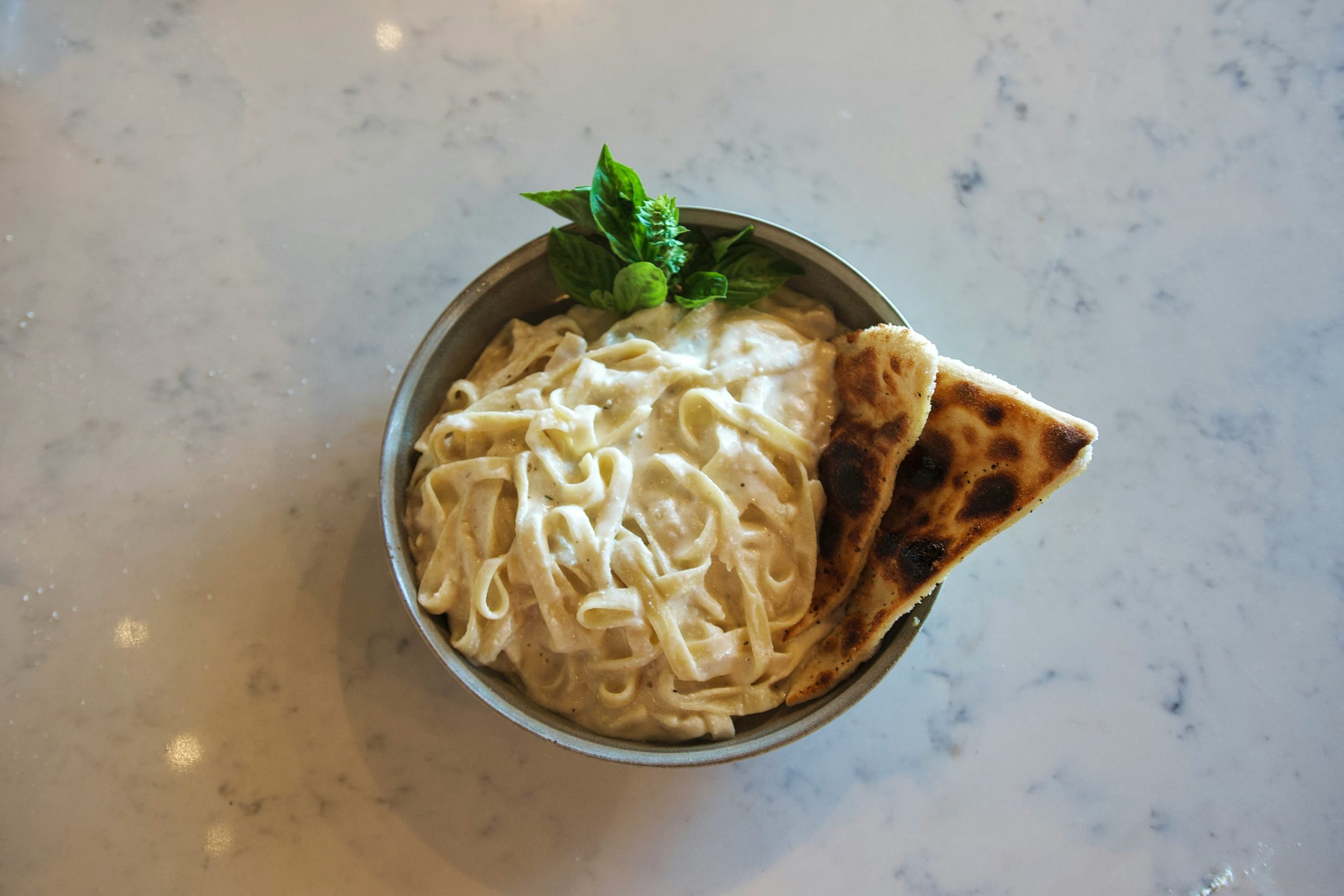
Whether you’re making a creamy lasagne, rich macaroni cheese or a classic cauliflower bake, a good white sauce is one of those kitchen basics worth mastering. Also known as béchamel, it only requires a handful of ingredients, yet it has a reputation for going wrong at the worst possible moment.
The good news? Most white sauce problems are easy to prevent once you know what’s causing them. Here’s why your sauce might not be turning out quite right and how to make it silky smooth every time.
Why does my white sauce taste like flour?
One of the most common complaints about homemade white sauce is that unmistakable raw flour taste. The culprit is usually the roux (the butter and flour mixture) not being cooked long enough before adding the milk.
How to avoid it
Once you’ve stirred the flour into the melted butter, cook it gently for one to two minutes while stirring continuously. You don’t want it to brown, but you do want to cook off that raw flour flavour before gradually adding the milk.
Why is my white sauce lumpy?
Few things are more frustrating than spotting lumps in what should be a velvety sauce. Lumps usually happen when the milk is added too quickly or the sauce isn’t whisked enough as it cooks.
How to avoid it
Add the milk a little at a time, whisking until smooth after each addition before pouring in more. This helps the roux absorb the liquid evenly.
If lumps do appear, don’t panic. Keep whisking vigorously, or pour the sauce through a fine sieve before serving.
Why is my white sauce too thick?
A sauce that’s closer to mashed potatoes than pouring cream is usually the result of too much flour or cooking it for too long.
How to avoid it
Stick to the recipe’s measurements and remember that white sauce thickens as it cools.
If it’s already too thick, whisk in a splash of warm milk until you reach the consistency you’re after.
Why is my white sauce too runny?
On the opposite end of the spectrum, a watery sauce won’t cling properly to pasta or vegetables. This often happens when there isn’t enough flour in the roux or the sauce hasn’t simmered long enough to thicken.
How to avoid it
Allow the sauce to cook gently for a few more minutes while stirring continuously. Avoid turning the heat up too high in an attempt to speed things along.
If it still needs thickening, make a small extra roux separately and whisk it into the sauce.
Why did my white sauce split?
If your sauce looks oily or grainy, it has probably split. This usually happens when it’s cooked over very high heat or boiled aggressively.
How to avoid it
Cook white sauce over medium to low heat and keep stirring. Gentle heat gives the starch time to thicken the milk without causing the butter to separate.
Why did my white sauce burn?
Because white sauce thickens on the bottom of the pan first, it’s surprisingly easy for it to catch before you notice.
How to avoid it
Use a heavy-based saucepan if possible and stir continuously, making sure to scrape the bottom and corners of the pan.
If you notice a slight burnt smell, don’t scrape the bottom. Carefully pour the unburnt sauce into a clean saucepan and continue cooking.
Why is my white sauce grainy?
A grainy texture can develop if ingredients aren’t fully incorporated or if cheese (when making cheese sauce) overheats and separates.
How to avoid it
Whisk consistently while the sauce cooks and, if adding cheese, remove the pan from the heat before stirring it in. Let the residual heat melt the cheese gently.
Why does my white sauce have no flavour?
A technically perfect sauce can still taste a little flat.
How to avoid it
Season as you go. Salt and freshly ground black pepper make a big difference, while a pinch of nutmeg is the traditional addition to béchamel and adds warmth without overpowering the dish.
For extra depth, try adding:
- A bay leaf while heating the milk
- A small clove of garlic
- White pepper for a more subtle finish
- Dijon mustard if you’re making cheese sauce
Just remember to remove whole aromatics before serving.
Can you rescue a failed white sauce?
Most of the time, yes.
Here’s a quick troubleshooting guide:
- Too thick? Whisk in warm milk.
- Too thin? Simmer for longer or add a little extra roux.
- Lumpy? Whisk vigorously or strain through a sieve.
- Split? Remove from the heat and whisk in a splash of warm milk.
- Burnt? Transfer the unburnt sauce to a clean pan without scraping the bottom.
The secret to a perfect white sauce
White sauce isn’t complicated, but it does reward patience. Gentle heat, constant whisking and adding the milk gradually are the three habits that make the biggest difference.
Once you’ve mastered the basics, you’ll have a versatile sauce that’s ready to become everything from a creamy pasta bake to a comforting fish pie or the foundation of the ultimate homemade macaroni cheese.
ALSO SEE: Caramelised onion, biltong and coriander frittata with mature Cheddar sauce
Caramelised onion, biltong and coriander frittata with mature Cheddar sauce
Feature image: Unsplash
