
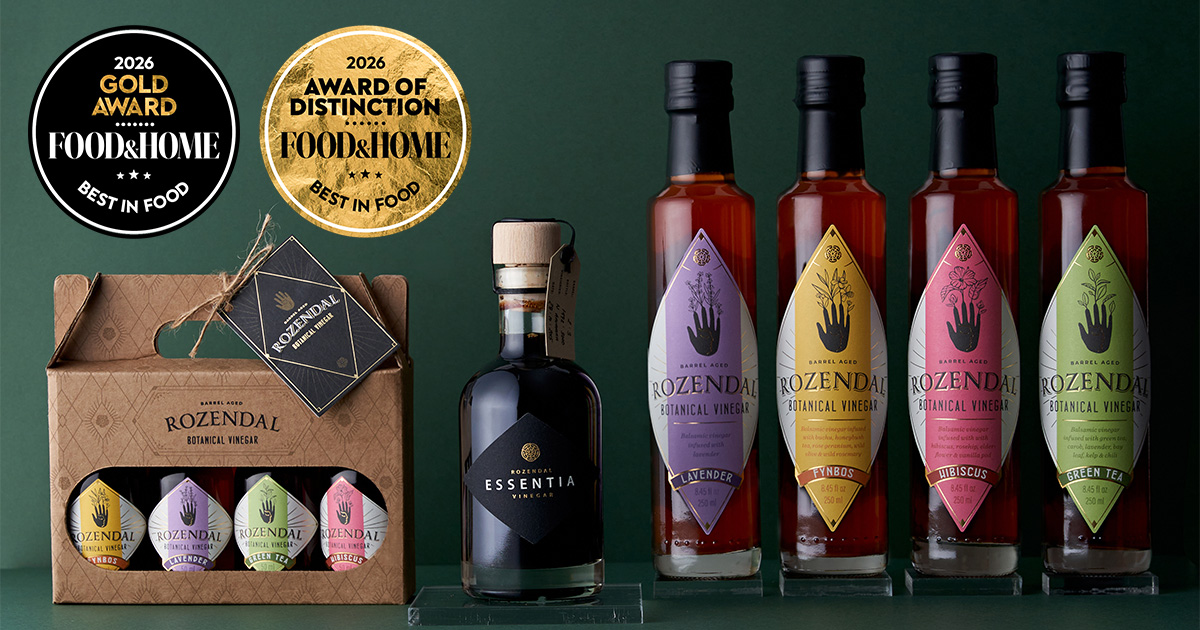
On a farm at the edge of Stellenbosch, where the suburban fringe gives way to the Jonkershoek Valley, Rozendal has spent more than two decades perfecting something that cannot be rushed. This spring, that patience was recognised again: Rozendal’s Fynbos Vinegar has been awarded both Gold and an Award of Distinction by Food & Home in 2026.
It’s a fitting turn for a business that began, quite literally, by accident.
From Wine to Vinegar
Kurt Ammann made his first wine vintage at Rozendal in 1983. The farm, whose name means roughly “horses in the valley” in Dutch, had food in its blood long before that; the family ran a restaurant before settling into farm life. For years, wine was the focus.
Then, in 1988, a vintage came in with too much acidity. It should have been a loss. Instead, it became the beginning of something else entirely. In 1995, a visit from Swiss guest Rolf Saxer offered the guidance that turned a flawed batch into a new direction. Rozendal pivoted from winemaking to vinegar making and never looked back. The farm released its last wine vintage in the early-to-mid 2000s, fully niching into vinegar from there.
It’s the kind of origin story that only makes sense in hindsight, the kind Rozendal has come to describe simply as a happy accident.
A Family Business, Slowly Built
Today, Rozendal is still very much a family affair. Kurt’s daughter, Nathalie, has run the vinegar side of the business since 2004. She holds a BSc Agric in Agronomy and Entomology from Stellenbosch University, and it was her hand that drew the original label artwork, a hand entwined by herbs, still at the heart of every bottle. Alongside her brother, she carries the farm’s day-to-day rhythm forward, generation folded into generation.
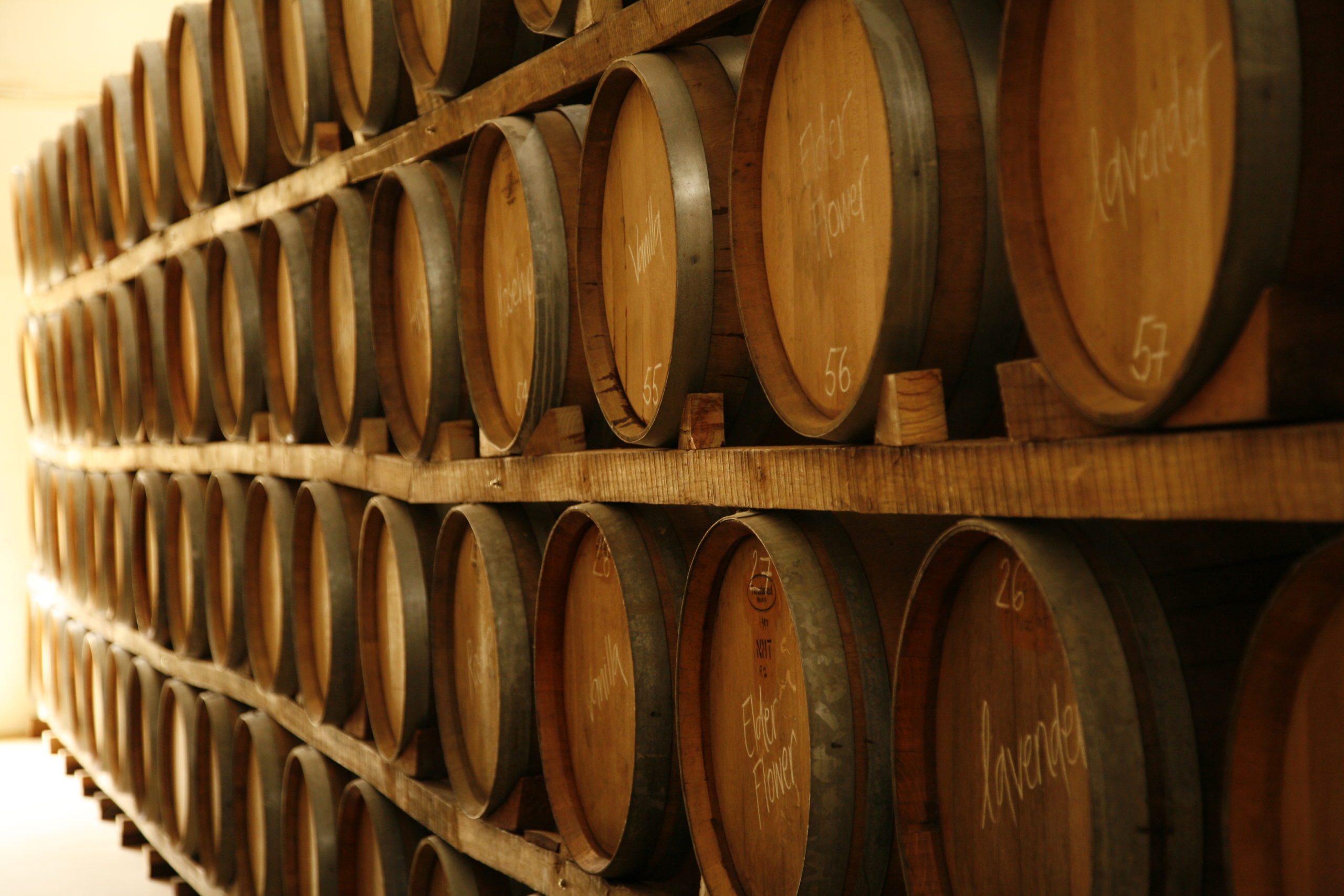
That sense of continuity extends into the vinegar itself. Rozendal makes its botanical vinegars using the traditional Orleans method, a slow fermentation process that stands in deliberate contrast to the speed of industrial production. The vinegar is then matured in oak barrels, developing depth and balance that cannot be manufactured, only waited for.
The Cape, Bottled
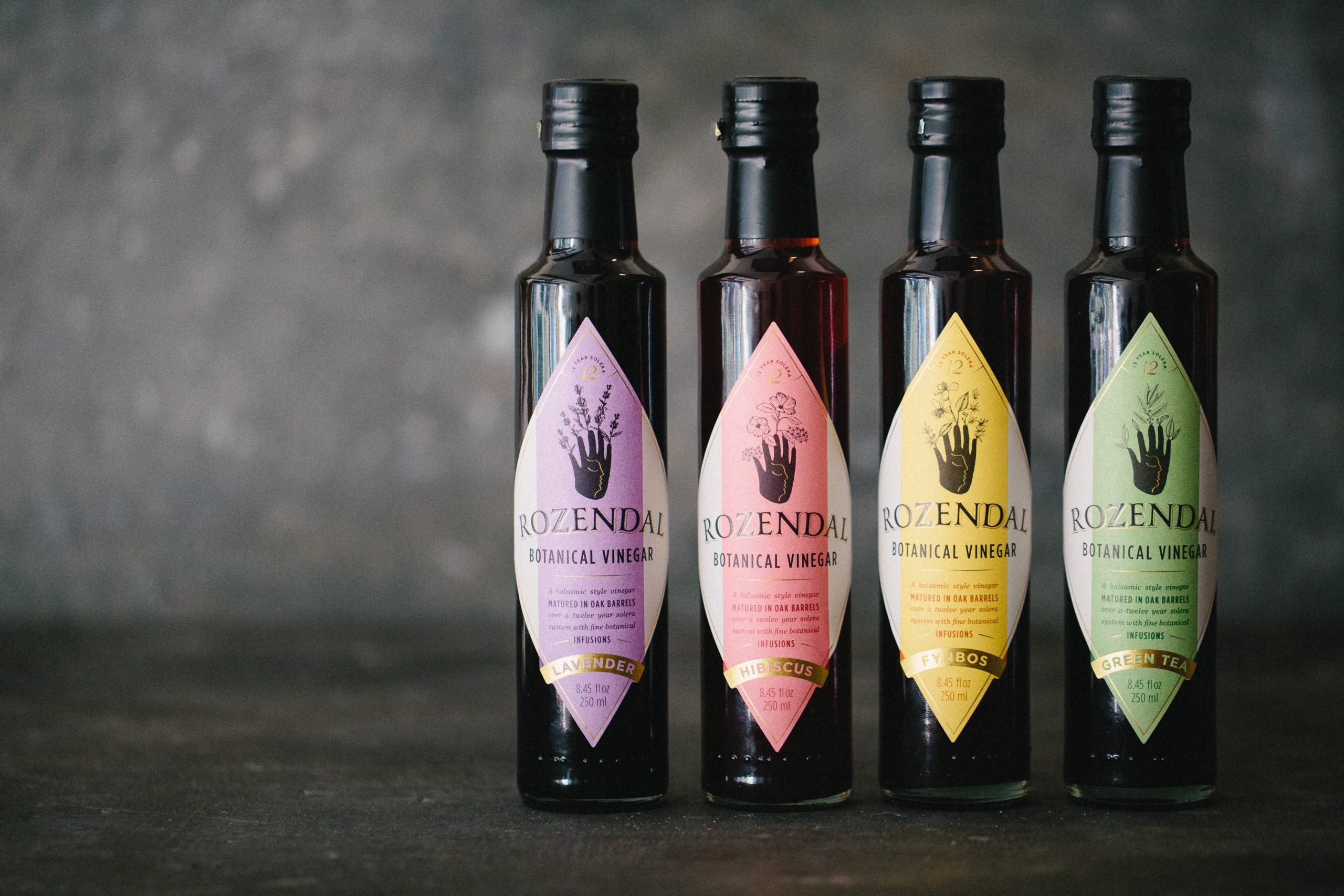
Rozendal produces four botanical vinegars, Green Tea, Lavender, Hibiscus, and Fynbos, alongside a rare flagship, Essentia, made from the farm’s original 1988 batch, with only a handful of barrels remaining.
It is Fynbos that has taken this year’s honours. Infused with buchu, honeybush tea, rose geranium, wild olive and wild rosemary, it draws directly from the Cape Floral Kingdom, one of the richest and most distinctive botanical regions on earth. Where the other vinegars each tell their own story, Fynbos is unmistakably a taste of place: something that could only have been made here, on this stretch of the Cape, using ingredients that grow nowhere else in quite the same way.
Recognition, Earned Slowly
This is not Rozendal’s first moment in the spotlight. The Hibiscus vinegar won two SOFI Awards (Speciality Outstanding Food Innovation) in New York, for Outstanding New Product in 2010 and Outstanding Vinegar in 2011. But for Rozendal, awards have never been the point; they’re simply what happens when you refuse to hurry. “Simple elegance” is how the family describes their approach: rustic rather than polished, quietly confident rather than loud. It’s an ethos that shows up in the label, and in every bottle that has spent years, not days, becoming what it is.
Rozendal doesn’t need to prove itself. Two decades in, it’s simply doing what it has always done: making vinegar the slow way, and letting the Cape speak for itself.
Rozendal Botanical Vinegars are available at the farm shop in Stellenbosch and online at www.rozendalvinegar.com.
Also See: Why television still shapes our biggest cultural conversations
Why television still shapes our biggest cultural conversations
