
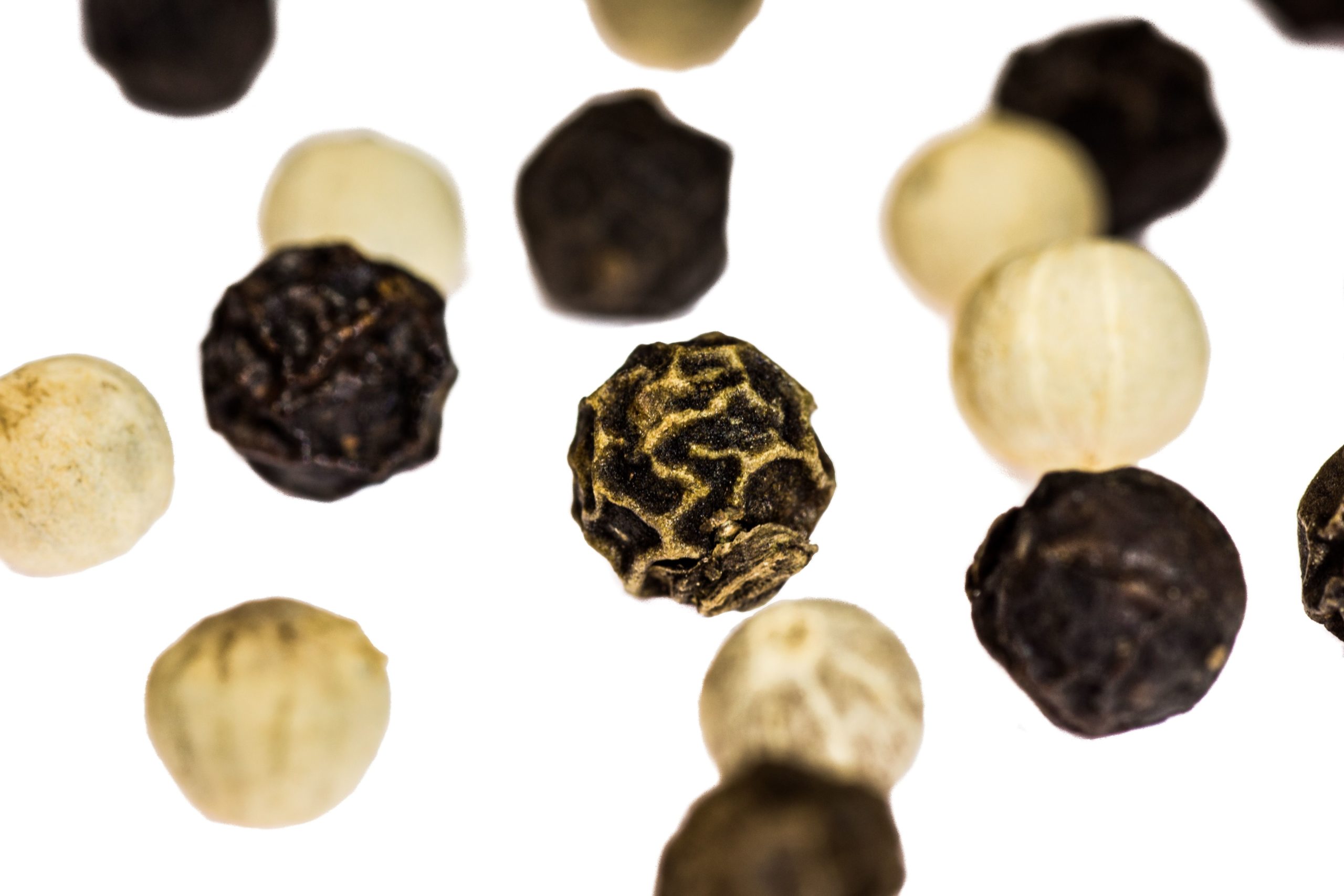
Pepper is a staple in many a household – often paired iconically with an elegant salt shaker. Without it, many a dish would lack depth and interest. What would a perfectly seared fillet be without freshly ground black pepper, or cheese sauce without white pepper, and don’t get me started on cold meat sarmies.
Pepper is a staple every cook has stocked in their pantry, but some uncertainty surrounds the type to use for each dish, and whether it matters. We have access to a whole range of colourful peppercorns, each with their own intensity, distinct flavour, and use.
Use our guide to help find the difference between white pepper vs black pepper and when to use each.
White pepper vs black pepper
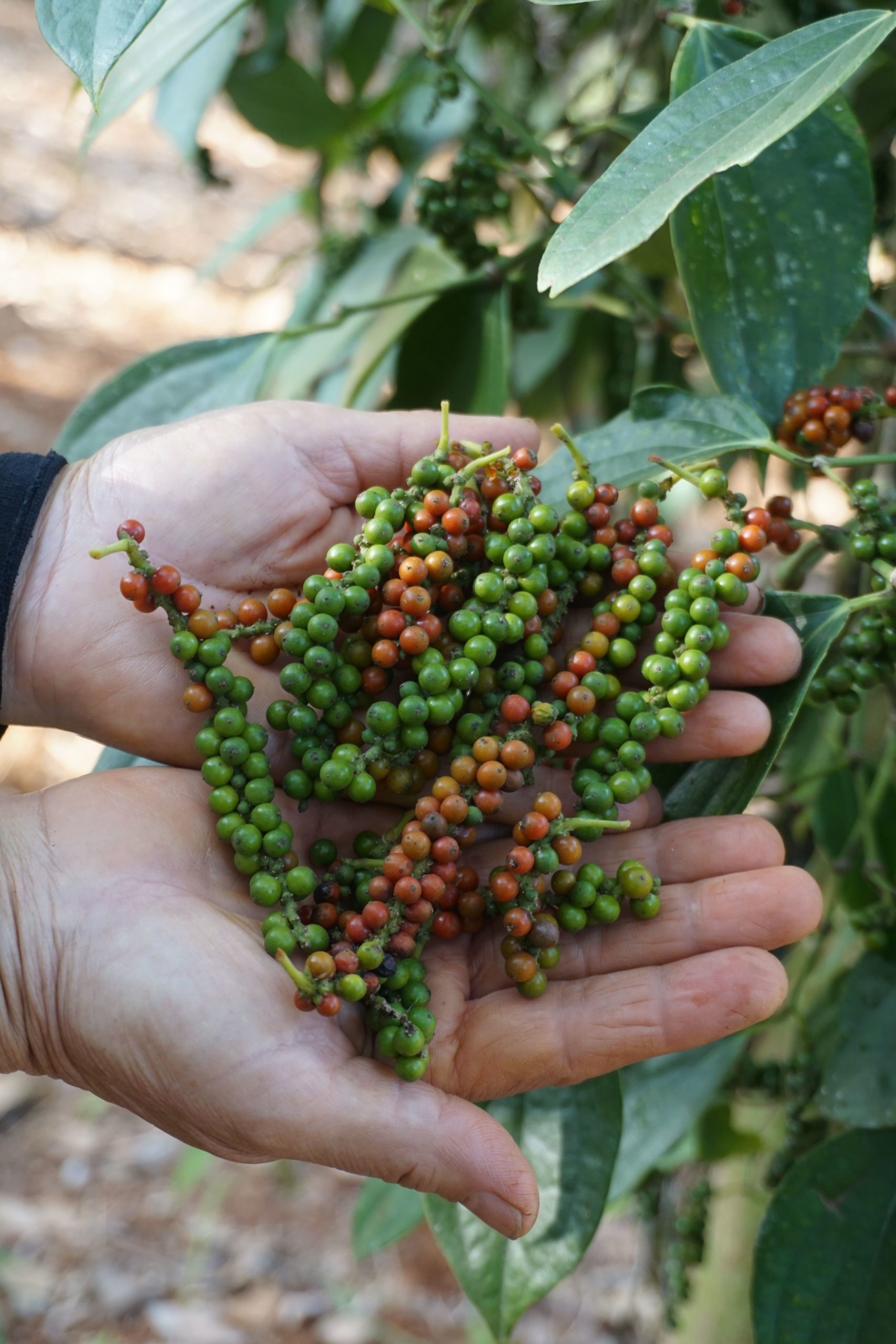
Peppercorns are the berries of the Piper nigrum pepper vine – a plant native to South and Southeast Asia. Found in the innermost part of these berries is the antioxidant compound piperine. This activates temperature receptors on our tongues, resulting in a heated or spicy sensation when we eat the dried berries.
While both white and black pepper are harvested from the same plant, the difference lies in how they’re grown and processed.
White pepper
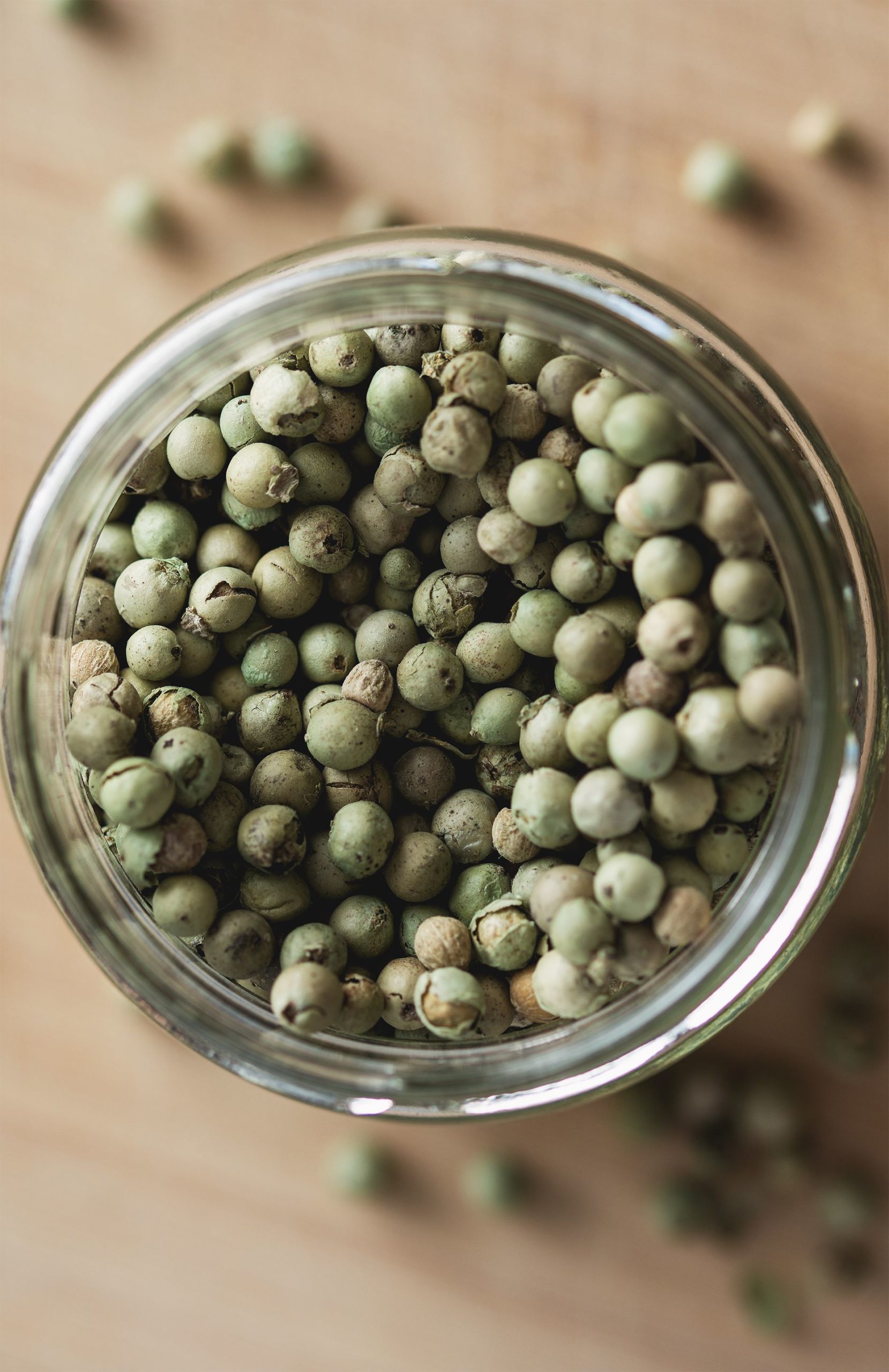
Berries harvested to make white pepper go through a lot more processing than black pepper.
First, the varietal, terroir and agricultural techniques are looked at. Similar to wine grapes, different varietals, terroir (or soil and sunlight), and agricultural techniques (think harvesting times, pruning, pesticides, and added nutrients) will result in very different appearances, aromas and flavours. When peppercorn plants are grown in intense climates where they struggle to thrive, the resulting outcome is a more intense flavour and heat (i.e. black peppercorns). A more nuanced, subtle flavour will come from berries that grew effortlessly (i.e white peppercorns).
When harvesting berries to make white pepper, the outer skin of the berries is removed by soaking them in water. Without the outer skin, the resulting colour is much lighter than their black peppercorn counterparts. As for their flavour – the time taken to soak them in water impacts their depth of flavour. The longer the soak, the more the berries ferment, turning a rather mild flavour into something a little funkier. The majority of white pepper comes from Indonesia and parts of Europe.
Black pepper
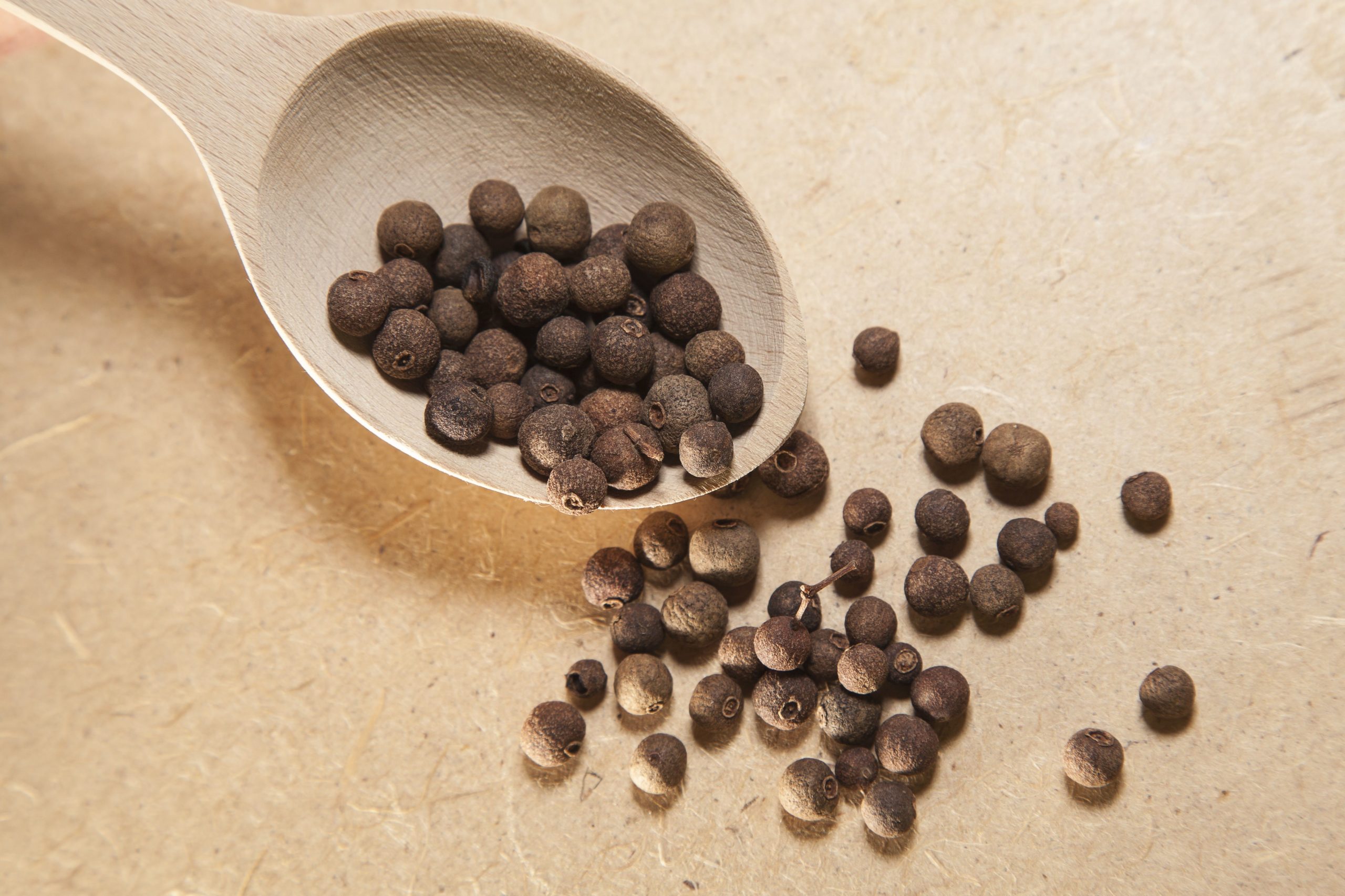
Berries harvested to make black pepper go through minimal processing. Green berries are usually harvested and dried as is – no removing of outer layers or soaking in water. The berries are either dried naturally in the sun or mechanically. The skin and flesh of the berries dry out and pucker up, creating the distinct look of black peppercorns. The majority of black pepper comes from Vietnam.
When to use each
White pepper has a more nuanced, umami, savoury and funky flavour than black pepper. It adds a lot of depth to a dish without overpowering it or becoming the main character. Use white pepper to enhance dishes like mashed potatoes, rice porridge, fish dishes, white or cheese sauces, cream sauces, and other dishes needing a savoury punch with a slow build of spice.
Black pepper should be paired with bold, punchy dishes that can handle its intense flavour and heat. Red meats (like steak), stews, curries, intense creamy sauces like monkey gland or mushroom sauce, fresh salads and sarmies will be happy with a generous crack of black pepper.
Also See: Baking powder vs bicarbonate of soda: When you should use each
Baking powder vs bicarbonate of soda: When you should use each
