
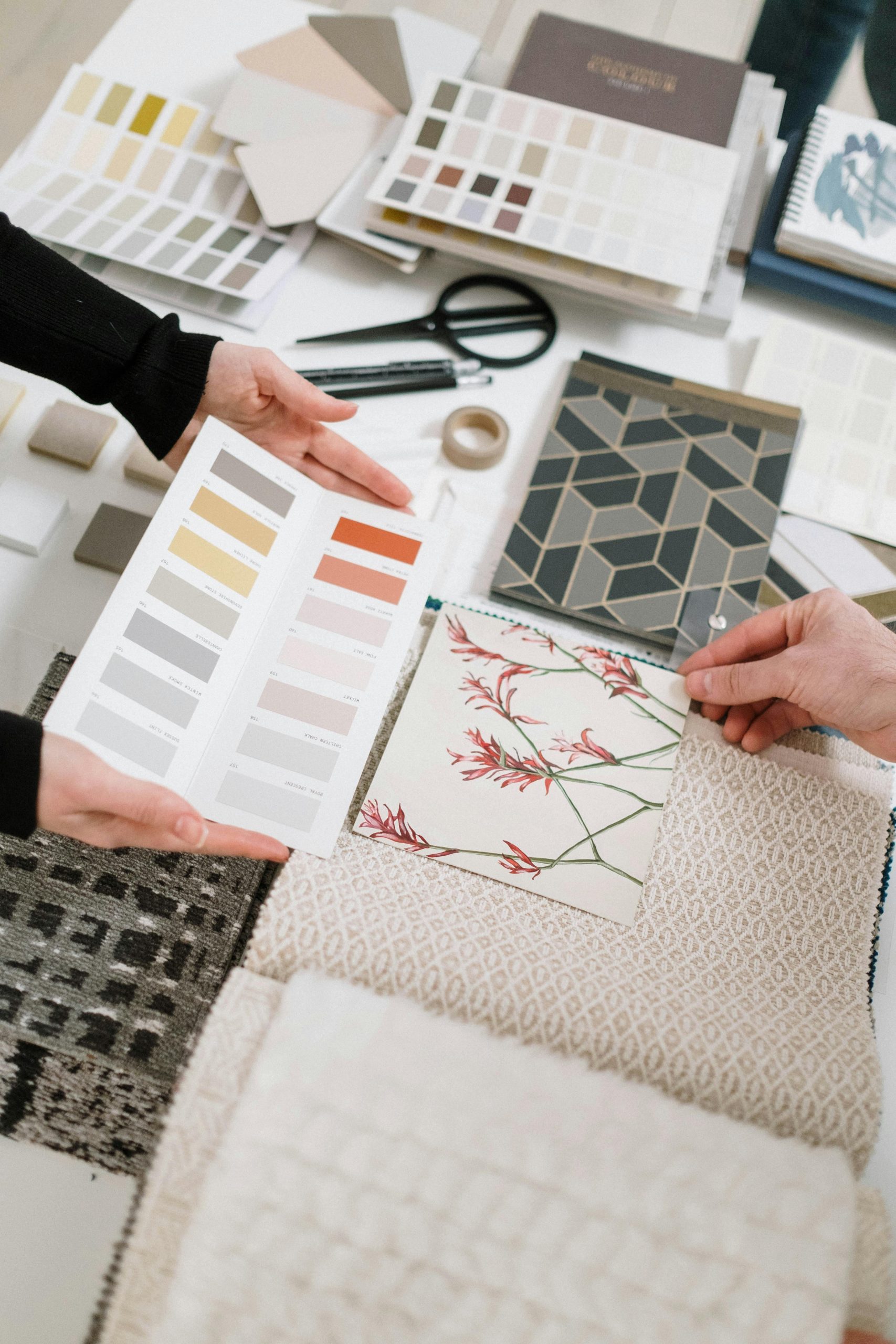
Decorating your home is the most exciting part of interior design – but also the most overwhelming. There are so many paint options and combos to choose from, not to mention fabric types, throws, pillows, artwork, and other items to sort out. To make things easier and less stressful, all while guaranteeing a well-decorated space, we’ve put together a decorating guideline: 5 tricks to use that actually work.
Decorating guideline
Of all the tips and tricks that internet users swear by, we’ve rounded up 5 of the best that actually help you achieve the space you’ve envisioned.
1. Use a mood board
Define or outline your decor concept with a mood board. Whether physical or digital, a mood board should contain colour palettes, fabric choices, and reference pictures of the look and feel you’re aiming to achieve. It helps you stick with your concept for every decision, ensuring your design choices work together to create a cohesive result.
Don’t confuse this with picking a theme. You’re aiming for a concept to guide your decision-making, not dictate every detail. The easiest way to create a mood board is to start collecting inspiration. These can be pictures of spaces you loved seeing from magazines, Instagram, or Pinterest. It also includes your favourite colours, artworks, ornaments, and fabrics. While you’re building your mood board, you’ll start noticing patterns – these recurring patterns are what will reveal your design concept and help set the tone for every decision that follows.
2. Use the 60-30-10 colour rule
Many interior designers notice that, when it comes to colour, people tend to choose extremes: either all neutral tones or a mix of bright and clashing colours. While neutrals and bright colours are needed to make a space feel inviting and interesting, there’s a trick to achieving the right balance. Colour palettes are commonly made up of three colours. When deciding on a colour palette for your mood board, and consequently your space, stick with the 60-30-10 colour rule for a harmonious base.
- 60%: This is your colour anchor – the backdrop that makes everything else work; use a neutral foundation for walls, large furniture, and large windows
- 30%: This makes up your supportive colour – it adds personality without overwhelming the space or mood; use accent colours on furniture, textiles, large accessories and artwork
- 10%: This should be the pop of colour – and should be a colour that adds joy and visual interest to the space; use it on small accessories, artwork, flowers, and decorative objects
3. Scheming
Once you’ve gathered your decorations, i.e. colour palette, furniture, artwork, and other decorating items, the next best thing to do is to start “scheming”. “Scheming” is the process of laying out all your furniture, materials and finishes in front of you, in the room you’re working on. Take a look at the whole bunch and then ask yourself a couple of questions. Do all these items work together? Is there a piece that’s the odd one out? Does this bunch meet the vibe of the mood board? What do I need to add or take away to make it feel more harmonious?
If it’s a little tricky bunching these items up in the space you’re working on, then take a few snaps of them and create a slideshow or PowerPoint to get a good look/idea of everything together. This step may seem bothersome and slightly unnecessary, but it really helps keep your vibe in check. Most things we imagine almost always need tweaking once we physically see how they turn out.
4. The triangle method
With everything planned out, now is the time to place items! One trick that separates amateur interior designers from the experts is placement. Whether filling up shelves or coffee tables, using the triangle method for placement is key. Instead of lining items up rigidly like little soldiers, use varying heights and textures to give the space an interesting and cohesive look.
Group tall, medium and short items together, forming a triangle. This makes your eye move in and around the space, keeping the viewer engaged and making the space feel cohesive. Group items like plants or flowers with a stack of books, candles and something personal – like a trinket you bought on your last holiday.
5. Remember, design is a marathon
Designing your space doesn’t (and shouldn’t, according to experts) need to be a one-day project. It’s easy to feel pressured to have a space look finished immediately, especially with what we see on socials. But the best-designed spaces take time. You might be waiting for your favourite artwork to arrive, or you’re still waiting to come across the perfect piece that’s aesthetically pleasing and functions exactly as you need it to.
Avoid compromising your style and preferences for quick fixes. Or rushing into cheaper options just to tick boxes on a checklist. Most experts argue that a home is always evolving, and these spaces are never truly finished. A thoughtful approach without rushing or unnecessary compromises is what guarantees a home that is both beautiful and deeply personal.
