
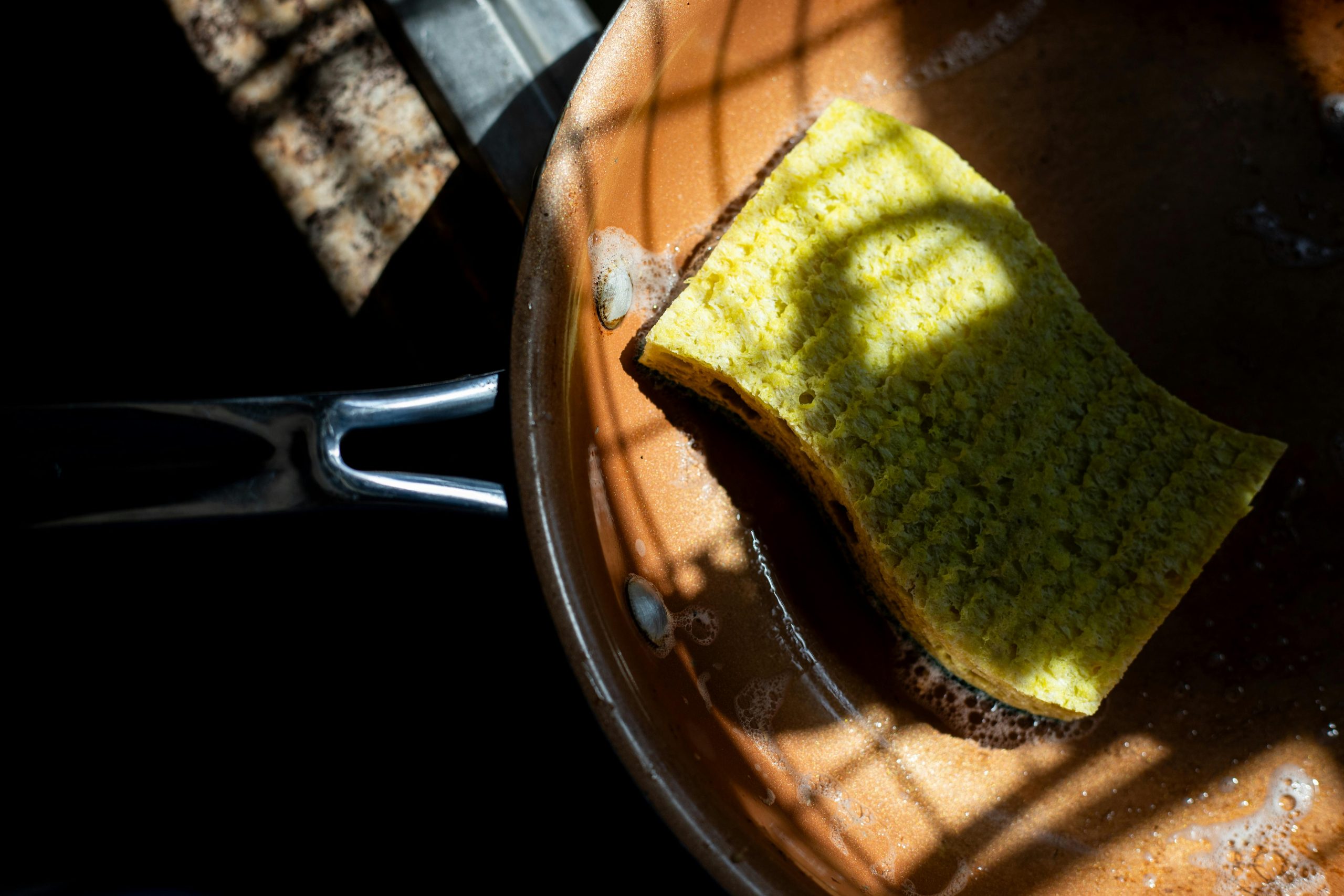
Ever wondered why your pots and pans feel sticky, even after a vigorous clean? Well, it’s more common than people think – fats and oils used for cooking break down at high temperatures, turning into a tacky film. To successfully clean your cookware, you’ll need a little more than elbow grease. Fortunately, you’ll find out more below.
The culprits
Many of us use fats, oils and cooking sprays while we cook and bake. These break down at high temperatures and start turning into a sticky residue. Paired with steam, splatters, starchy foods, and detergents that aren’t fully rinsed away, that sticky residue turns into a full-blown, stubborn film that coats every surface it can. And we mean every surface: from high-quality stainless steel to glass, plastic and metal handles, nothing is safe.
How to remove sticky films from all cookware
Even after a good hot soak and scrub, if you’re about to give up on that sticky cookware you inherited from your gran, try this method first:
1. Bar Keeper’s Friend
Bar Keeper’s Friend is a heavy-duty oxalic acid-based cleaner, popular in the United States. If you can’t find it in your local grocery store, opt for Vim, The Pink Stuff Paste or Chemco.
- In a small, plastic container, make a paste with some Bar Keeper’s Friend and water.
- Using a brush or gloved hand, spread this paste all over the sticky areas of your cookware. Let it sit for 3 to 5 minutes.
- Use a soft sponge and gently scrub the area in circular motions.
- Rinse with warm water. Repeat as needed.
2. Bicarbonate of soda
For stubborn residues or tricky places like rivets, rims, and other hardware, bicarbonate of soda is your best bet.
- Combine 1 tablespoon of bicarbonate of soda, 1 tablespoon of salt and 1 teaspoon of hot water in a small, plastic container.
- Apply the paste to the sticky areas of the cookware. Let this sit for about 5 minutes.
- Use a soft-bristled toothbrush to gently scrub the paste.
- Rinse clean with warm water. Repeat as needed.
How to prevent the dreaded sticky residue
One obvious answer is to try to avoid the culprits while cooking, but that’s a tough ask. Instead, clean your cookware in hot, soapy water as soon as possible. Avoid soaking them in water; this only causes the oil or fat to spread to other areas rather than breaking them down. Get rid of that mild dish soap when tackling sticky residue – only specially formulated dish soap will break down the baked-on grease.
