
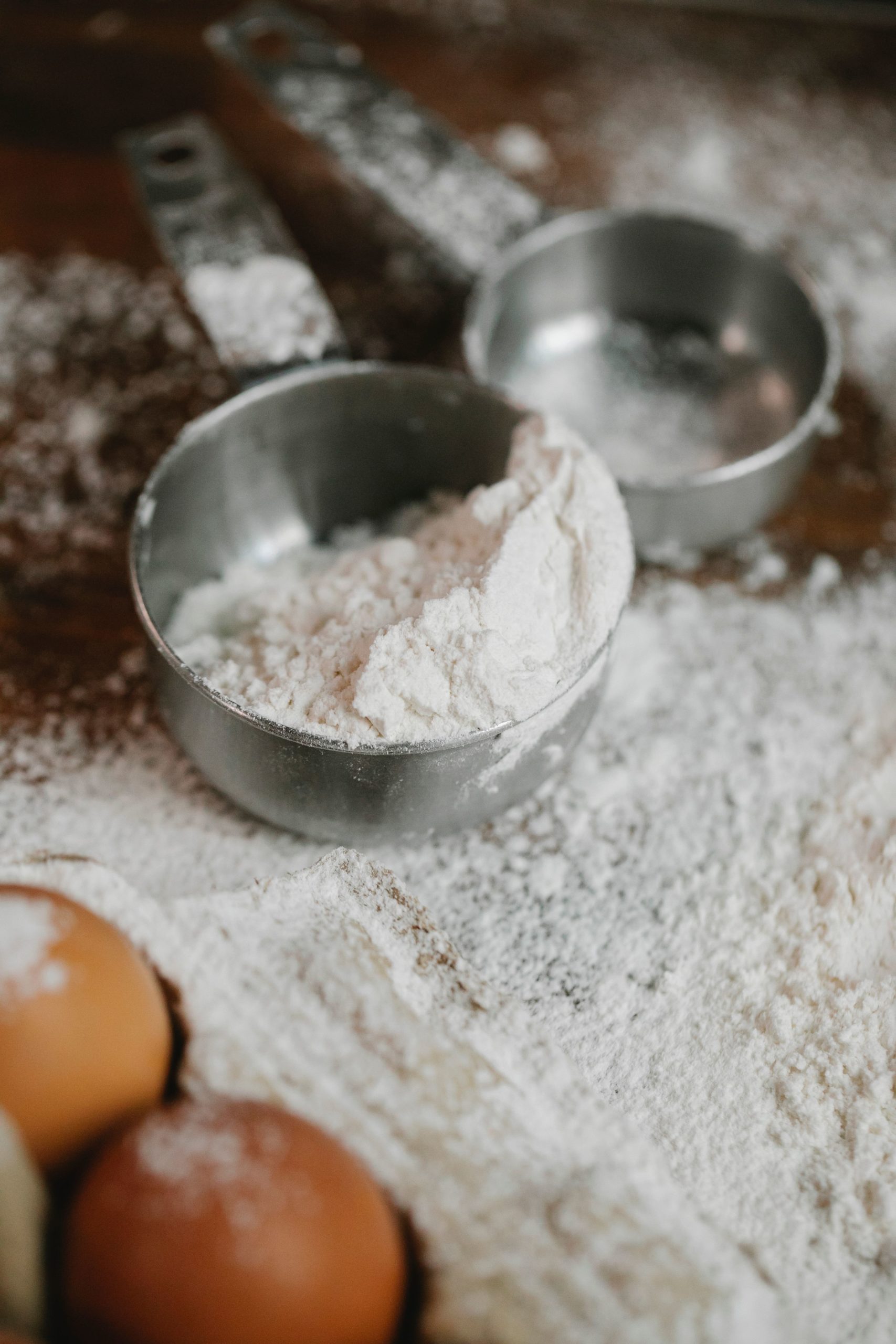
While these two products practically look and feel the same, they are vastly different. When it comes to baking, cooking, and even cleaning, there are times when you really should know when to use each to avoid a flopped cake, overly bubbly muffin batter, and a stain that’s become impossible to lift.
Use our easy guide to discover the difference between baking powder versus bicarbonate of soda, and when you should be using each.
Baking powder vs bicarbonate of soda
While both baking powder and bicarbonate of soda (also called bicarb for short or baking soda) are raising agents, their makeup is what sets them apart.
Baking powder is made up of both an acid and a base. Baking powder contains bicarb, an acid (not strong, usually weak) like cream of tartar and a filler, such as cornflour, to help absorb moisture and buffer the reaction between the acid and base when in storage. In short, baking powder is a complete raising agent, and it only needs a liquid, like water, to be activated. Once activated, the acids and bases react to each other and release carbon dioxide – which is what we’re after when baking cakes, breads and other goodies.
Bicarbonate of soda is alkaline or basic, not acidic. It’s simply half a raising agent – it needs to be combined with an acid, like cream of tartar, lemon juice or vinegar, for the chemical reaction to occur that results in carbon dioxide, which is what raises batters, doughs and soda breads. Without the acid, no chemical reaction will occur, and your batter or dough will most certainly fall flat. Bicarb also works wonders as a paste or added to DIY or natural cleaning solutions to help lift stains, cooked-on grease, and neutralise acidic soups and sauces.
When to use each
Another tip to help you differentiate between the two is that baking powder is fine and soft, with little to no odour. Bicarb has a rougher texture (like a finer version of table salt) and may smell only when combined with a liquid.
You will find baking powder in many dough and batter recipes that are without acidic ingredients – like cakes, scones, and muffins.
Bicarb will be found in recipes with acidic ingredients, like cream of tartar, lemon juice, vinegar, and buttermilk. Think meringues, certain cookie doughs, soufflès, and lighter cakes (like Angel food cake). You may also find bicarb in DIY recipes used for cleaning around the house.
In some cases, you may come across a recipe that calls for the addition of both baking powder and bicarb. This may be because the bicarb is needed to offset an acidic ingredient, but the reaction won’t result in enough carbon dioxide – hence the extra boost from the baking powder.
How to substitute for each
When you’re without one or the other, and don’t have time to run and buy what’s necessary, it is possible to substitute. But it’s not as straightforward as replacing one with the other – keep in mind the chemical reaction that needs to occur.
Substituting baking powder for bicarb: Substitute 1 teaspoon of baking powder with 1/2 teaspoon of bicarb and 1 teaspoon lemon juice or vinegar.
Substituting bicarb for baking powder: Make your own baking powder by mixing 1 part bicarb with 2 parts cream of tartar.
