
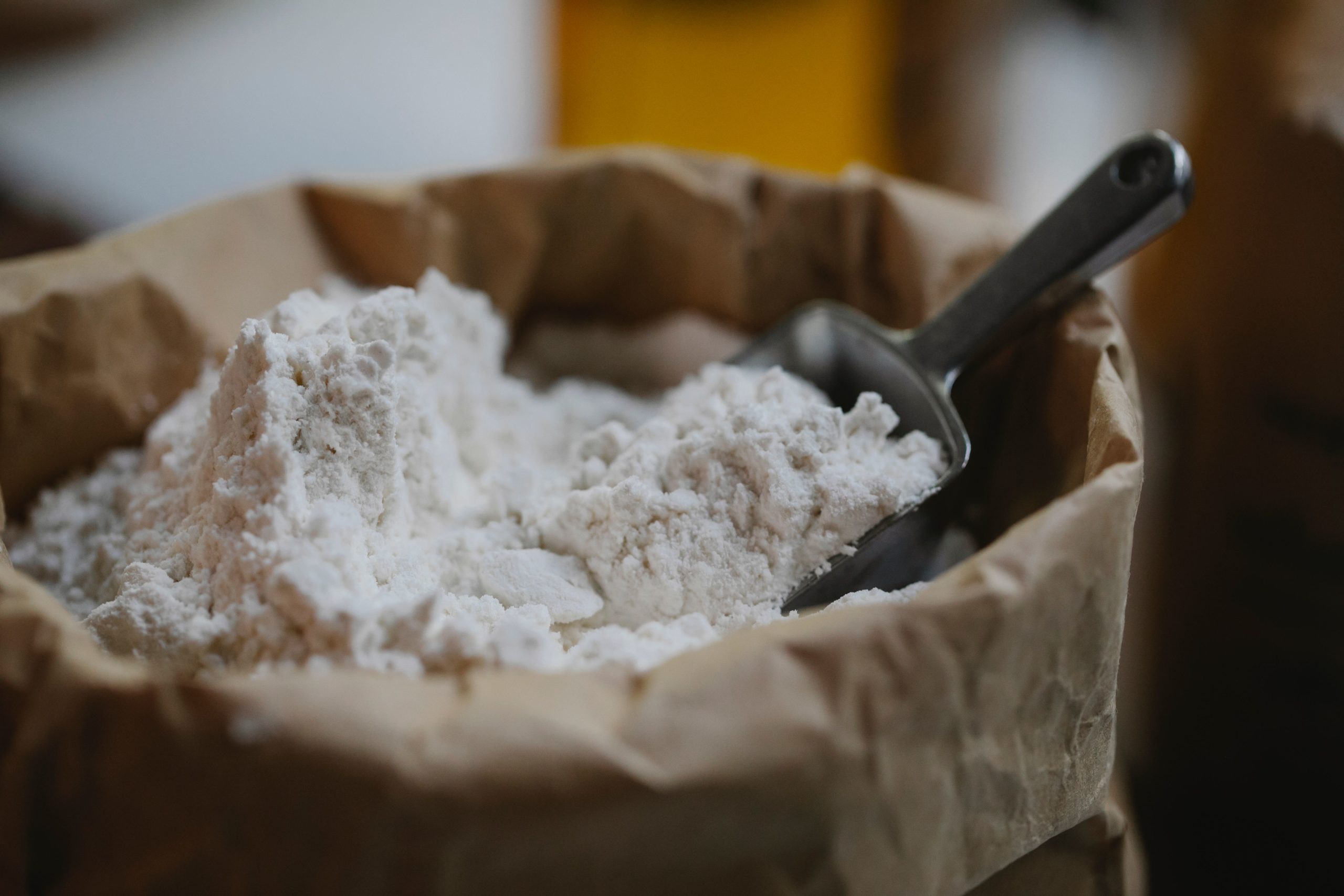
There is a huge difference between cake and bread flour, and the type used really does make a difference. Flour is not just flour, especially in the scientific world of baking. The super soft, moist chocolate cake or crispy, chewy baguette all depends on the type of flour used.
In this guide, we explore the differences and types of cake flour vs bread flour, explaining why and how the difference matters. And, by the end of it, your next bake should be a hoot.
Cake flour vs bread flour
Flour forms the basis of baked goods, creating structure and texture and helps control the moisture content. But not all flours are the same; while grain type and milling techniques are looked at, the most important factor of flour is its protein content.
Protein content in flour = gluten. Gluten is the key to the soft, pillowy structure of cakes and even-crumbed, chewy breads. The less protein content a flour has, the weaker the structure and lower elasticity the batter or dough has, or in other words, the lower the gluten development. The higher the protein content, the higher the elasticity and stronger structure, or higher gluten development.
Low protein content flours are ideal for soft, delicate bakes like cakes, muffins, and some batters. High protein content flours are ideal for chewy, firm, and even crispier bakes like bagels, pizza dough, focaccia, and other breads.
Cake flour
Cake flour is usually made from soft wheat varieties and ground to a fine or even extra-fine texture. It feels silky, similar to cornflour (without the rubbery/starchy texture) and is usually bright white. Cake flour has the lowest protein content, ranging anywhere between 6 and 11%. While cake flour can, in some cases, be substituted with bread flour, it cannot be used as a substitute for bread flour (your breads will most certainly flop).
Cake flour is best used to make:
- Tender cakes like angel food cake, chiffon, and sponge cakes
- Muffins and cupcakes
- Scones
- Batters used to coat foods for deep-frying like tempura batter
What about “self-raising” and “all-purpose” flour?
All-purpose flour
Commonly referred to in America as “AP Flour“, it’s made from a mix of hard and soft wheat, milled to a fine texture. It feels soft and powdery, looks pale white, and clumps together slightly when pinched. It has a protein content ranging from 9% to 11%. It’s widely available in America and used to make most baked goods like cookies, muffins, quick breads and some cakes, but not so much here in South Africa. It can be substituted for our cake flour and still produce a similar texture.
Self-raising flour
Usually stocked right next to cake flour in the shops is self-raising flour. Self-raising flour (as its name suggests) is made up of cake flour and a chemical raising agent, like baking powder. It feels like a shortcut in baking, but makes baking cakes, cupcakes, muffins, quick breads and scones that much quicker and easier. It has a similar protein content to cake flour and should never be substituted for bread flour.
Bread flour
Bread flour is made from hard wheat and other grain varieties that give it a more coarse texture. Bread flour usually has a protein content ranging from 11% to 14%, depending on the type of grain milled.
The most common bread flours we have available to us in South Africa include:
- White bread flour: the bran and germ of wheat kernels are removed and the endosperm milled finely
- Brown or whole wheat bread flour: the whole wheat kernel (i.e. the bran, germ and endosperm) is milled
- Rye flour: rye kernels are milled whole
- Specialised bread flour: this usually includes bread flours with a higher protein content (more than 14%) and finer texture, like “00” flour from Italy, pastry flour from Europe, and gluten-free flours (usually made from a starchy grain)
Bread flour is best used to make:
- Yeasted breads
- Sourdough starters and breads
- Pizza dough
- Pretzels
- Bagels
- Foccaccia
- Speciality flour like “00” and pastry flour is used to make pasta doughs and croissants
Also See: Does flour go bad? How to store flour and know when it’s expired
Does flour go bad? How to store flour and know when it’s expired
