
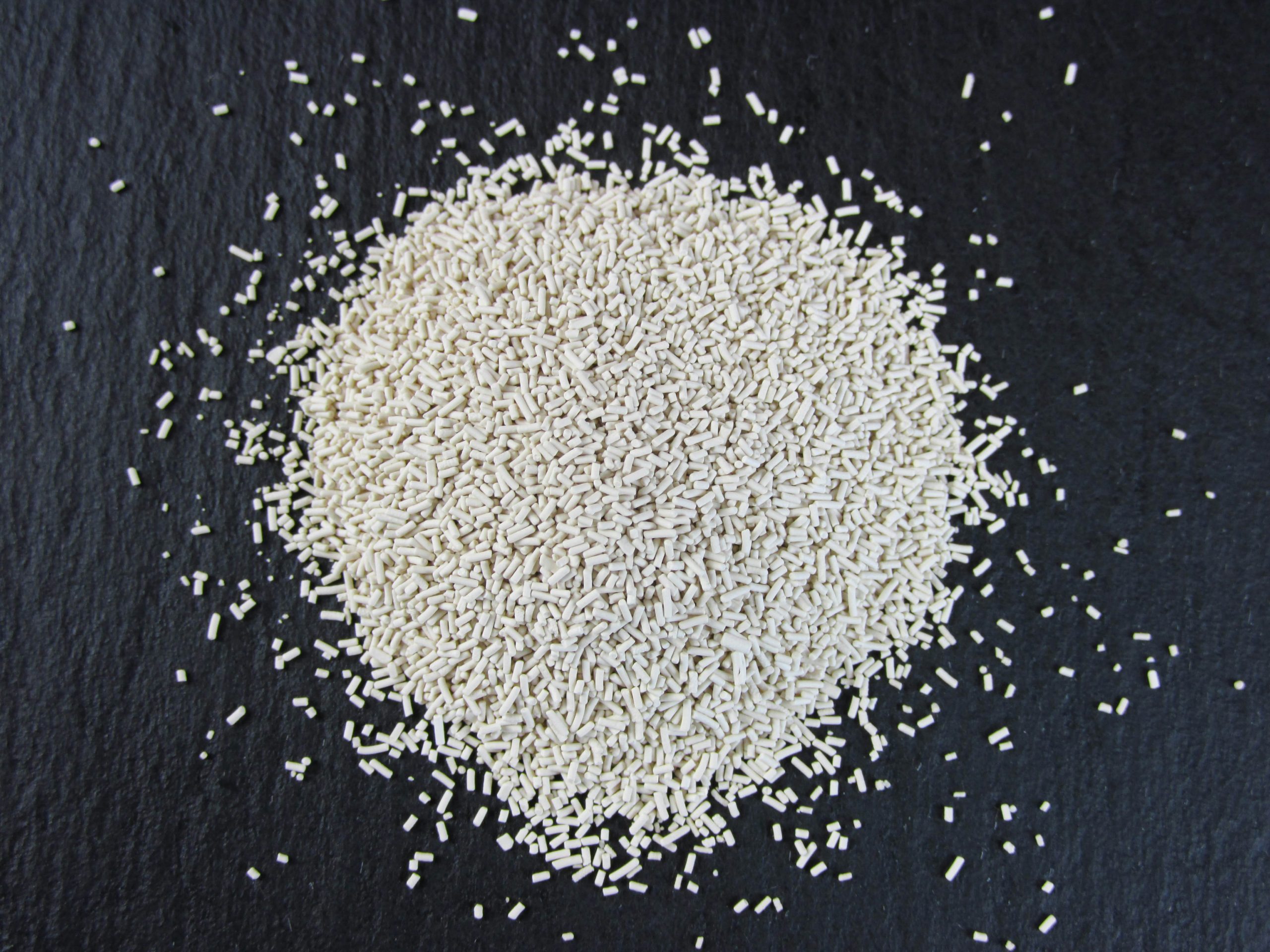
Whether you’re an experienced baker or just starting out, the type of yeast you use can make or break your next batch of bread, rolls and pastries. Even though the concept of yeast is a constant (those little microorganisms help your dough rise), the type of yeast you use really does make a difference.
We break down the differences between instant yeast vs active dry yeast and showcase the best type to use in your next bake.
Instant yeast vs active dry yeast: What’s the difference?
Instant yeast
Instant yeast is a type of dry yeast introduced in the 1970s as a fast-action solution to the (in many cases) long baking process. You may find that it is also referred to as or named rapid-rise or quick-rise yeast. It is the most popular type of dry yeast used in many a restaurant and home kitchen.
It starts out as any yeast-making process, but the difference is that it’s dried more quickly and milled into finer particles. This means that it almost instantly dissolves and activates faster than other types of dry yeasts. In other words, you don’t need to proof this type of yeast first before incorporating it into your dough – you can add it in with all the ingredients and end up with the same or similar results. It is also more geared for double or longer-lasting rises/proofing. Instant yeast will keep working long after the first rise, allowing you to refrigerate or ferment doughs for better gluten structures and flavour.
Instant yeast is best used for quick bakes like quick-bake bread recipes and other pastries (like cinnamon rolls).
Active dry yeast
This is the most common variety of dry yeast you find on the shelves. Its defining characteristic is that it is a living organism that’s dormant.
It needs to be proofed before you can incorporate it into your dough. And the most common method used to proof active dry yeast is to dissolve it into lukewarm water and left to bubble and froth for a good few minutes. Active dry yeast does not allow for second rises or prolonged proofing like instant yeast. Instead, you need to be mindful of the recipe you use with active dry yeast and how much time you let doughs rise for before baking.
Active dry yeast is usually sold in individual packets, and should actually be frozen or refrigerated once opened to keep the little yeasties fresh and active.
Active dry yeast is best used for more intricate bakes that need the added proofing time to ferment and develop gluten structures and flavour.
Can you substitute one for the other? Absolutely. Substituting instant yeast with active dry yeast will mean your dough will take longer to rise/proof before baking (and that you need to keep a stricter schedule, so as not to lose the oomph active dry yeast only provides once), you will see similar results. Substituting active dry yeast with instant yeast is a breeze. Use the same amounts by weight when substituting.
Also See: Does yeast go bad? Here’s how to tell before your dough falls flat
Does yeast go bad? Here’s how to tell before your dough falls flat
