
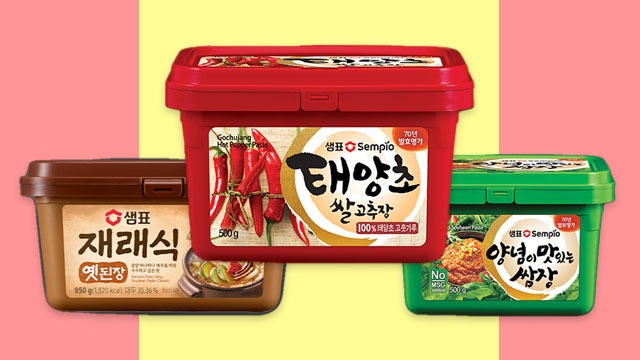
The ultimate trifecta of Korean cuisine, these fermented pastes are an important part of many Korean dishes and culture. So much so that UNESCO has recognised Korean “jang-making as an intangible cultural heritage of humanity”. If you’re standing in front of a shelf filled with mysterious red and brown pastes, searching for the condiment you need for your next Korean BBQ or jiggae, you’re not the only one scratching their head.
I’ve been there, done that and came out of the scenario with my stomach happily stuffed. Once you know the differences between the pastes, you’ll be able to unlock authentic flavours and add traditional Korean dishes that have been made for centuries – how exciting! Let’s get started.
Gochujang vs doenjang vs ssamjang
Gochujang
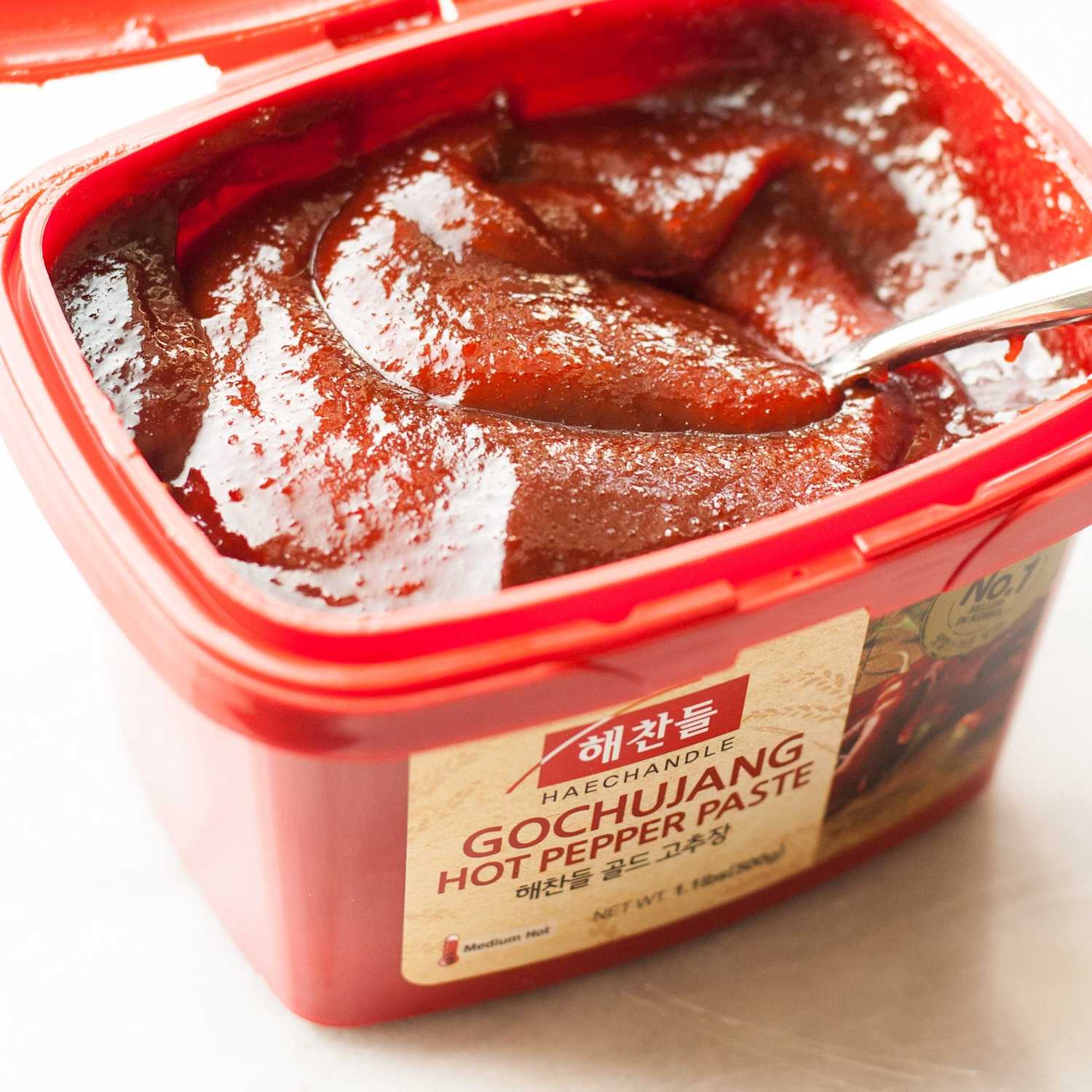
Translating to “chilli paste”, gochujang is pretty easy to decipher from others. One of the most iconic fermented pastes in Korean cooking, gochujang has a vibrant red colour, a spicy aroma, and a smooth, peanut-butter-like consistency. Through months of careful fermentation, gochujang is made with Korean red pepper powder (AKA gochugaru), fermented soybeans (AKA meju powder), glutinous rice and salt.
After fermentation, the paste develops a complex, layered profile: spicy, sweet, salty, and rich umami flavours make it distinct from others. Heat levels range between 1,500 and 2,500 Scoville Heat Units – think spicier than Sriracha but milder than pure chilli sauces.
Best used for:
- Marinades
- Stews and soups
- Tteokbokki
- Bibimpap sauce
- Stir-fries
Doenjang
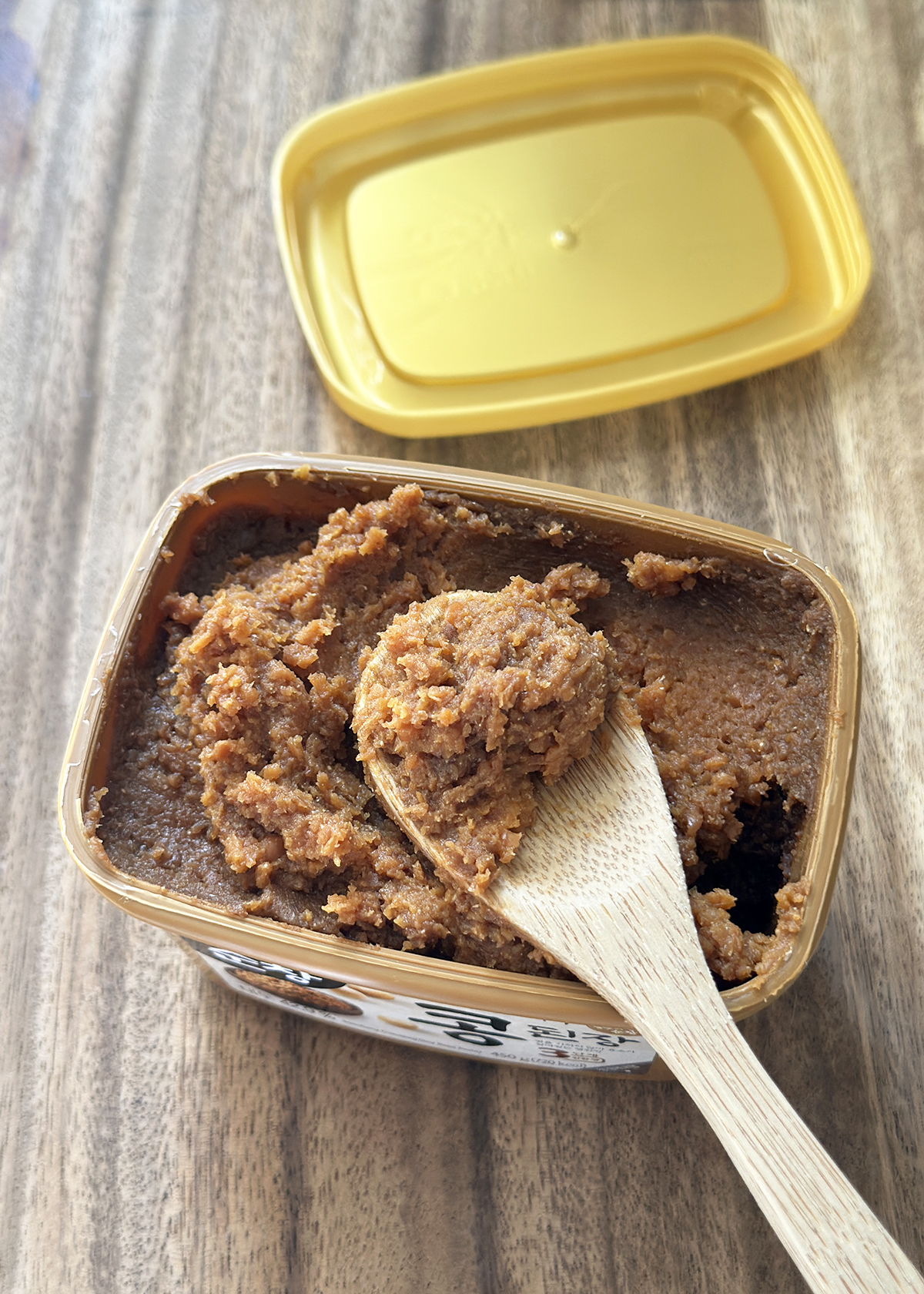
Doenjang serves as Korea’s foundational soybean paste. Unlike Japanese miso (also a fermented soybean paste), doenjang is more robust, earthier, and saltier, and reflects Korea’s distinct fermenting practices. Traditional doenjang contains three ingredients, namely fermented soybeans (meju), salt and water.
Soybeans are boiled, formed into blocks and fermented for months before being used to make doenjang. When the doenjang process finally begins, the meju blocks are submerged in a saltwater brine in earthenware vessels, where it separates into two products: a dark liquid known as “ganjang” (AKA Korean soy sauce), and a paste (AKA doenjang).
The long fermentation process helps build a complex flavour profile that sets it apart from other fermented soybean pastes. Doenjang provides an intense savoury, funky, and rich umami flavour to any dish it’s used in. With a slightly thicker, crunchy peanut butter-like consistency, doenjang paste is golden brown to dark brown in colour.
Best uses:
- Jjigae (stew)
- Soup seasoning
- Namul seasoning
- Dipping sauce base
- Muchim (seasoned veggies)
Ssamjang
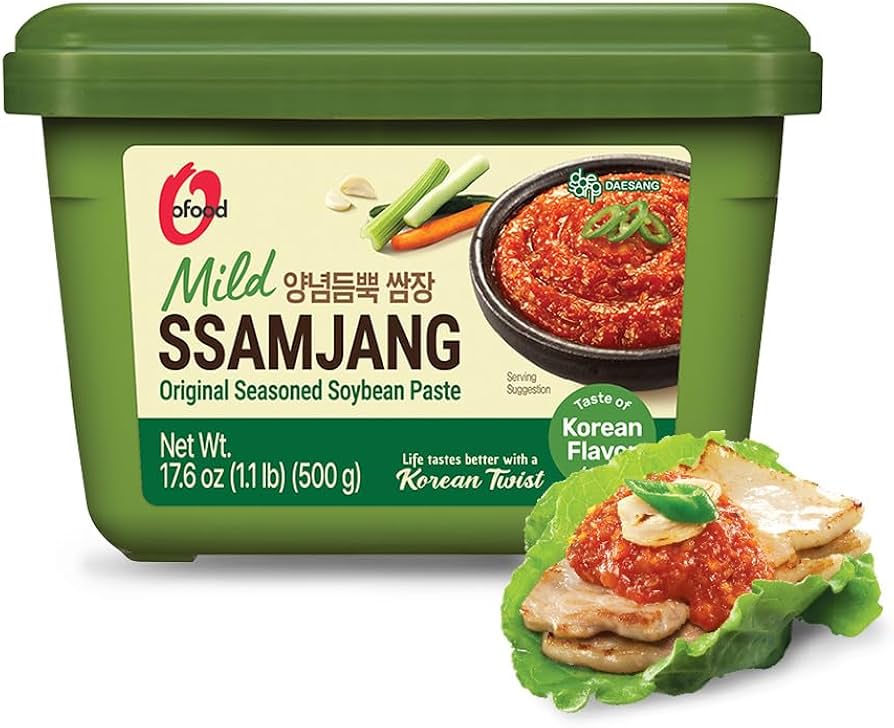
Ssamjang, which directly translates to “wrapping sauce”, is a best-of-both-worlds paste. Unlike gochujang and doenjang, ssamjang is a blend of Korean pastes and seasonings. A blend of gochujang, doenjang, sesame oil, garlic, spring onions, sweeteners (like sugar or honey) and sometimes other aromatics (like toasted sesame seeds and ground nuts) makes up a basic ssamjang.
The resulting texture is chunky from the doenjang and a vibrant red-brown colour from the gochujang and other ingredients. Ssamjang has a unique flavour profile adding heat, sweetness, earthy, umami and salty notes to the dish or meat that’s dipped into it.
Popularly used as a dipping sauce in Korean BBQ (wrapping BBQ meat in ssamjang and a lettuce leaf), ssamjang can be used in many other dishes.
Best uses:
- Korean BBQ
- Raw veggie dip
- Rice bowl topping
- Ssam (AKA wraps)
- Banchan condiment
Can you substitute one for another?
A quick answer is no, but with careful consideration and planning, it can be a yes.
- Gochujang in place of ssamjang: results in a spicier, bolder version of ssamjang, but with the right balance of heat, sweetness, acidity and saltiness, it makes for a reasonable substitute until you get your hands on the real thing
- Gochujang and doenjang in place of ssamjang: while they make the foundation of the dipping sauce, you’ll still need to add sesame oil, spring onions, garlic and a sweetener; some prefer to make their own version at home for freshness and vibrant flavour
- Ssamjang in place of gochujang: remember that ssamjang contains foenjang and a whole lot of other ingredients, and this can overpower a dish; however, it works well for robust stews and marinades where complex flavours are welcome
- Doenjang substitutes: since doenjang has a very distinct flavour, gochujang and ssamjang cannot be used as substitutes; the only next best thing is to move into Japanese cuisine and use some miso paste, but don’t expect authentic results
