
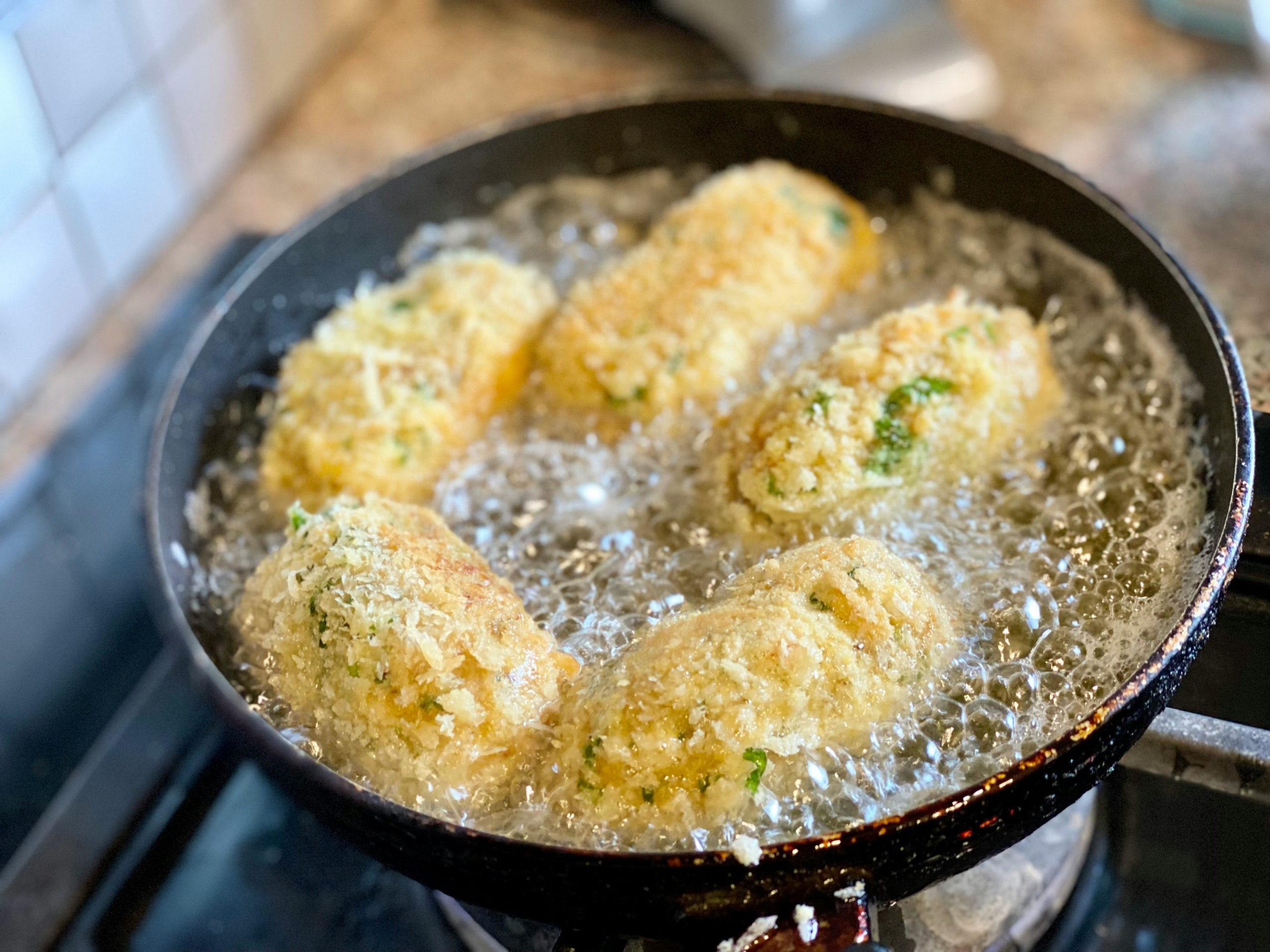
Cooking fats and oils have been, and continue to be, heavily contested. Cooking fats, like butter and tallow, help create the flakiest pastries and crunchiest potato wedges, but are flagged for their saturated fat content. Oils, like olive and sunflower, are versatile and also create the perfect crunch to many dishes. But they are highly processed, also flagging their usage. When both cooking mediums are questioned for their health implications, it makes cooking processes that much trickier.
We’re here to tell you that the choice doesn’t have to be. The cooking medium you choose depends on your health status and the dish you’re about to make.
Fats
Cooking fats are minimally processed by-products of animals. They’re usually separated or rendered and have been used for many things, from soap to deep frying, for centuries. Fats have high smoking points, add rich umami flavours to dishes, and help create a smooth, light mouthfeel – making them a versatile cooking medium.
However, due to their high saturated fat content, fats should be used in moderation. High consumption of saturated fats can increase the risk of heart disease and stroke.
Common cooking fats and their uses:
- Butter: a by-product of cow’s milk, its rich flavour is best used for sauteéing, making sauces and in baking; contains fat-soluble vitamins A, D, E and K; use low to medium heat to avoid burning the milk solids
- Ghee: this is butter that has been browned and clarified, i.e. milk solids have been removed; it has a high smoking point and is used for sauteéing, frying, shallow frying, roasting, and finishing dishes
- Tallow: fat rendered from cuts of beef, cattle, sheep or deer; it has a rich umami flavour and high smoking point; best used for shallow and deep frying; contains fat-soluble vitamins A, D, E, K and B12
- Lard: fat rendered from pigs; best used for making flaky pastries; has a high smoking point; while it also has a rich umami flavour, its aroma can be overwhelming
Oils
Cooking oils are highly processed by-products of plants. Flesh or seeds, like avocados and sunflower seeds, are crushed and pressed under high pressure and heat to release natural oils. This undergoes rigorous industrial processes from hexane exposure to degumming and bleaching to steaming.
Although seed oils contain polyunsaturated fats, which are considered healthier, many critics deem the chemicals and processing methods used to produce oils unhealthy. Moreover, their high linoleic and omega-6 fatty acid contents have been linked to inflammation, associated with many chronic diseases like cancer, depression, Alzheimer’s disease, heart disease, diabetes and arthritis.
Common cooking oils and their uses:
- Margarine: although originally made from animal fats, margarine is a hydrogenated form of vegetable oil; used as a substitute spread in place of butter; has a high-smoking point and is used for sauteéing and in baking
- Olive oil: made from olives, it brings a fruity flavour and aroma to dishes; has a high smoking point (but flavour and aroma may diminish with high heats); is used for sauteéing, shallow frying, in baking, and for vinaigrettes
- Canola (rapeseed) oil: one of the healthiest seed oils, canola has almost no trans fat and very low amounts of saturated fats; used for sauteéing, shallow and deep frying, marinades, and vinaigrettes
- Sunflower oil: made from sunflower seeds, it has a neutral flavour and aroma; high smoking point; used for marinades, sauteéing, shallow and deep frying; great substitute for canola oil
- Grapeseed oil: made from grapeseeds, it has a neutral flavour and aroma; high smoke point; best used for marinades, sauteéing, grilling, shallow frying and vinaigrettes; great substitute for canola oil
- Avocado oil: made from avocados, it has a buttery avo flavour and aroma; best used for sauteéing, grilling, and even baking; great substitute for grapeseed and canola oil
Which is best?
From a health perspective, oils are the better option. Even though their omega-6 fatty acid levels are still in contention, their unsaturated fats are healthier than the saturated fats found in cooking fats. As with any food, moderation is key.
From a cooking perspective, many chefs will use:
- Cooking fats when searing, roasting, making sauces, and in baking
- Cooking oils for deep-frying, making vinaigrettes and marinades
So really, the choice depends on your health status and goals, budget, and what you’re whipping up in the kitchen.
Also See: Understanding your cooking oils, smoking points and how to choose the right oil
Understanding your cooking oils, smoking points and how to choose the right oil
