
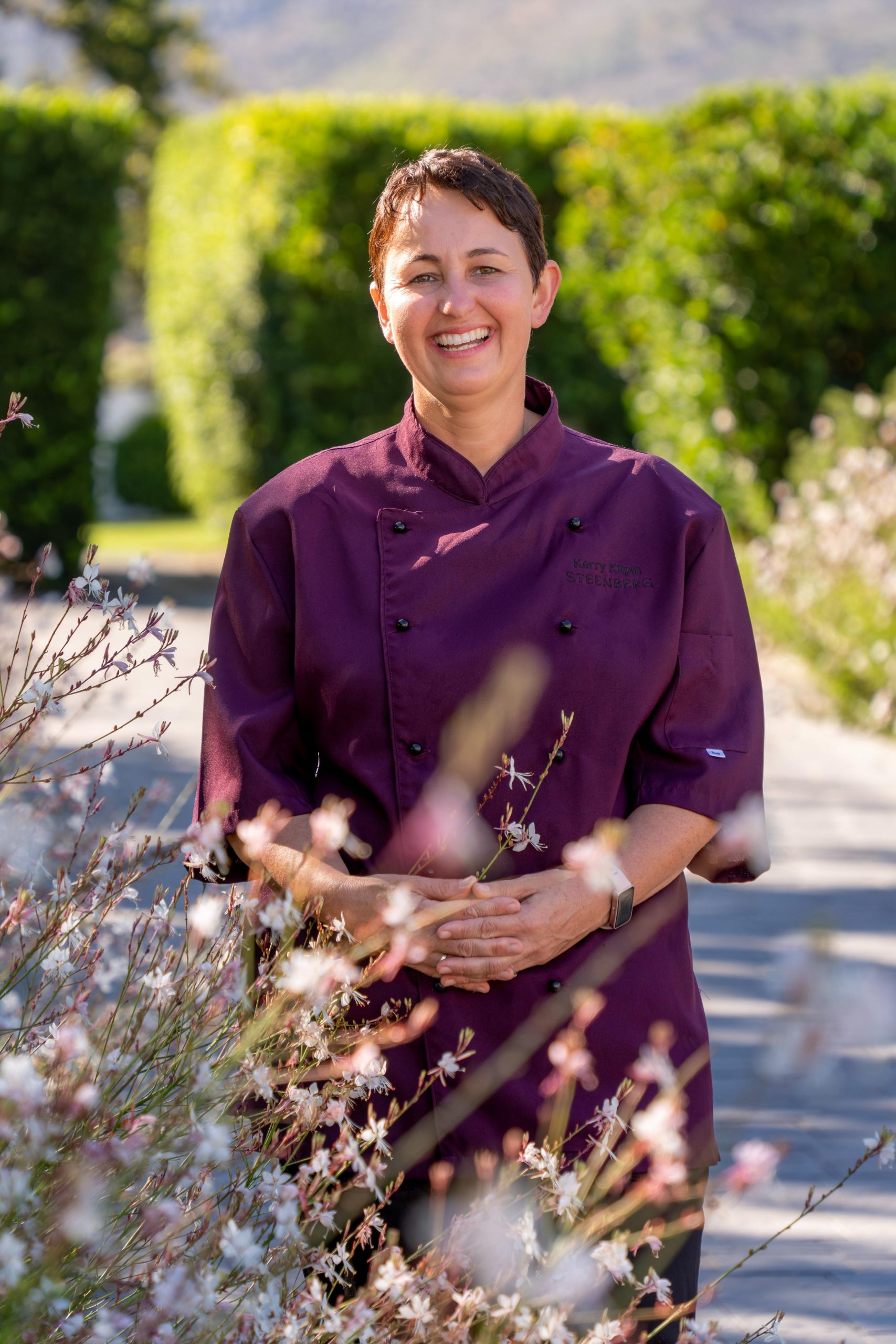
In the high-pressure world of professional kitchens, talent alone is never enough. Young chefs rely on mentoring; real, hands-on and shoulder-to-shoulder guidance to develop discipline, creativity and the resilience that the industry demands, an approach that remains a cornerstone of culinary training globally. For Executive Chef Kerry Kilpin, who leads the teams at Steenberg’s Tryn and Bistro Sixteen82, mentorship isn’t an optional extra. It is the beating heart of her culinary philosophy and the thread that has shaped her own journey.
If it weren’t for mentors, none of us would be where we are,” she says. “Cooking schools provide the foundation, but nothing replaces real-life experience. That’s where chefs are truly made.”
Today, Kerry heads two of the Cape’s most sought-after dining destinations while nurturing a pipeline of young culinarians who find opportunities and purpose under her guidance.
Kerry’s own journey is rooted in mentorship. She credits renowned chef Franck Dangereux, whom she worked with for more than 12 years at La Colombe and The Foodbarn, as the defining influence in her career. “That’s where my shaping happened and where my journey really began,” she says. “The way I mentor now is a direct reflection of what I learnt by working beside him for so many years.”
This deep appreciation for mentorship has become foundational to the kitchen culture she has built at Steenberg.
Kerry hosts six to seven culinary students at any given time, a constant rotation that ensures opportunities for both growth and learning. But at Steenberg, mentorship is not limited to interns or culinary-school students only.
There are people who come into the kitchen with no qualifications at all,” she explains. “Some start in the scullery, move into junior roles, and grow through the ranks. We’ve built a culture of promoting from within.” In Kerry’s view, the most important ingredient is not experience. It is an attitude. “Skills can be taught. A hunger to learn, humility, and a strong work ethic are far more important.”
This approach has shaped chefs who have grown into pillars of the Steenberg culinary team. Senior Chef de Partie Nandi Swartbooi, who first joined as a commis chef in 2015, is one such success story. Another is Mbali Mkize, now Sous Chef at Tryn, who began her journey in 2016 as a commis chef and steadily worked her way through the ranks through dedication, talent, and consistent mentorship.
While nurturing young chefs, Kerry also upholds Steenberg’s exacting standards. The kitchen operates under a clear hierarchy, much like a school. For example, the executive chef is the principal, the head chef the deputy, sous chefs are the grade heads, and chef de parties and commis chefs are the teachers and assistants. Each level guides and checks the one below it, ensuring that every dish is carefully reviewed and perfected before it leaves the pass. This layered approach not only maintains Steenberg’s high standards but also creates a space where young chefs can learn, grow, and rise through the ranks with confidence.
Young chefs need room to grow, but they also need structure,” she says. “That balance is what makes a professional kitchen work.”
Kerry identifies one universal challenge among young chefs: the fear of asking for help. “A strong chef will always ask. A weak one won’t,” she says simply. “In this environment, you cannot do it alone.” Whether the hesitancy stems from intimidation, insecurity, or overconfidence, Kerry makes it clear: collaboration is non-negotiable.
“You can’t plate 20 dishes alone. Teamwork is the backbone of success.” Her message becomes a mantra in the kitchen: “No question is a stupid question.”
Creativity at Steenberg often starts with something unexpected: staff meals. “Staff food is where passion reveals itself. When chefs cook for one another, that’s where you see their flair, their influences and their imagination.” At Tryn, senior chefs also have full creative control over the amuse-bouche, presenting ideas to Kerry for tasting and refinement.
Menu development is collaborative, with brainstorming sessions that might produce a flood of ideas or none. “Sometimes the idea doesn’t work on the intended dish but works beautifully on another. That is why collaboration is so important.”
Resilience, Kerry believes, comes from leadership by example, consistency, and care. She ensures predictable schedules and invests in comfortable, well-equipped facilities, including an air-conditioned staff canteen where her team can truly relax and refuel. The staff meals are a cornerstone of this approach. Chefs are encouraged to eat well during their shifts, take proper breaks, and enjoy the creative, delicious dishes they prepare for one another. “It’s a tough industry, and you must look after your team. A happy chef equals happy guests,” Kerry says. Beyond food, she fosters a culture of wellness, respect and celebration from supporting each other’s growth to honouring birthdays with personalised cakes and creating a nurturing environment where everyone feels valued.
As a woman leading two top-tier restaurants while raising two children, Kerry hopes her journey inspires others.
You can be a mother, run two restaurants, and still live a full life. I want young female chefs to see that it’s possible.”
Her advice to aspiring culinary talent is clear! “You must love it. If you don’t love it to your core, it will be too hard. But if you do, it will be the most rewarding path imaginable.”
Also See: Amura: An immersive marine-led restaurant by the “Chef of the sea”
Amura: An immersive marine-led restaurant by the “Chef of the sea”
