
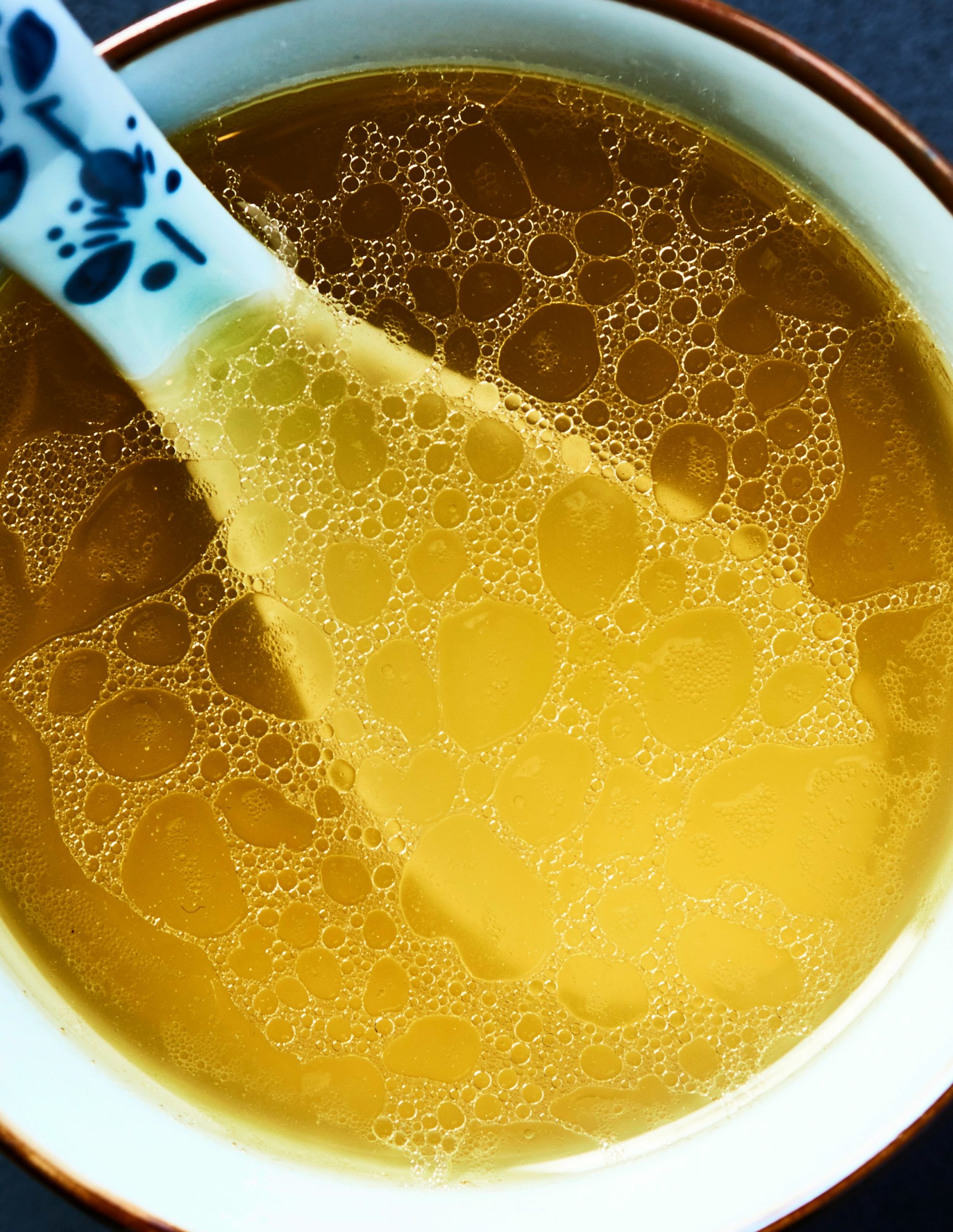
Walk down the soup aisle or scroll through recipes online and you’ll quickly notice two ingredients that seem almost interchangeable: bone broth and stock. While they’re often used in similar ways, they’re not exactly the same thing.
Knowing the difference between bone broth and stock can help you choose the right one for your recipe – or simply decide which deserves a spot in your fridge.
What is stock?
Stock is a kitchen staple made by simmering bones, often with a handful of vegetables such as onions, carrots and celery, along with herbs and aromatics. The focus of stock is flavour. It forms the base of soups, stews, gravies and sauces, adding richness without overpowering the finished dish.
Most stocks are simmered for 2 to 6 hours, depending on the type of bones being used. Chicken stock generally requires less time than beef stock. Stock usually isn’t seasoned heavily with salt because it’s designed to be used as an ingredient rather than enjoyed on its own.
What is bone broth?
Bone broth starts with many of the same ingredients as stock, but the cooking process is much longer. Bones, often roasted first, are simmered for 12 to 24 hours, and sometimes even longer. Many recipes also include a splash of apple cider vinegar, which helps draw minerals and collagen from the bones. The result is a liquid that’s richer, slightly thicker and more gelatinous once chilled. Bone broth is commonly seasoned more generously than stock, making it suitable for sipping as a warm drink as well as cooking.
The biggest differences
Although they begin similarly, several key factors set them apart.
Cooking time
The most obvious difference is how long they’re cooked.
- Stock: Around 2 to 6 hours.
- Bone broth: Typically 12 to 24 hours.
The longer cooking time allows more collagen to dissolve into the liquid, giving bone broth its signature texture.
Texture
If you’ve ever refrigerated homemade bone broth, you’ve probably noticed it turns into a jelly-like consistency. That’s thanks to gelatin, which develops as collagen breaks down during the long simmer. Stock may also gel if it’s well made, but generally not to the same extent.
Flavour
Stock has a clean, savoury flavour that’s designed to support other ingredients. Bone broth tends to have a deeper, richer taste thanks to its extended cooking time and heavier seasoning.
How they’re used
Stock is primarily a cooking ingredient. You’ll find it in everything from creamy soups and casseroles to braised meats and pasta sauces.
Bone broth works beautifully in recipes too, but many people also enjoy drinking it on its own as a warming beverage.
Is bone broth healthier than stock?
Bone broth is often marketed as a nutritional powerhouse because it contains collagen, gelatin and small amounts of minerals released from the bones during cooking.
While collagen-rich foods can contribute protein to your diet, the scientific evidence behind many popular bone broth health claims is still limited. The exact nutritional value also varies depending on the bones used, cooking time and preparation method.
Stock also contains nutrients, particularly if it’s made from bones, although generally in lower concentrations due to the shorter cooking time.
Rather than thinking of one as “healthy” and the other as “unhealthy”, it’s more accurate to see them as two nutritious ingredients that serve slightly different purposes.
Can you substitute one for the other?
In most recipes, yes.
If a recipe calls for stock, bone broth can usually be used without any issues. Just keep in mind that bone broth may have a stronger flavour and could already contain salt, so taste as you go before adding extra seasoning.
Likewise, stock can replace bone broth, although the finished dish may not have quite the same richness or body.
Which should you choose?
It really depends on what you’re making.
Choose stock if you:
- Want a versatile cooking ingredient.
- Are making sauces, soups or gravies.
- Prefer to control the seasoning yourself.
Choose bone broth if you:
- Want a richer, more concentrated flavour.
- Enjoy sipping it on its own.
- Like the fuller texture created by extra gelatin.
ALSO SEE: Cake flour vs bread flour: Does the difference really matter?
Cake flour vs bread flour: Does the difference really matter?
Feature image: Unsplash
