
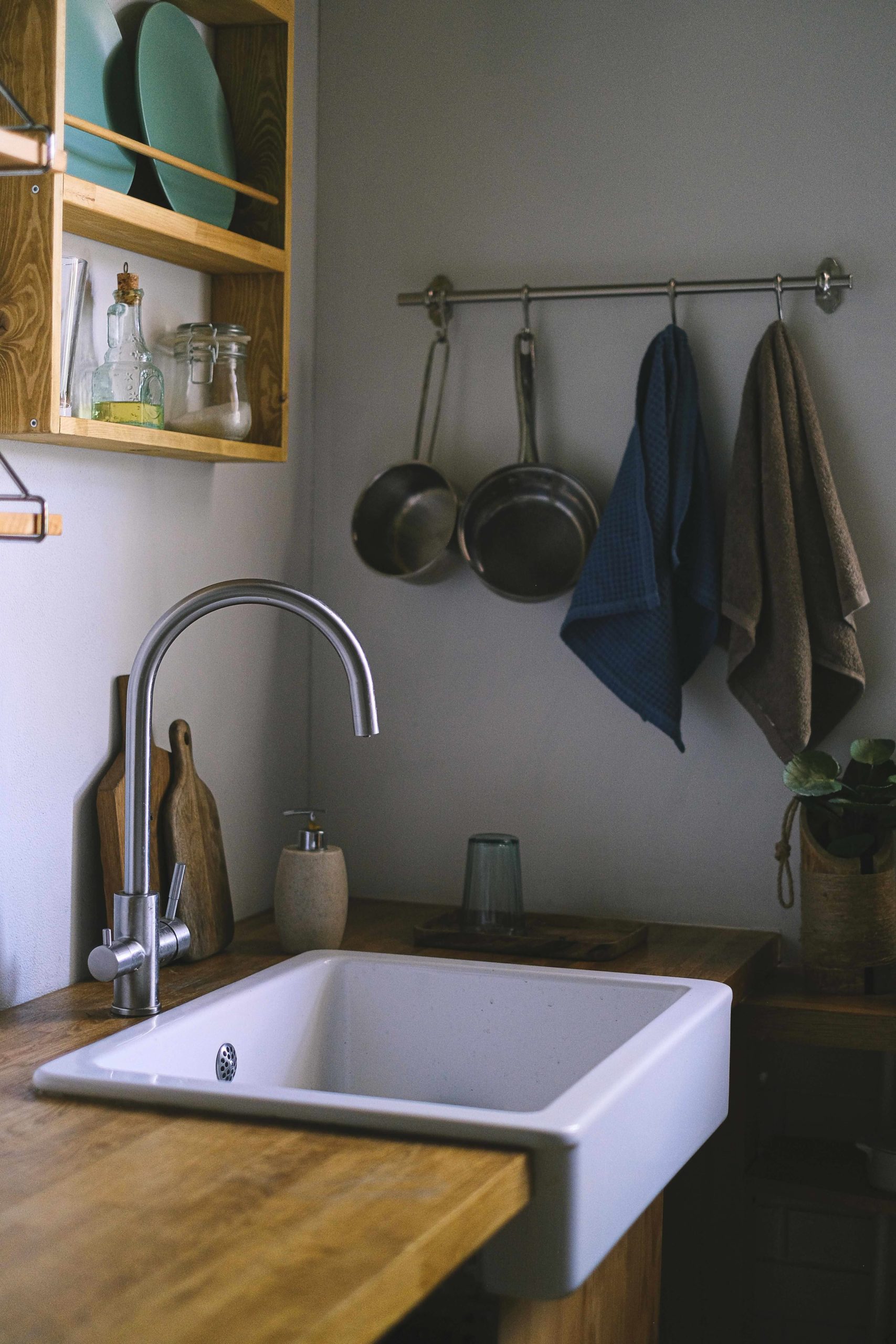
While mould and mildew are common culprits on tiles and grout in bathrooms, we unfortunately also find them growing sneakily around the kitchen sink. The kitchen sink, like the bathroom, is the perfect environment for mould and mildew to thrive – it’s warm, wet and humid – thanks to the endless influx of dishes.
The good thing is that with a little elbow grease, cleaning solution, and consistency, your kitchen sink will be mould and mildew-free for the next round of dishes. Use our easy-to-follow guide and discover the most common growth spots and how to remove mould and mildew from your kitchen sink.
How to remove mould and mildew from your kitchen sink
Mould and mildew are types of fungi that spread or grow through the spread of spores. They thrive in constantly moist and warm, and poorly ventilated environments, like those commonly found in bathrooms. When it comes to kitchens, they seem to thrive here, too. The sink just has the perfect temperatures, moisture, and materials for these spores to travel and multiply.
While you might think the sink is clean after washing last night’s dishes, it really isn’t. If you didn’t scrub the sink itself, then it’s probably not even clean. Inspect your sink, specifically looking at these areas:
- The drain
- The overflow outlet
- Faucet joints and the area around it
- The silicone sealant around the sink
- The container or area where you keep your sponge, soap and brushes
- Under the sink (especially if there’s a leak)
- The countertop surrounding the sink
- The wall or window behind the sink and its silicone sealant
That’s a lot of area to cover for mould and mildew (which these little microorganisms love) and for you to clean constantly. Even if you find a small spot of mould or mildew, it means other areas might have spores that are developing. I know, it’s beginning to sound like some sci-fi series, but this is what quietly and creepily happens in and around our sinks while we’re living our best lives.
So, what now? It’s time to get gloved up and start scrubbing.
What you’ll need:
- Rubber gloves
- A mask (if the infestation looks serious)
- Soft-bristled brush
- Clean sponge
- Microfibre cloth
- A spray bottle half filled with water
- White vinegar
- Mild liquid dish soap
- Bicarbonate of soda
- For an extra kick, your preferred bleach or chemical cleaning agent made for cleaning mould and mildew
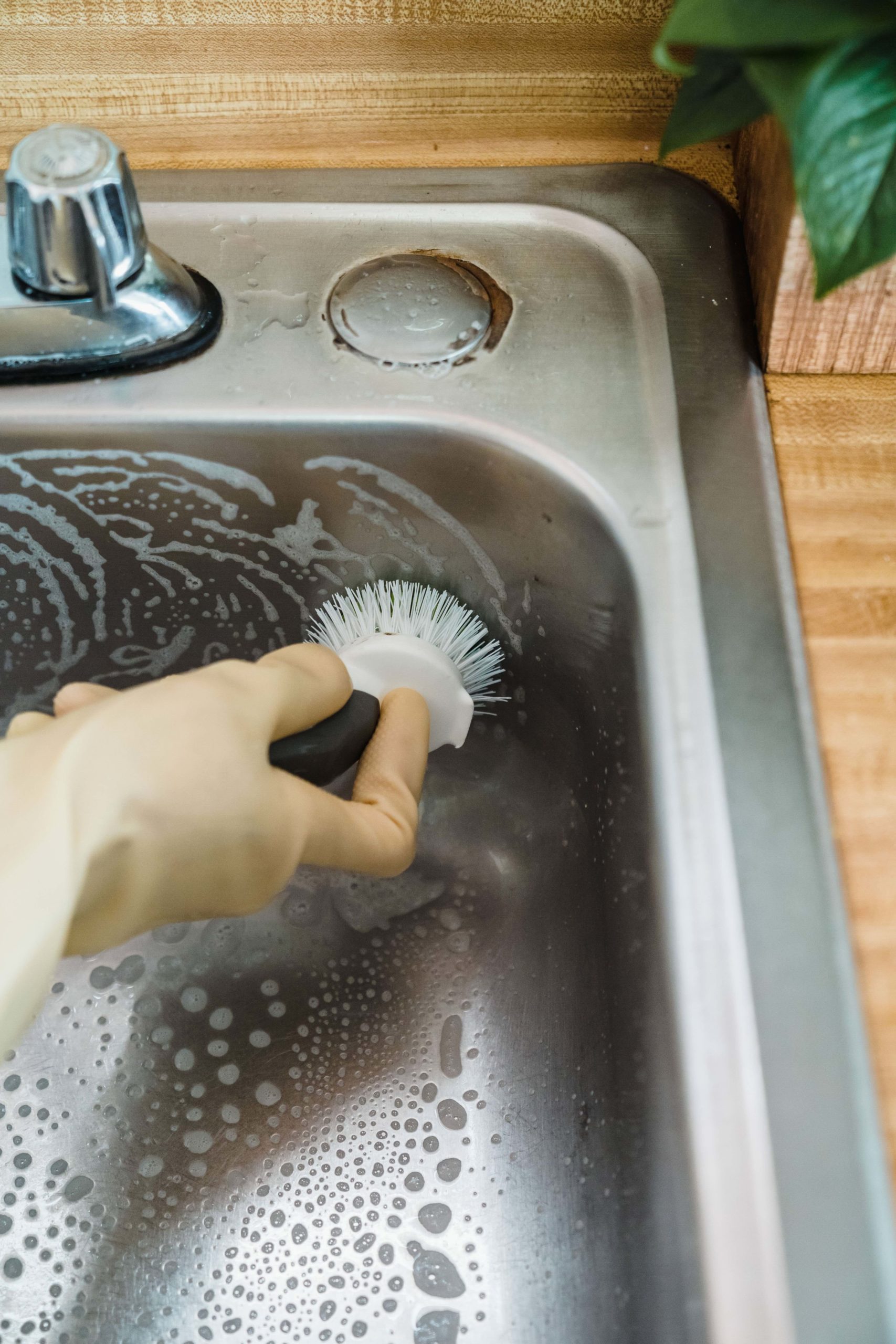
Cleaning steps
- Remove any accessories and dishes from in and around the sink (it’s also a good idea to clean those while you’re at it).
- If there’s a leak under the sink (or anywhere else), fix it up first.
- Pour 1 to 2 drops of liquid dish soap into the spray bottle, then fill the rest with white vinegar. Shake to combine. Spray this over all the areas of the sink we discussed above – ensuring all the nooks and crannies are drenched in the solution.
- Let this solution sit for a good 10 to 15 minutes.
- Give it another spray and use a soft-bristled brush or sponge and start scrubbing. Ensure you’re scrubbing the actual inside surface of the sink, where the sink and countertop join, the faucet, the drain, the overflow outlet, and the surface surrounding the outside of the sink.
- Rinse with water. Inspect these areas again. If there’s a musty smell or some patches left, go in with bleach or your preferred cleaning material – leaving the solution to sit another 10 minutes before scrubbing again.
- Rinse thoroughly to remove excess and residue.
- Now, pour about 1/2 to 1 cup of bicarbonate of soda down the drain, then boil your kettle.
- Pour the hot water down the drain. This should unclog the drain and keep it fresh.
- Use the microfibre cloth to dry the inside and surrounding areas of the sink – ensuring all the joints and sealant are thoroughly dried.
Tips to prevent mould and mildew from growing in your sink
The most important aspect in preventing mould and mildew growth is ventilation. If you can open a window or door that leads a breeze in and around your sink, then the biggest part is taken care of. Other tips include:
- Clean regularly: Experts advise cleaning the sink at least twice to three times a week (depending on use).
- Keep the drain clean and unclogged: The drain can become a main culprit for mould and mildew growth. Keep it clean and clear by deep-cleaning it at least once a week (with regular use) or every month.
- Keep everything dry: This includes the interior surface of the sink and all the areas that surround it. If your ventilation is poor, use a dry microfibre cloth or paper towels to dry it after every use, or at least once you’ve finished using it for the day.
- Check the silicone sealant and caulking regularly: If you can’t completely clean these, it might be time for a hydrogen peroxide spray (3% diluted in water) or for you to redo them.
- Check for leaks regularly: While you might be cleaning and drying regularly, a leak (even a tiny one) will cut through all your hard work and lead to the growth and spread of mould and mildew.
