
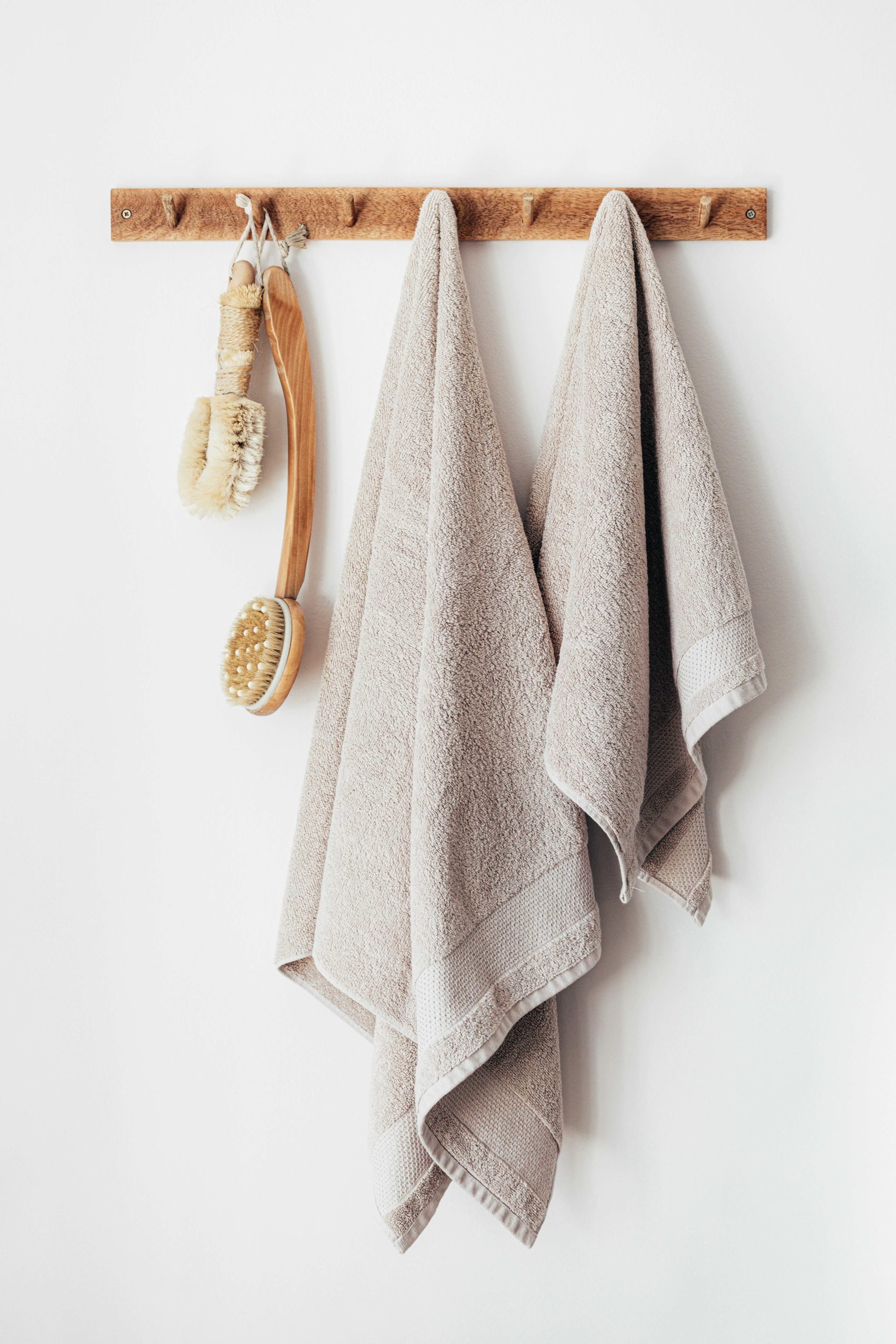
Towels require a little more than tossing them into a washing machine to keep them soft, fluffy and odour-free. The intricate fabric loops on towels do a lot more than create a soft texture – they also help absorb as much moisture from your body as possible, help towels dry completely, and help keep them mildew- and odour-free.
If you find that your towels are stiff after every wash, follow our guide and discover tips to keep them clean, fluffy and odour-free.
Why do towels go stiff?
Most towels that go stiff after use or a wash aren’t always at the end of their lifespan – their stiffness could be due to a few reasons. But the main culprit is usually a build-up of soap and other wash-related residues. Here’s a list of reasons keeping your towels stiff. Run through it and identify which are making your towels less fluffy:
- Unwashed new towels: You have to wash new towels before use. Not only to rid them of possible germ buildup from handling in the store, but also because many manufacturers spray on chemicals to prevent mould, mildew and the fibres from getting flattened during shipping and storage. Washing new towels will get rid of these chemicals and germs, and also help to open up the fibres and loops.
- Too much detergent: When you use more than 1/2 cup of detergent to wash 2 or more towels, the washing machine won’t rinse all of it out – not in one wash cycle. This excess soap settles into the fabric, keeping it from drying completely and allowing the fibres to stand up.
- Fabric softener: Towels should never be washed with fabric softener (no, not even a little bit). If they are, then their fibres and loops will suffer from being coated in a heavy substance and won’t be able to dry properly, lifting themselves back up.
- Hanging them dripping wet on the line: The excess water will flatten their fibres, preventing them from standing up and becoming fluffy (sometimes leading to uneven drying and musty/sour smells). Ensure you run another spin cycle to get rid of as much water as possible before drying your towels.
- Over-washing towels on high heat: While experts advise washing towels after 3 to 4 uses (i.e. at least weekly), washing towels more frequently can lead to stripping of the fabric – meaning there aren’t as many free-standing fibres and loops to keep the fabric fluffy anymore. Paired with high heat wash cycles, your towels won’t last as long as you’d expect them to.
How to wash towels to get them fluffy and odour-free
Avoid overloading your washing machine with towels – they might seem light, but once they’re soaked, they become very heavy. For front loader washing machines, a good rule of thumb is to wash 2 to 4 towels at a time. For top loader washing machines, wash 4 to 6 towels at a time (depending on the weight limit). Overloaded washing machines are not only at risk of damage, but they also don’t get the job done. You will most likely have to wash the towels again to get them properly soaked, cleaned and spun.
What you’ll need:
- Washing machine or bath/large washing tub
- Gentle laundry detergent
- Non-chlorine or colour-safe bleach (for stains but completely optional)
- White vinegar
Colourful towels
- Use cool to warm water when washing colourful towels.
- Before popping the towels into the washing machine or tub, inspect them and identify any stains. Treat these with a non-chlorine, colour-safe bleach by adding 1 to 2 tablespoons alongside the detergent. Or, use your preferred stain remover. Gently work the stain remover into the fabric, keeping it only to the area that’s been stained.
- If you haven’t used bleach, you can add 1/4 to 1 cup of white vinegar in the slot you usually add fabric softener to. Never wash anything with bleach and vinegar – the combination will result in the formation of chlorine gas, which is very harmful.
- After the initial wash cycle, add an extra spin cycle.
- Then tumble dry for 10 to 20 minutes (depending on the load – the fewer towels, the shorter the tumble dry). Then hang up on your washing line in direct sunlight. This combination ensures an even drying process, helps the fibres stand up again, and the sunlight helps eliminate lingering odours and germs.
White towels
- White towels may be washed using warm to hot water to help maintain their brightness.
- Follow the steps as discussed above.
What if, after all this, my towels are still stiff?
If you’ve washed and dried them best you could and your towels still turn out stiff and sad-looking, then it might be time to face the inevitable. Your towels are probably at the end of their life, and no amount of stripping, tumble drying or laundry experts will be able to bring them back to their former fluffy lives.
Experts recommend inspecting towels after 2 to 5 years of use (depending on use and frequency). Towels have a lifespan of a minimum of 2 years, when used frequently without being swapped out with another set, and a maximum of 5 years, when swapped out with another set or two. After that, the fabric quality drops and continues to decline with use.
If your towels are older than that, it might be time to find alternative uses for them or throw them out.
