
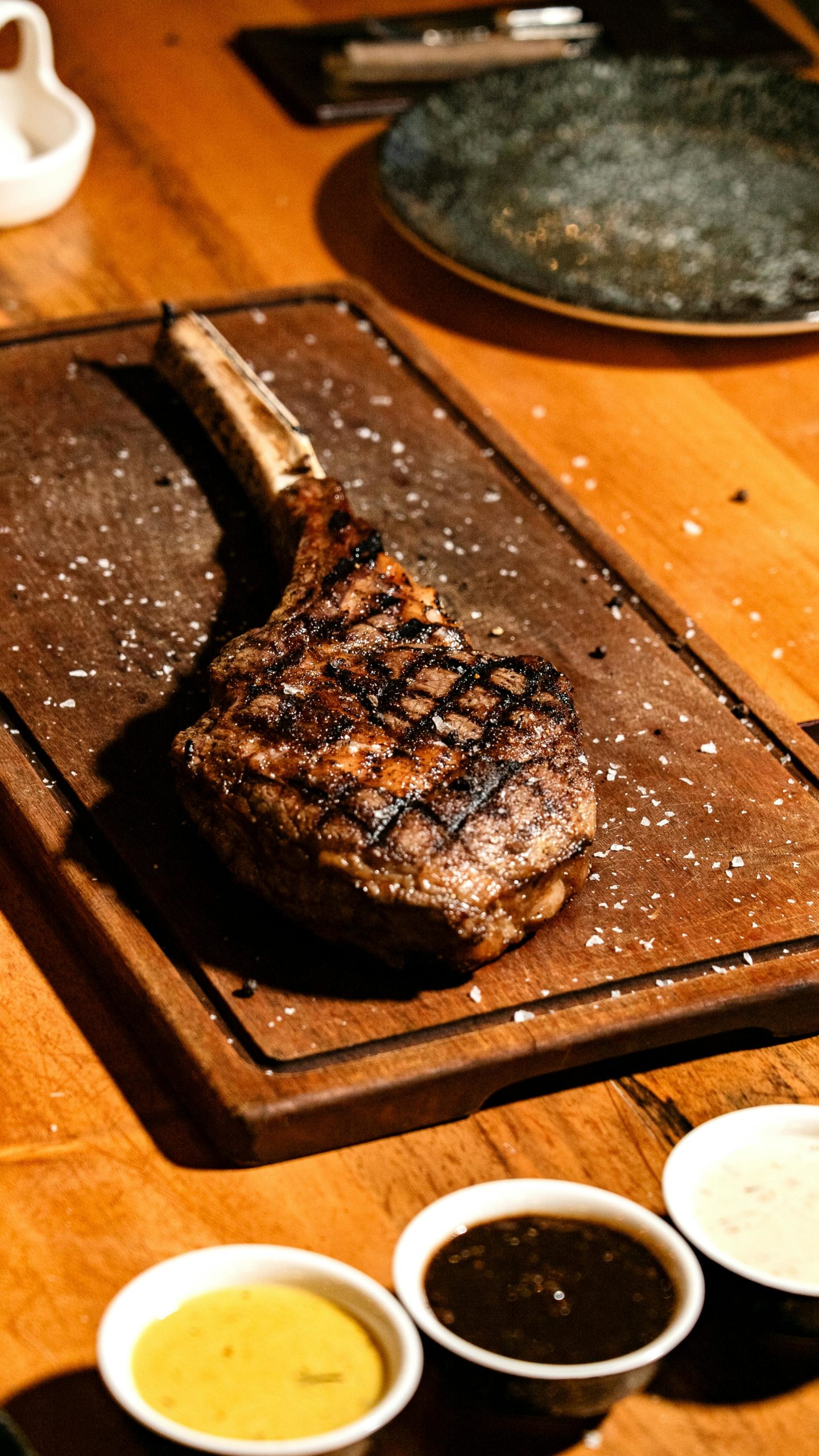
If you ask any Michelin-star chef, they will immediately say yes and probably tell you a story on how it helps the muscles relax and redistribute the juices, leaving you with a clean cut and no mess on the plate. While that may be somewhat true, new studies have shown that resting meat isn’t about redistributing juices and relaxing muscles, but, more arguably, for a far more important reason altogether.
New research, clearer reasons
Food scientists have been researching the effects of resting on meat. And while the longer you rest meat, the less messy it gets on the plate (i.e. its juices don’t spill all over the place, ruining things like mashed potatoes), food scientists have found that the redistribution of meaty juices does not affect the overall juiciness of the meat.
If you think about it, whether you eat a rested piece of meat or use an unrested piece of meat to mop up the juices that have spilt onto the plate, it’s still juicy. And yes, the doneness of the meat isn’t as big a factor as previous studies have made it to be. When a medium-rare, well-rested steak is compared with a slow-roasted and smoked American-style brisket (a.k.a. well-done piece of meat), it can be argued that the brisket is juicier and more tender than the steak. Why is that?
Researchers have identified “carryover cooking” as the most important factor for juicy meat. Yes, resting is a component of it, but the temperature at which you eat meat is what counts the most.
So, what now?
To rest or not rest – is that really the question?
The best way to enjoy your meat, whether a rump steak, a lamb chop or a slow-roasted brisket, is at your ideal temperature, a.k.a. doneness. All you need to know is when to take the piece of meat off the heat in time for the “carryover heat” to do the rest.
Simply put: when you cook something at super high temperatures, it continues to cook even when the heat source is removed. So, when you remove that rump steak from the braai, it continues to cook whether you rest it or start digging in. This continuous cooking is what changes the internal temperature and affects the doneness of meat.
Ideally, you should remove meats from their heat sources (the pan, braai, air-fryer, or oven) before they reach their internal temperature, because, within a few minutes, the latent heat or carryover cooking will get the meat to its doneness or preferred internal temperature all on its own.
Yes, this makes it a bit of an adjustment to cooking, but in the end makes more sense. To make it an easier adjustment and less of a guessing game, you could buy a specific thermometer that measures internal temperatures, taking carryover cooking into consideration.
Or, you could follow these guidelines to help you find your ideal internal temperature:
- Pan-frying/grilling: remove meats 3 to 5 minutes before the usual recommended time and rest, allowing the latent heat to reach the desired internal temperature (except for ‘blue’ steaks – remove as soon as possible and serve)
- Roasts: remove roasts and rest 10 to 20 minutes before the usual recommended time (longer for bigger roasts)
- Air-frying: remove and rest the meat 3 to 5 minutes before the recommended time (5 to 10 minutes for larger or whole pieces)
