
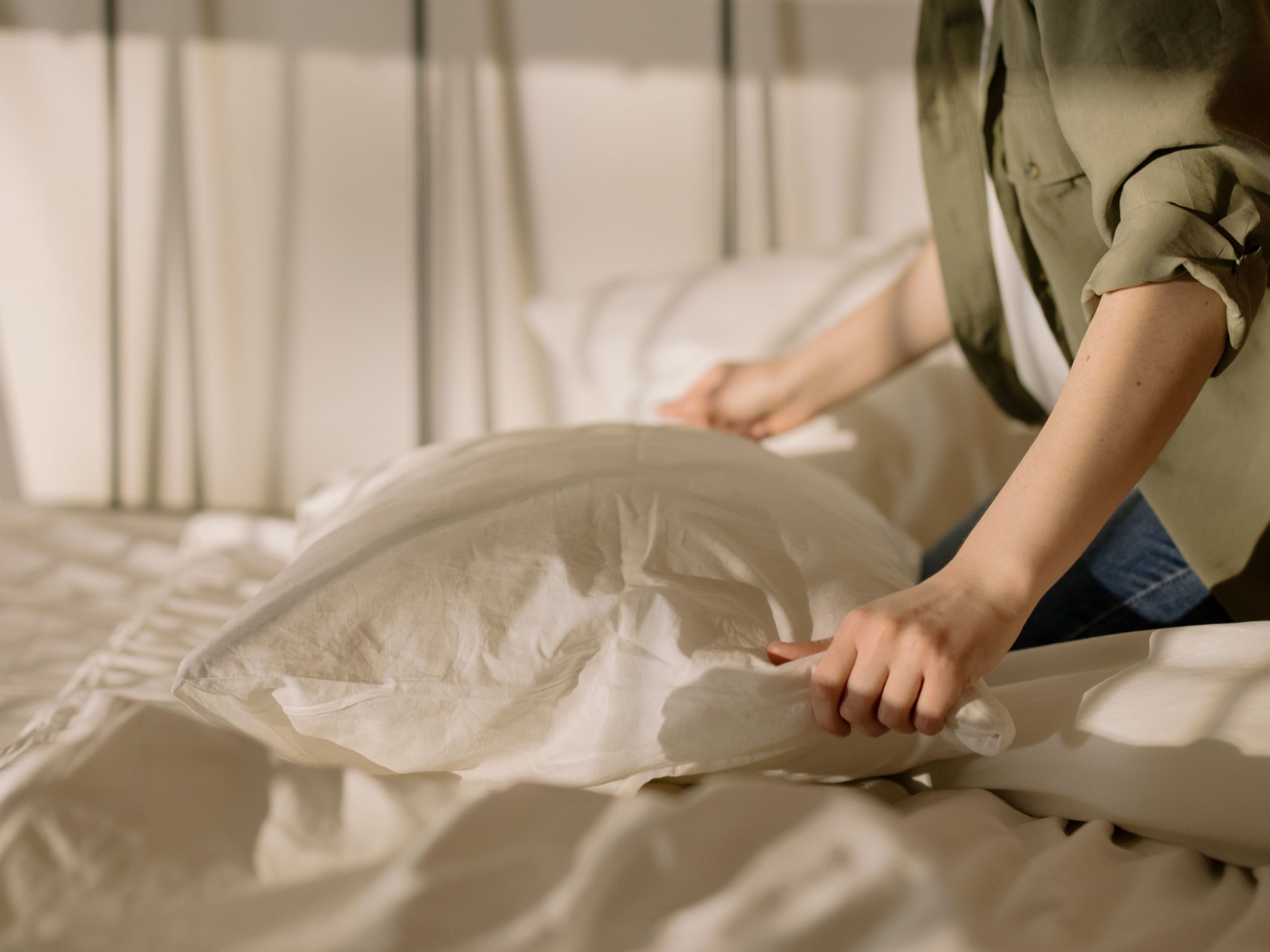
If you think about it, we spend a lot of time sleeping (or trying to). In fact, studies have found that we spend up to a third of our lives sleeping. Which means our sheets go through a lot – even if you’ve showered before bed, your body still sheds dead skin cells and soaks your linen with sweat, not to mention the bacteria, fungi, and other little creatures that might also be snoozing alongside you. Add your fur babies to the mix and your bed is cooking with a soup of the unwanted.
It is therefore most important that your sheets are washed regularly. Read our guide and find out exactly how often you should wash your bedding.
What really happens when we sleep
Experts have actually researched this. They’ve found that our bodies shed hundreds of thousands of dead skin cells, our sebaceous glands excrete oils, we sweat up to a cup of fluid, and, to add to the mix, our bodies and skin cells host millions of bacteria and fungi – all of which are transferred to our bedding.
Pretty gross, right? To add the cherry to the top of that biohazard of an ice cream sundae, when our pets sleep with us on the bed, they add hair, dander, traces of faeces and other little critters.
This mix not only leads to dust mites, a collection of damp in our mattresses and pillows (think food for dust mites and fungi), but also pollutants that may aggravate eczema, asthma, and allergic rhinitis – and in some serious cases, the growth of fungi that can lead to serious lung infections.
The good news is that with regular washing, your airways and skin should be fine. How often you should wash your bedding has also been studied.
How often you should be washing your bedding
According to the experts, each area of your bed needs different wash routines. However, to keep things running smoothly alongside all the other cleaning tasks we have, we’ve simplified the routine for you below.
What you’ll need:
- Mild laundry detergent for regular washing
- Enzymatic laundry detergent for deep cleans or tackling stains and strong odours
- Stain remover
- Fabric softener
- White vinegar (helps sanitise sheets and remove strong odours)
- An iron/steamer
- Bicarbonate of soda
Regular cleaning
- Strip the bed of all the linen you use: all pillowcases, duvet covers and sheets.
- Inspect them before popping them into the washing machine – treat stains with your preferred stain remover and gently work the solution into the area.
- Add 1/4 to 1/2 cup laundry detergent alongside 1/4 to 1/2 cup fabric softener to the detergent dispenser slots. Then, add 1/2 cup white vinegar into the laundry detergent slot (or the fabric softener slot if you prefer to go without it).
- Wash the bedding as usual; cold to warm water will do. Ensure the bedding has been spun to remove as much excess water as possible.
- Shake and hang in the sun – sunlight will help remove germs, leftover critters and odours.
- Fold the bedding while it’s still warm to avoid wrinkles, or iron/steam before folding.
Deep-cleaning
- Strip the bed of all the linen and protectors you use.
- Inspect and spray stain remover on stains, gently working the solution into the fabric before popping into the washing machine.
- Use 1/4 to 1/2 cup enzymatic laundry cleaner combined with 1/4 to 1/2 cup white vinegar and 1/4 to 1/2 cup fabric softener in the detergent dispenser.
- Choose a slightly warmer cycle (around 60ºC) to use heat to help kill germs and bacteria, and remove strong odours.
- While the bedding washes, it’s time to tackle the pillows, mattress, bed frame and headboard.
- Sprinkle a generous amount of bicarbonate of soda over your mattress. Leave this to absorb moisture and odours for a good 10 to 15 minutes.
- Vacuum all the pillows and your duvet. Set them out in some direct sunlight while you work.
- Vacuum the mattress, turn it over and vacuum again.
- Vacuum the bed frame (ensuring you get into all the nooks and crannies that have collected dust). Vacuum your headboard if it’s made from fabric, or use all-purpose cleaner to wipe it down.
- Leave the mattress and pillows uncovered for at least an hour to air and dry out before covering with protectors and fresh sheets.
- Ensure the bedding has been sufficiently spun before shaking out and hanging in direct sunlight.
- Before folding and using or storing, ensure you iron or steam the bedding. This final exposure to heat ensures any lingering odours and germs are banished.
In terms of your pillows, you should be washing them every 3 to 4 months (more often if you wear makeup to bed or sweat a lot). Use our cleaning guide for the best results here. With regular cleaning, you might notice your skin, airway and sleep routine improve.
