
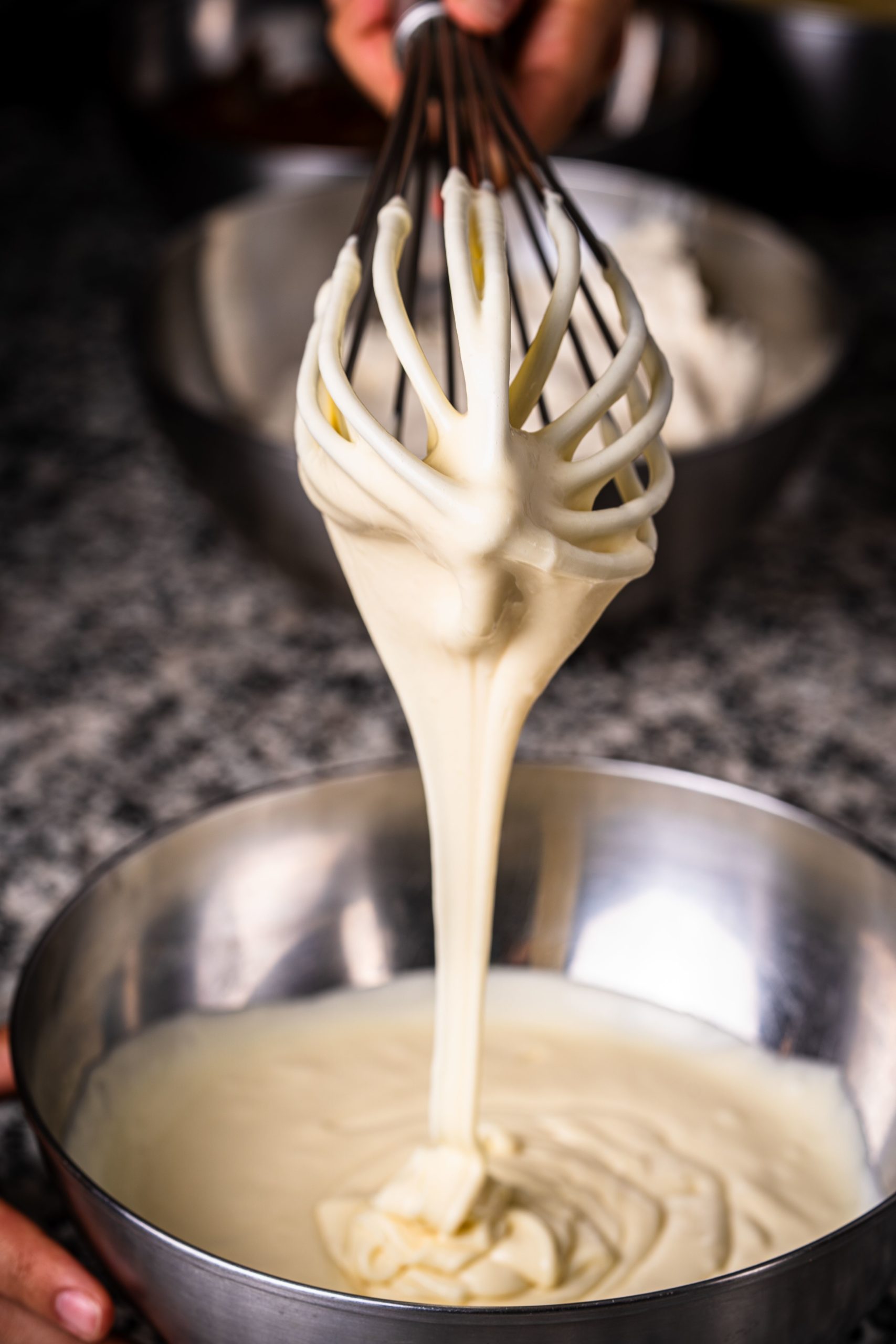
Cream is the foundation of many dishes, from chocolate mousse and scones with clotted cream to creamy savoury sauces and potato dauphinoise. But not all creams are made equal. From pouring cream and whipping cream to double-thick and clotted cream, we highlight the differences and their best uses.
Pouring vs whipping vs double-thick vs clotted cream
Cream is essentially milkfat – the fat that separates from unheated, unpasteurised fresh milk. What makes each type of cream different is the fat content and the way it’s been processed. Let’s get into it.
Pouring cream
Pouring cream (sometimes referred to as light, table or cooking cream) contains 18 to 30% milkfat. This content is relatively low compared to other creams, thus making it lighter in texture and consistency. While you won’t be able to whip it to stiff peaks like whipping cream, it does add a silky, subtle richness to dishes. It’s most suited for heating, like finishing off a gravy or boosting the flavour of pan juices after frying a protein, as it can withstand heat better than other types of cream.
Pour a splash of this cream into your morning coffee, or use it to enrich soups, sauces and baked dishes (like mac ‘n cheese or potato dauphinoise). Pouring cream is perfectly suited for any dish that requires a delicate yet rich creaminess.
Whipping cream
Whipping cream (in America, it’s called heavy cream) contains about 36 to 45% milkfat. This makes it easy to whip into soft or stiff peaks, depending on your preference or recipe. Add a dollop to cakes, sweet loaves, and other desserts for a luxurious finish. But don’t let its name put you off using it in savoury dishes – it also works well to thicken and enrich soups and sauces.
Double-thick cream
Double-thick cream is similar to thick cream, only it has a much higher milkfat content: no less than 50%. It has a very thick consistency – don’t try to whip it or mix it with a spoon too much, as it will turn into butter very quickly. Use it as is over desserts or to add a velvety, rich texture to savoury dishes like risottos, sauces, pastas and even soups.
Clotted cream
While often confused or used interchangeably with double-thick cream, clotted cream has a much higher milkfat content – no less than 55% – and is processed more than the creams discussed above. It’s made by gently heating cream in a shallow pan for several hours. This helps the thickest, creamiest layer to separate from the milk, rise to the top and start to slightly clot. The result is a super dense, spoonable texture with a slightly buttery flavour. Clotted cream is commonly dolloped over freshly baked scones. It can also be used to garnish pancakes, crumbles and pies.
